
Before Memmo my notes were scattered across PDFs. Now a workspace pulls everything into one place — I see exactly what's still left to study.
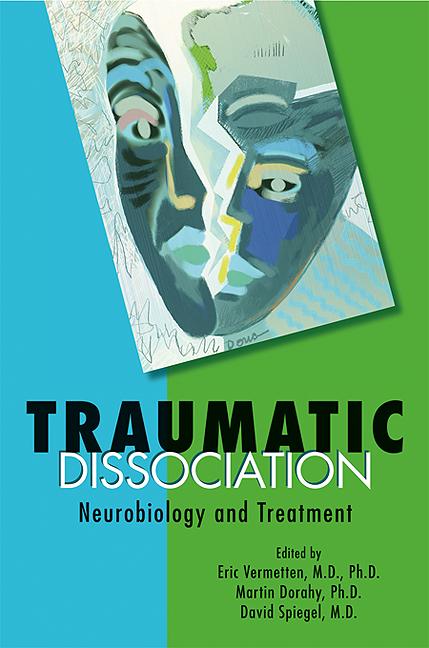
Traumatic Dissociation: Neurobiology and Treatment offers an advanced introduction to this symptom, process, and pattern of personality organization seen in several trauma-related disorders, including acute stress disorder, posttraumatic stress disorder (PTSD), and the dissociative disorders. Our understanding of traumatic dissociation has recently been advanced by neuroimaging technology, empirically-based investigation, and an acknowledgment of its importance in psychopathology. The authors of this volume tie these findings together, tracking the condition from its earliest historical conceptualization to its most recent neurobiological understanding to provide even greater insight into traumatic dissociation and its treatment.
Bringing together for the first time theoretical, cognitive, and neurobiological perspectives on traumatic dissociation, this volume is designed to provide both empirical and therapeutic insights by drawing on the work of many of the main contributors to the field. Opening chapters examine historical, conceptual, and theoretical issues and how other fields, such as cognitive psychology, have been applied to the study of traumatic dissociation. The following section focuses specifically on how neurobiological investigations have deepened our understanding of dissociation and concluding chapters explore issues pertinent to the assessment and treatment of traumatic dissociation. The interacting effects of traumatic experience, developmental history, neurobiological function, and specific vulnerabilities to dissociative processes that underlie the occurrence of traumatic dissociation are among some of the key issues covered. The book's significant contributions include A review of cognitive experimental findings on attention and memory functioning in dissociative identity disorder An appreciation of how the literature on hypnosis provides a greater understanding of perceptual processing and traumatic stress Ascertaining symptoms of dissociation in a military setting and in other situations of extreme stress An outline of key issues for planning assessment of traumatic dissociation, including a critique of its primary empirically supported standardized measures An examination of the association between child abuse or neglect and the development of eating disorders, suggesting ways to therapeutically deal with negative body experience to reduce events that trigger dissociation A description of neuroendocrine alterations associated with stress, pointing toward a better understanding of the developmental effects of deprivation and trauma on PTSD and dissociation A review of the relation of attachment and dissociation A discussion of new research findings in the neuroimaging of dissociation and a link between cerebellar functioning and specific peritraumatic experiences
Useful as a clinical reference or as ancillary textbook, Traumatic Dissociation reorganizes phenomenological observations that have been overlooked, misunderstood, or neglected in traditional training. The research and clinical experience described here will provide the basis for further clinical and theoretical formulations of traumatic dissociation and will advance empirical examination and treatment of the phenomenon.
Before Memmo my notes were scattered across PDFs. Now a workspace pulls everything into one place — I see exactly what's still left to study.
Memmo's summaries are gold before exams. I don't have to re-read 800 pages two weeks before — just the important parts.
The AI chat has saved me the night before an exam more than once. I just keep asking until I get it — no waiting on a study group to reply.
The quizzes hit exactly what I need to know. Memmo tracks what I get stuck on — so I only practice what's worth it.
Flashcards with spaced repetition are magic. Memmo knows when I'm about to forget something and brings it back.
The AI podcasts are my favorite. I listen on my way to school and get a recap without sitting at a computer.

Handbok i kvalitativa metoder
281 kr

Hållbar utveckling: en introduktion för ingenjörer och andra problemlösare
334 kr

Brymans Samhällsvetenskapliga metoder
390 kr

Projektledning
491 kr

Den orättvisa hälsan: om socioekonomiska skillnader i hälsa och livslängd
326 kr

Organizational Leadership
429 kr

Vetenskapsteori för nybörjare
196 kr

På väg mot läraryrket
172 kr

Det sociala livet i skolan: Socialpsykologiska perspektiv
253 kr

Betygsättningens didaktik
151 kr

Personality
402 kr

Studying Leadership
404 kr

Managing Innovation
477 kr

Introduktion till samhällsvetenskaplig metod
347 kr

The Psychology of Sex and Gender
698 kr

Evidens och kunskap för socialt arbete
207 kr

Introduction to Leadership
605 kr