
Before Memmo my notes were scattered across PDFs. Now a workspace pulls everything into one place — I see exactly what's still left to study.
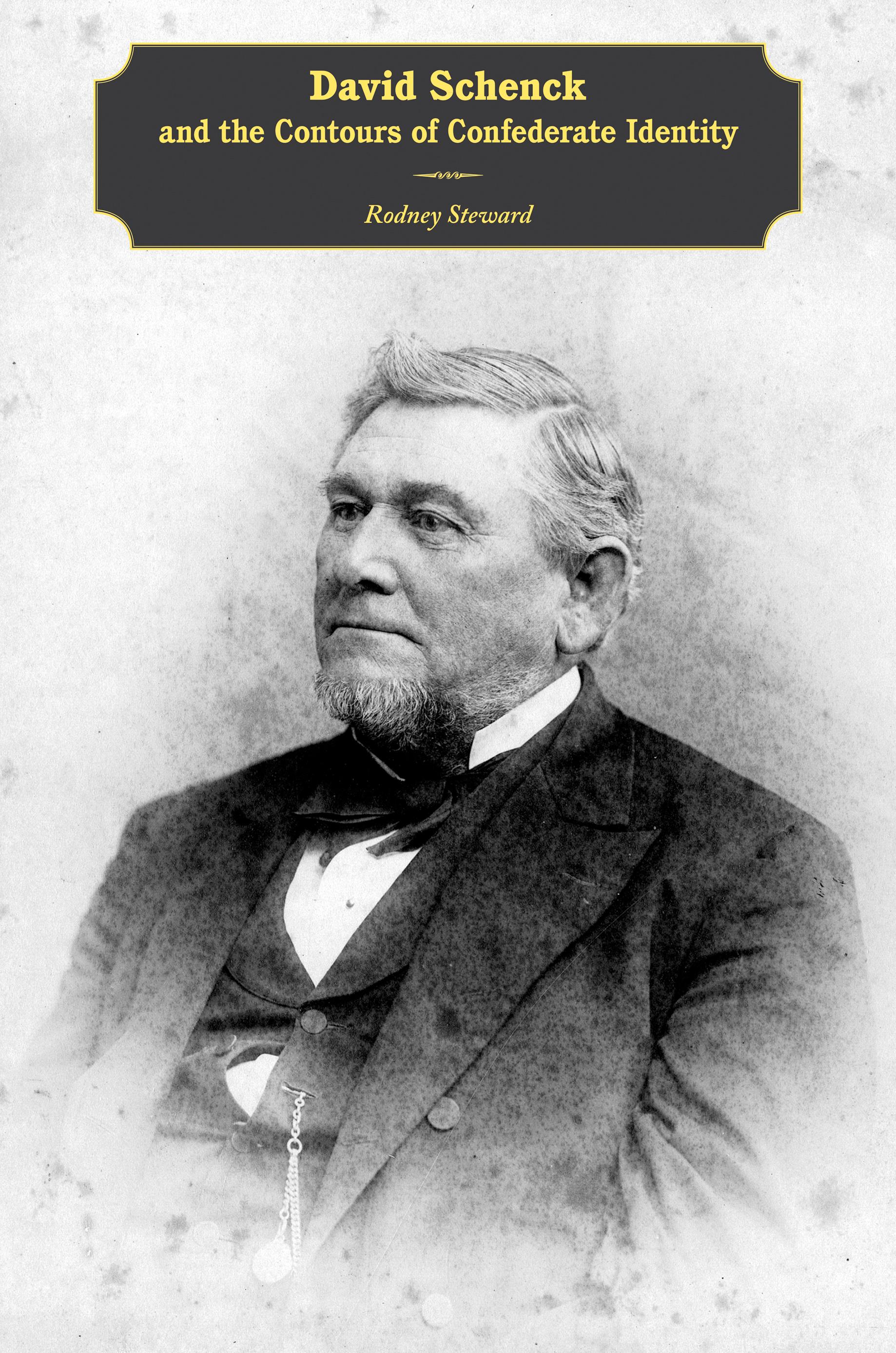
A mid-level Confederate official and lawyer in secessionist North Carolina, David Schenck (1835–1902) penned extensive diaries that have long been a wellspring of information for historians. In the midst of the secession crisis, Schenck overcame long-established social barriers and reshaped antebellum notions of manhood, religion, and respectability into the image of a Confederate nationalist. He helped found the revolutionary States’ Rights Party and relentlessly pursued his vision of an idealized Southern society even after the collapse of the Confederacy. In the first biography of this complicated figure, Rodney Steward opens a window into the heart and soul of the Confederate South’s burgeoning professional middle class and reveals the complex set of desires, aspirations, and motivations that inspired men like Schenck to cast for themselves a Confederate identity that would endure the trials of war, the hardship of Reconstruction, and the birth of a New South.
After secession, Schenck remained on the home front as a receiver under the Act of Sequestration, enriching himself on the confiscated property of those he accused of disloyalty. After the war, his position as a leader in the Ku Klux Klan and his resistance to Radical Reconstruction policies won him a seat on the superior court bench, but scathing newspaper articles about his past upended a bid for chief justice of the North Carolina Supreme Court, a compelling fall from grace that reveals much about the shifting currents in North Carolina society and politics in the years after Reconstruction. During the last twenty years of his life, spent in Greensboro, Schenck created the Guilford Battleground Company in an effort to redeem the honor of the Tar Heels who fought there and his own honor as well.
Schenck’s life story provides a powerful new lens to examine and challenge widely held interpretations of secessionists, Confederate identity, Civil War economics, and home-front policies. Far more than a standard biography, this compelling volume challenges the historiography of the Confederacy at many levels and offers a sophisticated analysis of the evolution of a Confederate identity over a half century.
Rodney Steward is an assistant professor of history at the University of South Carolina, Salkehatchie. His works have appeared in the Virginia Magazine of History and Biography, Encyclopedia of North Carolina, and North Carolina Historical Review.
Before Memmo my notes were scattered across PDFs. Now a workspace pulls everything into one place — I see exactly what's still left to study.
Memmo's summaries are gold before exams. I don't have to re-read 800 pages two weeks before — just the important parts.
The AI chat has saved me the night before an exam more than once. I just keep asking until I get it — no waiting on a study group to reply.
The quizzes hit exactly what I need to know. Memmo tracks what I get stuck on — so I only practice what's worth it.
Flashcards with spaced repetition are magic. Memmo knows when I'm about to forget something and brings it back.
The AI podcasts are my favorite. I listen on my way to school and get a recap without sitting at a computer.

Handbok i kvalitativa metoder
281 kr

Hållbar utveckling: en introduktion för ingenjörer och andra problemlösare
334 kr

Brymans Samhällsvetenskapliga metoder
390 kr

Projektledning
491 kr

Den orättvisa hälsan: om socioekonomiska skillnader i hälsa och livslängd
326 kr

Vetenskapsteori för nybörjare
196 kr

Organizational Leadership
429 kr

På väg mot läraryrket
172 kr

Det sociala livet i skolan: Socialpsykologiska perspektiv
253 kr

Betygsättningens didaktik
151 kr

Personality
402 kr

Studying Leadership
404 kr

Managing Innovation
477 kr

Introduktion till samhällsvetenskaplig metod
347 kr

The Psychology of Sex and Gender
698 kr

Evidens och kunskap för socialt arbete
207 kr

Introduction to Leadership
605 kr