
Before Memmo my notes were scattered across PDFs. Now a workspace pulls everything into one place — I see exactly what's still left to study.
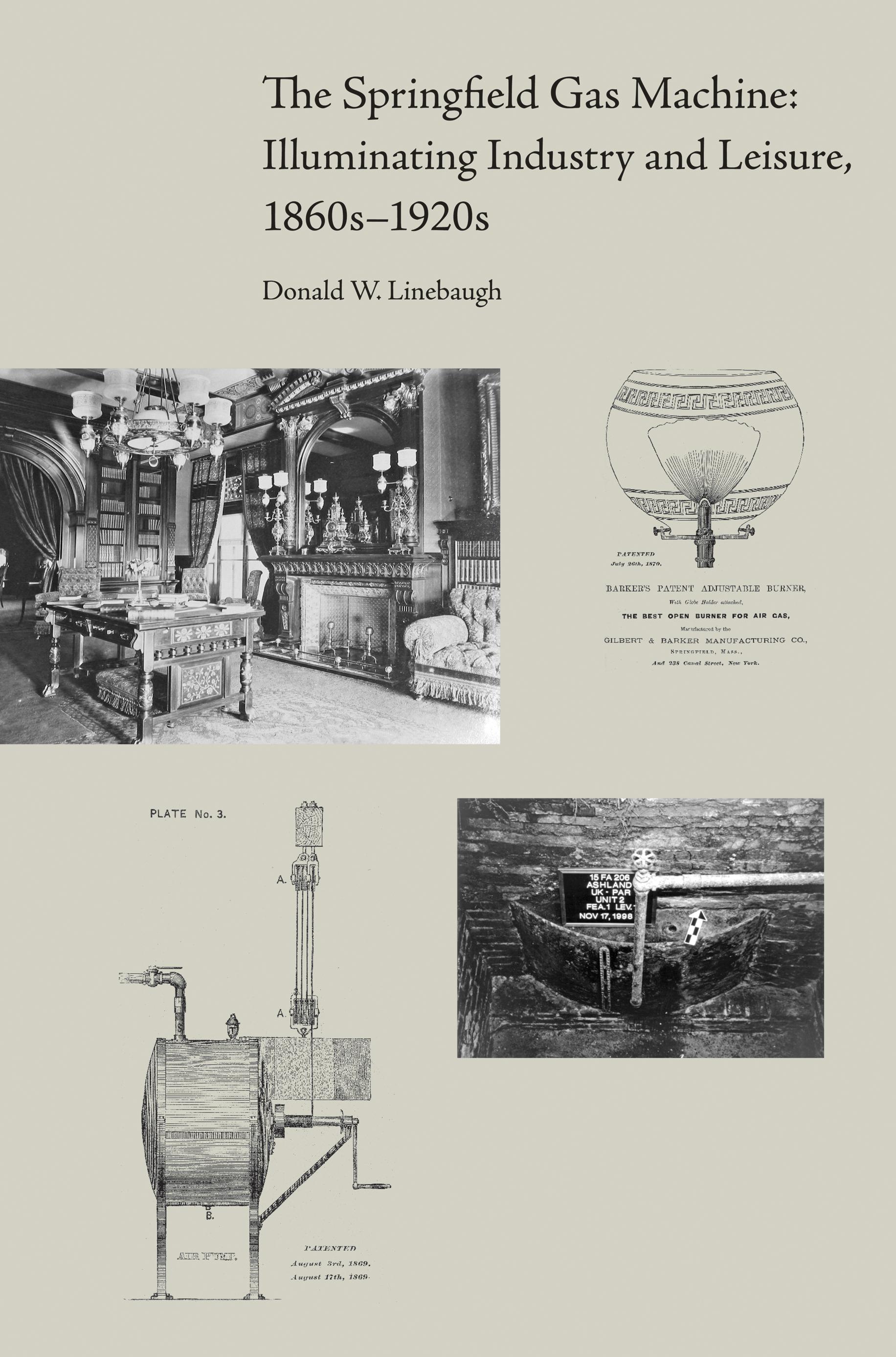
Developed just after the close of the Civil War, the Springfield Gas Machine was a unique commercial and domestic gas lighting system marketed for use in homes and businesses outside of a city’s gas works. The self-contained unit was perfectly suited to accommodate an expanding rural and suburban U.S. landscape as middle- and upper-class American families were looking to find simplicity in the countryside without losing any modern comforts of the city. Industries, too, were looking for a means to operate more efficiently and implement longer work hours for various production operations. Perhaps more important, owners of the Springfield system could retain control of their light production during a time when corporations were reaping large benefits from their monopolistic hold over municipal gas works.
In addition to detailing preserved Springfield systems across the country, Donald W. Linebaugh uses newspapers and magazine articles, advertisements, patents, and even mail-order catalogs to tell the story of this one-of-a-kind unit. The Gilbert and Barker Manufacturing Company's innovative business plan established them as a leader in the manufacture of gas lighting devices. By taking gasoline from an oft-discarded byproduct of refining crude oil to a viable fuel source, the company paved the way for other gas-powered appliances to improve household management strategies and industrial production. In capturing the pre-automobile market for gasoline, Gilbert and Barker attracted the attention of the Standard Oil Trust, presaging the oil-industry dominance over gasoline production that continues today.
The story of the Springfield gas machine ends in the early twentieth century as the advent of electricity proved more available to the masses with considerably less expense. However, gas lighting was, for its time, a major innovation in domestic and commercial lighting, and it changed daily life and social behaviors in the late nineteenth century as the comforts of home became a reality for suburban and rural Americans.
Before Memmo my notes were scattered across PDFs. Now a workspace pulls everything into one place — I see exactly what's still left to study.
Memmo's summaries are gold before exams. I don't have to re-read 800 pages two weeks before — just the important parts.
The AI chat has saved me the night before an exam more than once. I just keep asking until I get it — no waiting on a study group to reply.
The quizzes hit exactly what I need to know. Memmo tracks what I get stuck on — so I only practice what's worth it.
Flashcards with spaced repetition are magic. Memmo knows when I'm about to forget something and brings it back.
The AI podcasts are my favorite. I listen on my way to school and get a recap without sitting at a computer.

Handbok i kvalitativa metoder
281 kr

Hållbar utveckling: en introduktion för ingenjörer och andra problemlösare
334 kr

Brymans Samhällsvetenskapliga metoder
390 kr

Projektledning
491 kr

Den orättvisa hälsan: om socioekonomiska skillnader i hälsa och livslängd
326 kr

Vetenskapsteori för nybörjare
196 kr

Organizational Leadership
429 kr

På väg mot läraryrket
172 kr

Det sociala livet i skolan: Socialpsykologiska perspektiv
253 kr

Betygsättningens didaktik
151 kr

Personality
402 kr

Studying Leadership
404 kr

Managing Innovation
477 kr

Introduktion till samhällsvetenskaplig metod
347 kr

The Psychology of Sex and Gender
698 kr

Evidens och kunskap för socialt arbete
207 kr

Introduction to Leadership
605 kr