
Before Memmo my notes were scattered across PDFs. Now a workspace pulls everything into one place — I see exactly what's still left to study.
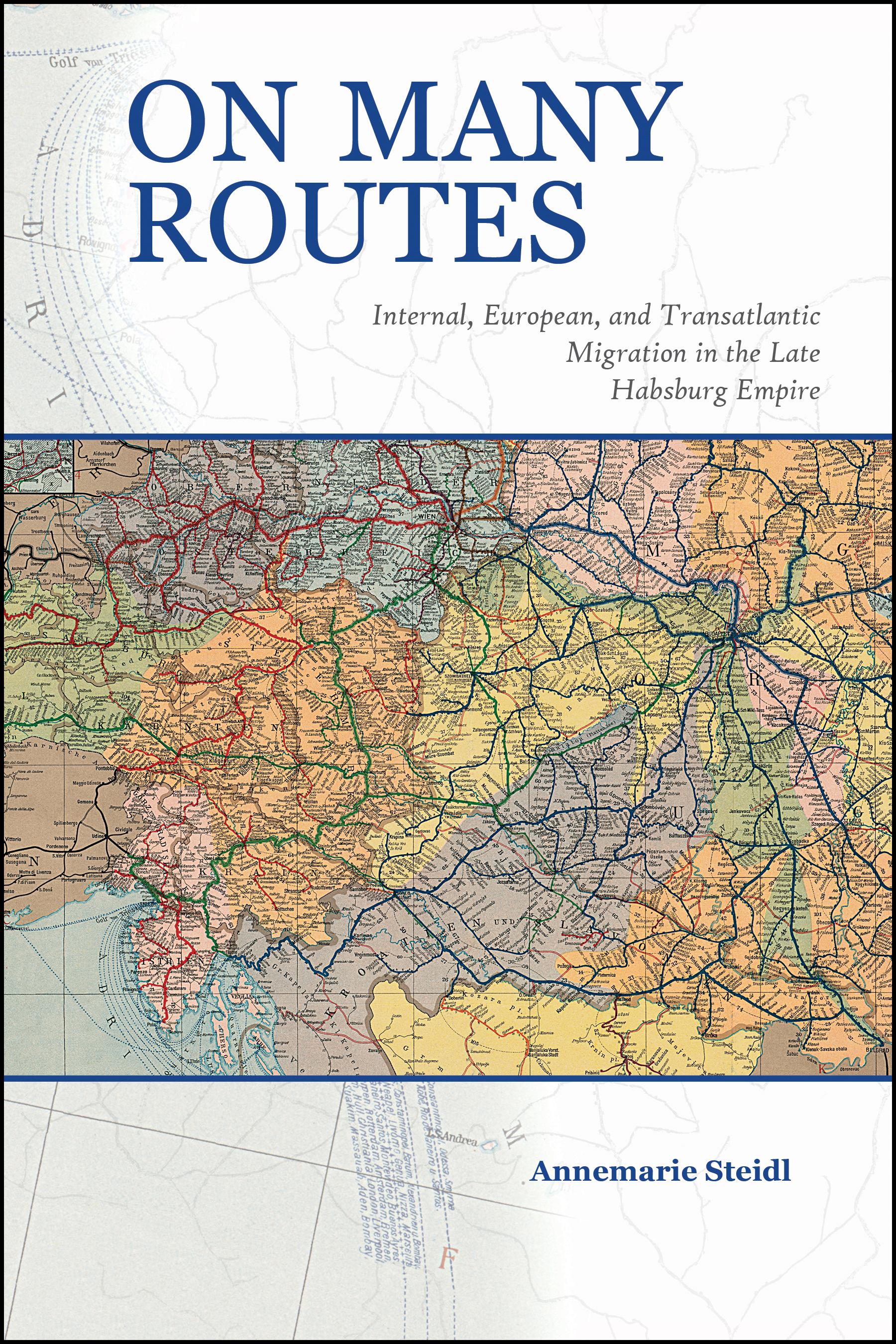
On Many Routes is about the history of human migration. With a focus on the Habsburg Empire, this innovative work presents an integrated and creative study of spatial mobilities: from short to long term, and intranational and inter-European to transatlantic. Migration was not just relegated to city folk, but likewise was the reality for rural dwellers, and we gain a better understanding of how sending and receiving states and shipping companies worked together to regulate migration and shape populations.
Bringing historical census data, governmental statistics, and ship manifests into conversation with centuries-old migration patterns of servants, agricultural workers, seasonal laborers, peddlers, and artisans—both male and female—this research argues that Central Europeans have long been mobile, that this mobility has been driven by diverse motivations, and that post-1850 transatlantic migration was an obvious extension of earlier spatial mobility patterns. Demonstrating the complexity of human mobility via an exploration of the links between overseas, continental, and internal migrations, On Many Routes shows that migrations to the United States, to the nearest coalfield, and to the urban capitals are embedded within complicated patterns of movement. There is no good reason to study internal apart from transnational moves, and combining these fields brings ample possibility to make migration research more relevant for the much broader field of social and economic history. This work poses an invaluable resource to the understudied area of Habsburg Empire migration studies, which it relocates within its wider European context and provides a major methodological contribution to the history of human migration more broadly. The ubiquity and functionality of human movement sheds light on the relationship between human nature and society, and challenges simplistic notions of human mobility then and now.
Before Memmo my notes were scattered across PDFs. Now a workspace pulls everything into one place — I see exactly what's still left to study.
Memmo's summaries are gold before exams. I don't have to re-read 800 pages two weeks before — just the important parts.
The AI chat has saved me the night before an exam more than once. I just keep asking until I get it — no waiting on a study group to reply.
The quizzes hit exactly what I need to know. Memmo tracks what I get stuck on — so I only practice what's worth it.
Flashcards with spaced repetition are magic. Memmo knows when I'm about to forget something and brings it back.
The AI podcasts are my favorite. I listen on my way to school and get a recap without sitting at a computer.

Handbok i kvalitativa metoder
281 kr

Hållbar utveckling: en introduktion för ingenjörer och andra problemlösare
334 kr

Brymans Samhällsvetenskapliga metoder
390 kr

Projektledning
491 kr

Den orättvisa hälsan: om socioekonomiska skillnader i hälsa och livslängd
326 kr

Vetenskapsteori för nybörjare
196 kr

Organizational Leadership
429 kr

På väg mot läraryrket
172 kr

Det sociala livet i skolan: Socialpsykologiska perspektiv
253 kr

Betygsättningens didaktik
151 kr

Personality
402 kr

Studying Leadership
404 kr

Managing Innovation
477 kr

Introduktion till samhällsvetenskaplig metod
347 kr

The Psychology of Sex and Gender
698 kr

Evidens och kunskap för socialt arbete
207 kr

Introduction to Leadership
605 kr