
Before Memmo my notes were scattered across PDFs. Now a workspace pulls everything into one place — I see exactly what's still left to study.
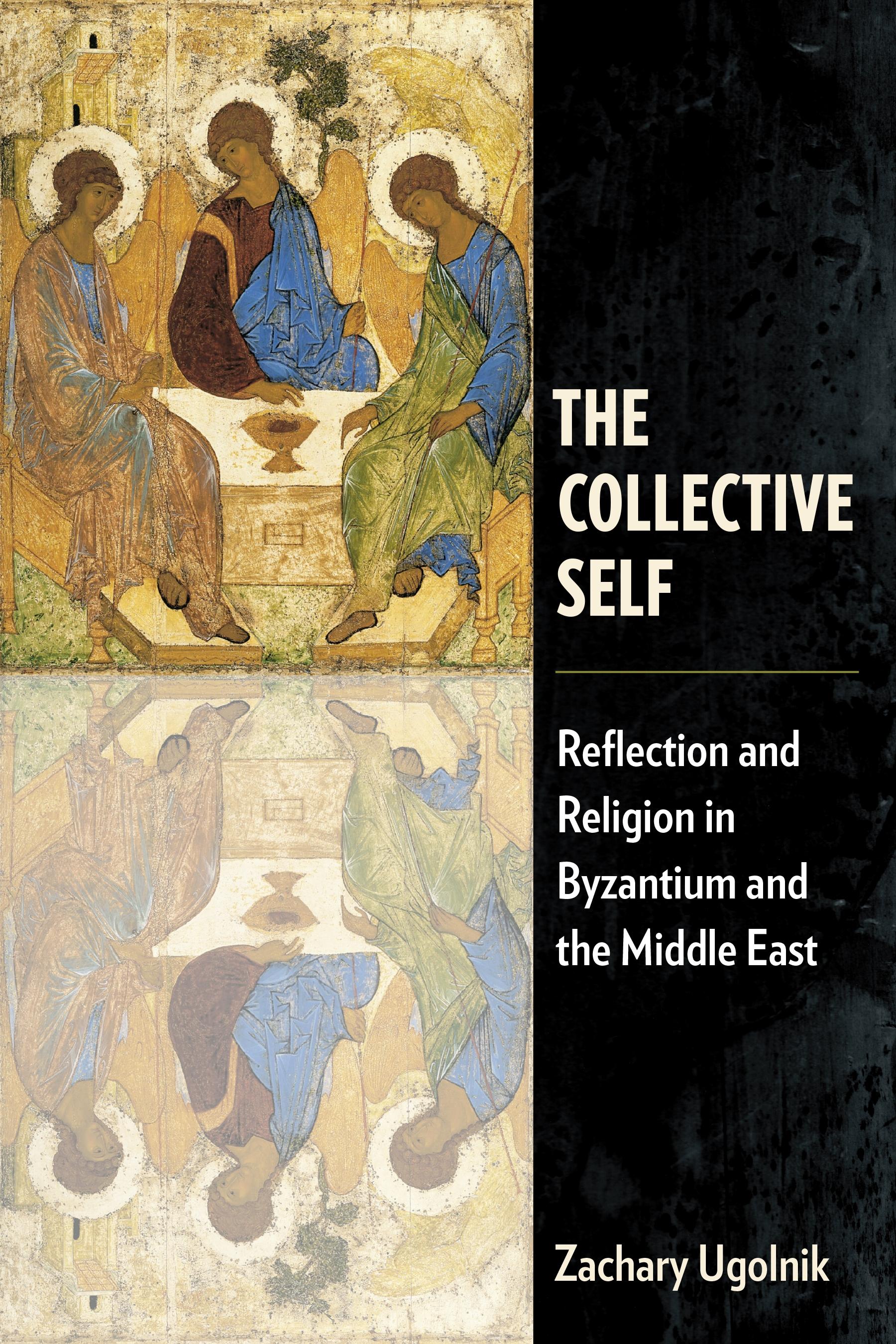
Reveals a conception of selfhood in Byzantine and Middle-Eastern sources that is fundamentally collective rather than merely individual, challenging Western-centric narratives of the modern self and enriching contemporary discussions on communal ways of being
What if the story we tell ourselves about of the modern self is incomplete? The Collective Self challenges narrow histories of Western selfhood that limit our understanding of both past and present.
Drawing on mirror imagery as a unifying thread, this book brings overlooked sources from the eastern Mediterranean, Middle East, and Orthodox Christian tradition into conversation with Western genealogies of “knowing thyself.” Reflections and mirrors—an ancient technology—become embedded in discussions of self-knowledge. From the Odes of Solomon and Plotinus’s Enneads to the writings of Evagrius, Athanasius, and Ephrem the Syrian, and concluding with medieval Syriac writers and a few emblematic Sufi sources, Ugolnik reveals a conception of selfhood that is fundamentally collective rather than merely individual.
The Collective Self intervenes in current debates about embodiment, interdependence, and communion by demonstrating that reflexivity and communal selfhood are not exclusively modern or post-modern innovations. By highlighting optical theories that allow convergence in perception and embodied notions of the self, this book problematizes the assumption that introspection is only mental or individual and challenges typical associations of what is ancient or modern, Eastern or Western.
In these texts, mirror imagery articulates a convergence of gazes between oneself, the divine, and glorified beings—what Ugolnik calls “I and We.” This synthesis occurs through communal practices of prayer, liturgy, psalm, and hymn singing that create pathways for practitioners to participate in each other’s subjectivity across space and time.
As we enter a new bio-technological and computational age, this alternative history of self-reflection offers vital resources for imagining more inclusive models of identity, empathy, and collective flourishing—reminding us that technology has long served as a medium for understanding who we are.
Before Memmo my notes were scattered across PDFs. Now a workspace pulls everything into one place — I see exactly what's still left to study.
Memmo's summaries are gold before exams. I don't have to re-read 800 pages two weeks before — just the important parts.
The AI chat has saved me the night before an exam more than once. I just keep asking until I get it — no waiting on a study group to reply.
The quizzes hit exactly what I need to know. Memmo tracks what I get stuck on — so I only practice what's worth it.
Flashcards with spaced repetition are magic. Memmo knows when I'm about to forget something and brings it back.
The AI podcasts are my favorite. I listen on my way to school and get a recap without sitting at a computer.

Handbok i kvalitativa metoder
281 kr

Hållbar utveckling: en introduktion för ingenjörer och andra problemlösare
334 kr

Brymans Samhällsvetenskapliga metoder
390 kr

Projektledning
491 kr

Den orättvisa hälsan: om socioekonomiska skillnader i hälsa och livslängd
326 kr

Organizational Leadership
429 kr

Vetenskapsteori för nybörjare
196 kr

På väg mot läraryrket
172 kr

Det sociala livet i skolan: Socialpsykologiska perspektiv
253 kr

Betygsättningens didaktik
151 kr

Personality
402 kr

Studying Leadership
404 kr

Managing Innovation
477 kr

Introduktion till samhällsvetenskaplig metod
347 kr

The Psychology of Sex and Gender
698 kr

Evidens och kunskap för socialt arbete
207 kr

Introduction to Leadership
605 kr