
Before Memmo my notes were scattered across PDFs. Now a workspace pulls everything into one place — I see exactly what's still left to study.
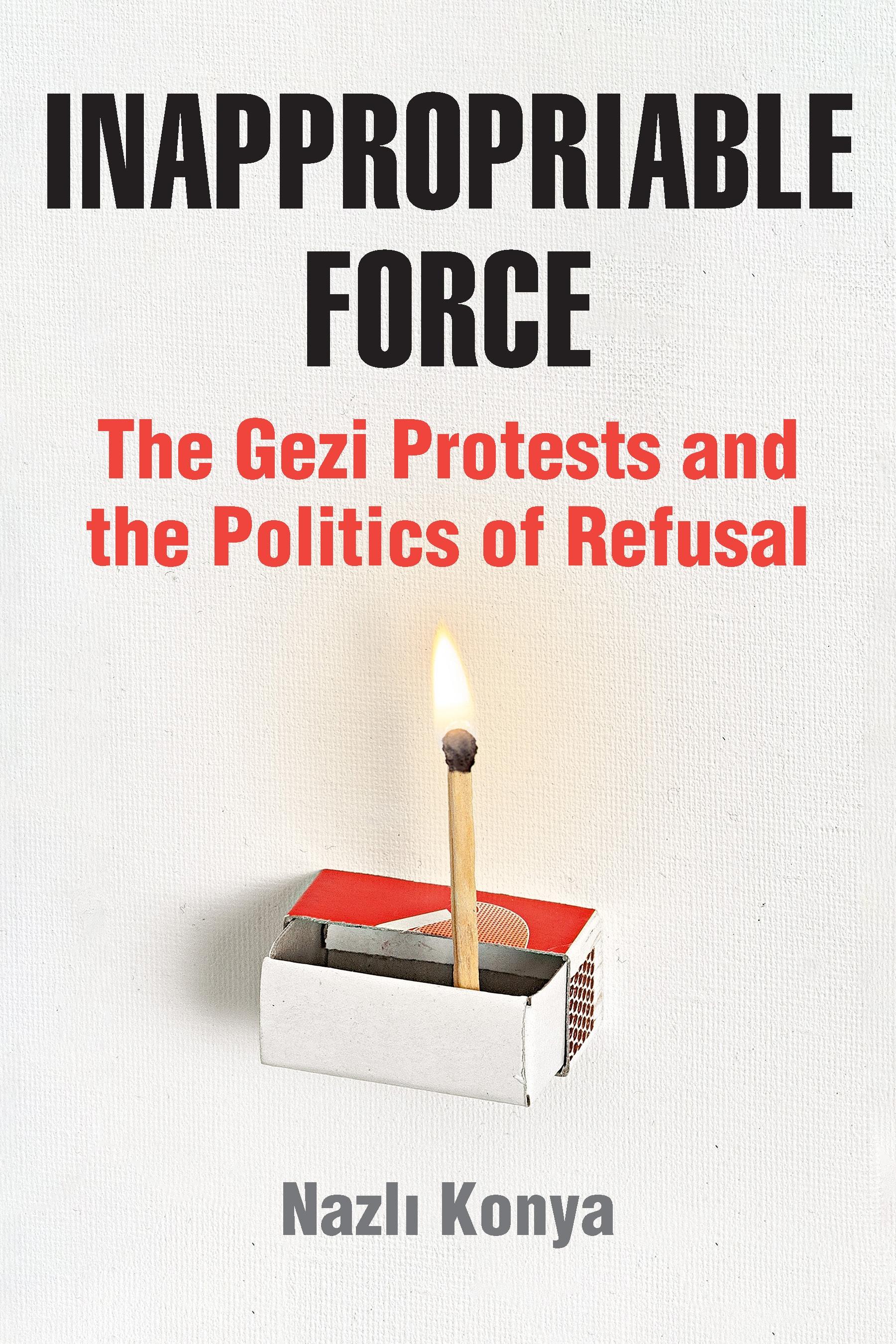
In the aftermath of the global mass protests of the 2010s, democratic theorists have shown renewed interest in conceptualizing popular mobilization and “the people.” A series of provocative works have theorized assembled crowds in the streets as sources of democratic authority, legitimacy, and sovereignty. These insightful accounts nevertheless often remain detached from the full range of the situated experiences of protesters.
Inappropriable Force brings the concrete, on-the-ground practices of Turkey’s 2013 Gezi Uprising into the foreground of theoretical reflection,asking what people gathered in the streets shared, desired, or refused, and what their public experimentations with politics, language, and aesthetics made possible. Working from the empirical particularities of Gezi to political theory, the book theorizes protest as a political meaning-making enterprise that reconfigures everyday regimes of sense, speech, and engagement.
Drawing on Gezi’s archives and engaging democratic and critical theorists such as Judith Butler, Giorgio Agamben, Walter Benjamin, Jacques Rancière, Joan Copjec, and René Girard, the book identifies a surplus in protest irreducible to the categories of popular sovereignty, authorization, or legitimation. This surplus—an inappropriable force—can only be experienced in practice, through collective action. Not predicated on unified will or hegemonic claims to peoplehood, it unfolds in plural modes of thinking, sociality, affect, creativity, and imagination that emerge when people assemble out of doors.
Adopting a practice-oriented and deparochializing approach, Inappropriable Force treats the political activities and cultural artifacts of the Gezi protests as texts of political theory in their own right. In doing so, it conceptualizes popular protest as a generative reservoir of political meaning and critical insight.
Before Memmo my notes were scattered across PDFs. Now a workspace pulls everything into one place — I see exactly what's still left to study.
Memmo's summaries are gold before exams. I don't have to re-read 800 pages two weeks before — just the important parts.
The AI chat has saved me the night before an exam more than once. I just keep asking until I get it — no waiting on a study group to reply.
The quizzes hit exactly what I need to know. Memmo tracks what I get stuck on — so I only practice what's worth it.
Flashcards with spaced repetition are magic. Memmo knows when I'm about to forget something and brings it back.
The AI podcasts are my favorite. I listen on my way to school and get a recap without sitting at a computer.

Handbok i kvalitativa metoder
281 kr

Hållbar utveckling: en introduktion för ingenjörer och andra problemlösare
334 kr

Brymans Samhällsvetenskapliga metoder
390 kr

Projektledning
491 kr

Den orättvisa hälsan: om socioekonomiska skillnader i hälsa och livslängd
326 kr

Organizational Leadership
429 kr

Vetenskapsteori för nybörjare
196 kr

På väg mot läraryrket
172 kr

Det sociala livet i skolan: Socialpsykologiska perspektiv
253 kr

Betygsättningens didaktik
151 kr

Personality
402 kr

Studying Leadership
404 kr

Managing Innovation
477 kr

Introduktion till samhällsvetenskaplig metod
347 kr

The Psychology of Sex and Gender
698 kr

Evidens och kunskap för socialt arbete
207 kr

Introduction to Leadership
605 kr