
Before Memmo my notes were scattered across PDFs. Now a workspace pulls everything into one place — I see exactly what's still left to study.
Available in a new digital edition with reflowable text suitable for e-readers
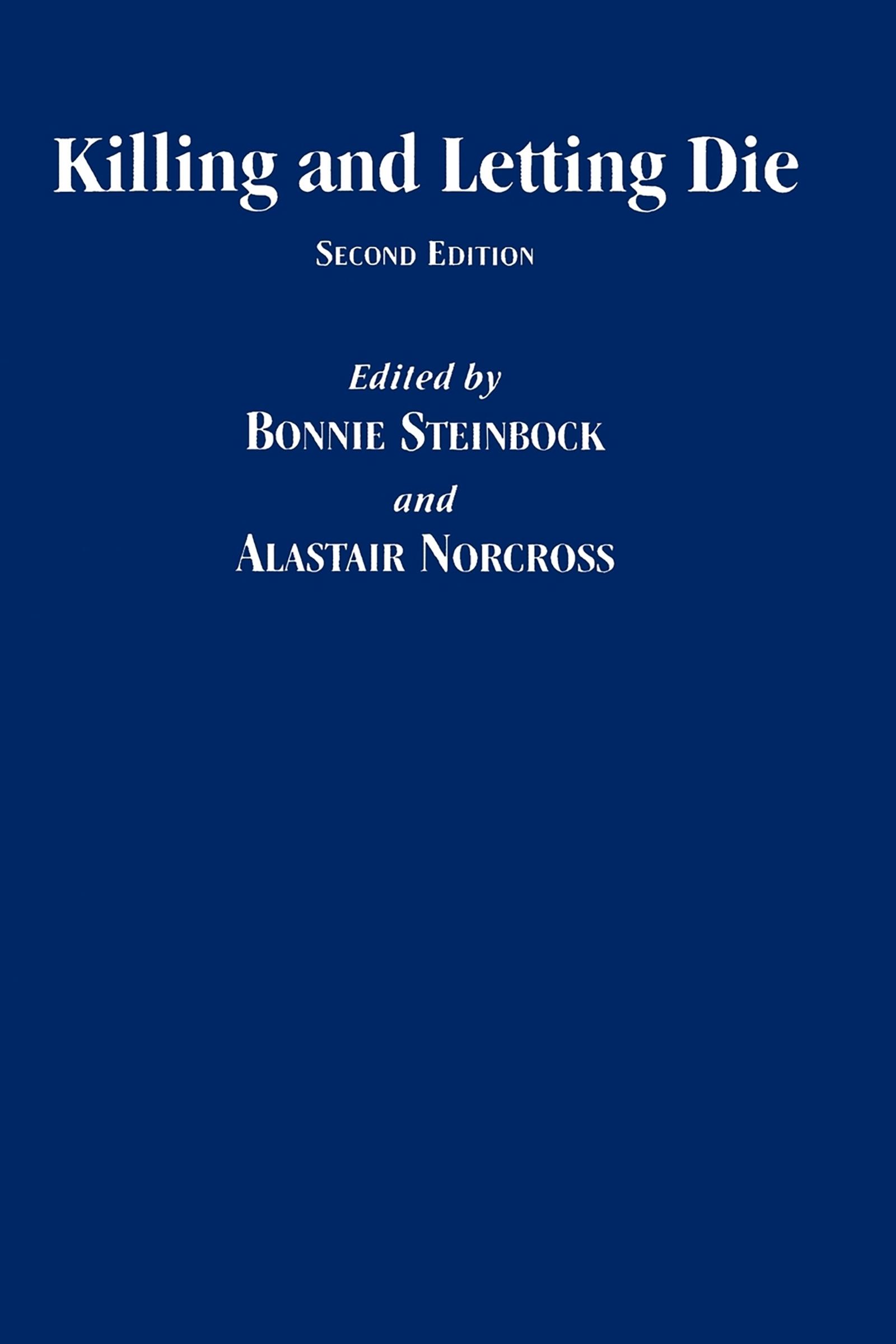
This collection contains twenty-one thought-provoking essays on the controversies surrounding the moral and legal distinctions between euthanasia and "letting die." Since public awareness of this issue has increased this second edition includes nine entirely new essays which bring the treatment of the subject up-to-date. The urgency of this issue can be gauged in recent developments such as the legalization of physician-assisted suicide in the Netherlands, "how-to" manuals topping the bestseller charts in the United States, and the many headlines devoted to Dr. Jack Kevorkian, who has assisted dozens of patients to die. The essays address the range of questions involved in this issue pertaining especially to the fields of medical ethics, public policymaking, and social philosophy. The discussions consider the decisions facing medical and public policymakers, how those decisions will affect the elderly and terminally ill, and the medical and legal ramifications for patients in a permanently vegetative state, as well as issues of parent/infant rights.
The book is divided into two sections. The first, "Euthanasia and the Termination of Life-Prolonging Treatment" includes an examination of the 1976 Karen Quinlan Supreme Court decision and selections from the 1990 Supreme Court decision in the case of Nancy Cruzan. Featured are articles by law professor George Fletcher and philosophers Michael Tooley, James Rachels, and Bonnie Steinbock, with new articles by Rachels, and Thomas Sullivan. The second section, "Philosophical Considerations," probes more deeply into the theoretical issues raised by the killing/letting die controversy, illustrating exceptionally well the dispute between two rival theories of ethics, consequentialism and deontology. It also includes a corpus of the standard thought on the debate by Jonathan Bennet, Daniel Dinello, Jeffrie Murphy, John Harris, Philipa Foot, Richard Trammell, and N. Ann Davis, and adds articles new to this edition by Bennett, Foot, Warren Quinn, Jeff McMahan, and Judith Lichtenberg.
Before Memmo my notes were scattered across PDFs. Now a workspace pulls everything into one place — I see exactly what's still left to study.
Memmo's summaries are gold before exams. I don't have to re-read 800 pages two weeks before — just the important parts.
The AI chat has saved me the night before an exam more than once. I just keep asking until I get it — no waiting on a study group to reply.
The quizzes hit exactly what I need to know. Memmo tracks what I get stuck on — so I only practice what's worth it.
Flashcards with spaced repetition are magic. Memmo knows when I'm about to forget something and brings it back.
The AI podcasts are my favorite. I listen on my way to school and get a recap without sitting at a computer.

Handbok i kvalitativa metoder
281 kr

Hållbar utveckling: en introduktion för ingenjörer och andra problemlösare
334 kr

Brymans Samhällsvetenskapliga metoder
390 kr

Projektledning
491 kr

Den orättvisa hälsan: om socioekonomiska skillnader i hälsa och livslängd
326 kr

Vetenskapsteori för nybörjare
196 kr

Organizational Leadership
429 kr

På väg mot läraryrket
172 kr

Det sociala livet i skolan: Socialpsykologiska perspektiv
253 kr

Betygsättningens didaktik
151 kr

Personality
402 kr

Studying Leadership
404 kr

Managing Innovation
477 kr

Introduktion till samhällsvetenskaplig metod
347 kr

The Psychology of Sex and Gender
698 kr

Evidens och kunskap för socialt arbete
207 kr

Introduction to Leadership
605 kr