
Before Memmo my notes were scattered across PDFs. Now a workspace pulls everything into one place — I see exactly what's still left to study.
Provides vital new evidence that Union veterans remained stubbornly opposed to the nation’s reconciliationist tendencies and unwilling to surrender the causes for which they fought
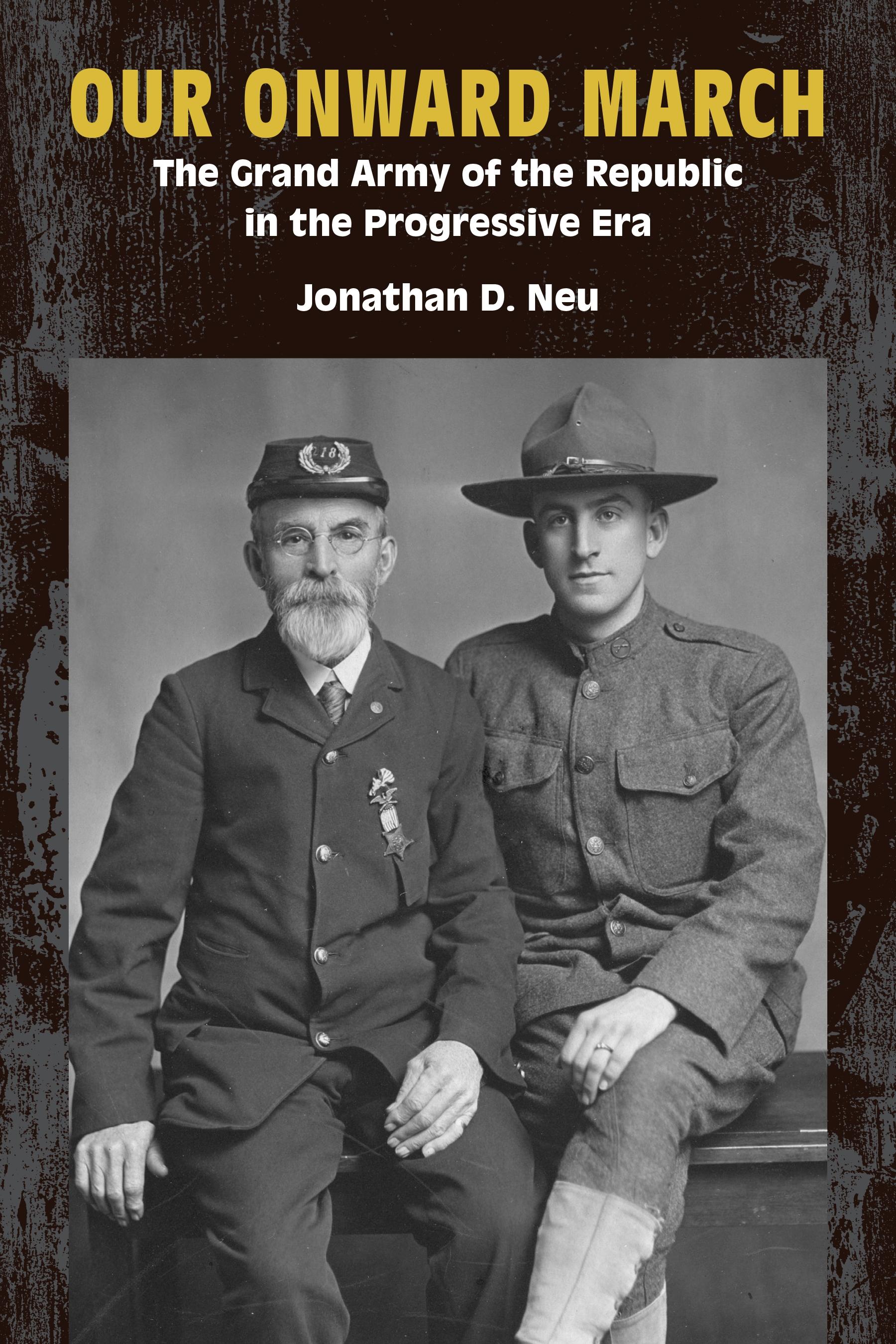
Union soldiers’ service to the nation did not end in 1865. Instead, it persisted well into the twentieth century as hundreds of thousands of veterans joined the Grand Army of the Republic (GAR) and directed the reform and improvement of their communities through their fraternal membership in thousands of local posts around the country.
In Our Onward March, Jonathan D. Neu shows how Union veterans of the GAR drew on lessons they learned in the Civil War—lessons about broad principles like democracy, freedom, and loyalty—to undertake grassroots civic projects designed to address the rampant social ills and challenging foreign policy issues associated with US modernization. Armed this time with sage wisdom and unwavering principles, they mobilized again to consummate their wartime victory with reform-minded activism on behalf of establishing an even more perfect Union.
Extending the boundaries of America’s post–Civil War era, Neu investigates the GAR during the Progressive era, a period in the organization’s history that scholars have overlooked. Countering stubborn notions that the GAR was merely a pension advocacy group or an insular bastion of sentimental nostalgia, he reveals instead that the organization reached a turning point in 1890, after which it became an active and decentralized civic association whose members worked to instill a commitment to public life, engagement with community issues, and pride in the democracy they had defended as young men.
Anchored by illuminating new source material, including post-minute books and fraternal records, Our Onward March places aging GAR members squarely among the diverse constellation of turn-of-the-century social reformers, using their memory of the Civil War to promote robust, veteran-led civic engagement. By situating Union veterans in this context, we see a more accurate portrait of the GAR post in American culture—as a local center of progressive activism.
Before Memmo my notes were scattered across PDFs. Now a workspace pulls everything into one place — I see exactly what's still left to study.
Memmo's summaries are gold before exams. I don't have to re-read 800 pages two weeks before — just the important parts.
The AI chat has saved me the night before an exam more than once. I just keep asking until I get it — no waiting on a study group to reply.
The quizzes hit exactly what I need to know. Memmo tracks what I get stuck on — so I only practice what's worth it.
Flashcards with spaced repetition are magic. Memmo knows when I'm about to forget something and brings it back.
The AI podcasts are my favorite. I listen on my way to school and get a recap without sitting at a computer.

Handbok i kvalitativa metoder
281 kr

Hållbar utveckling: en introduktion för ingenjörer och andra problemlösare
334 kr

Brymans Samhällsvetenskapliga metoder
390 kr

Projektledning
491 kr

Den orättvisa hälsan: om socioekonomiska skillnader i hälsa och livslängd
326 kr

Vetenskapsteori för nybörjare
196 kr

Organizational Leadership
429 kr

På väg mot läraryrket
172 kr

Det sociala livet i skolan: Socialpsykologiska perspektiv
253 kr

Betygsättningens didaktik
151 kr

Personality
402 kr

Studying Leadership
404 kr

Managing Innovation
477 kr

Introduktion till samhällsvetenskaplig metod
347 kr

The Psychology of Sex and Gender
698 kr

Evidens och kunskap för socialt arbete
207 kr

Introduction to Leadership
605 kr