
Before Memmo my notes were scattered across PDFs. Now a workspace pulls everything into one place — I see exactly what's still left to study.
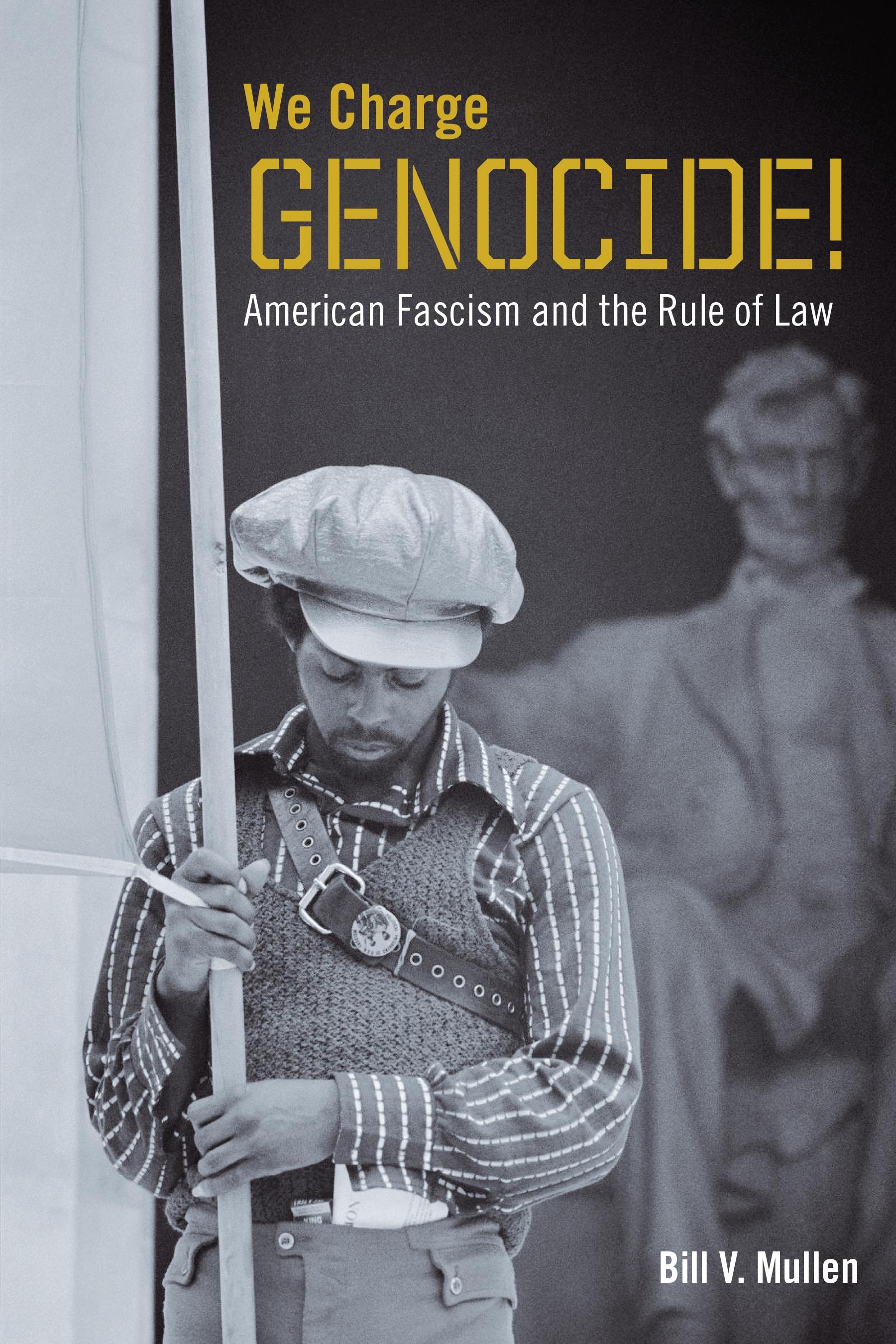
A revealing exploration of domestic fascism in the United States from the 1930s to the January 6th insurrection in Washington, D.C.
In 1951, the Civil Rights Congress presented to the United Nations We Charge Genocide, a more than two-hundred-page petition that held the United States accountable for genocide against African Americans. This landmark text represented the dawn of Black Lives Matter and is as relevant today as it was then, as evidenced by the rise of white supremacist groups across the nation and the January 6th Capitol riot which disclosed the specter of a fascist revival in the US Tracing this specter to its roots, We Charge Genocide! provides an original interpretation of American fascism as a permanent and longstanding current in US politics dating to the origins of US settler-colonialism.
Picking up where Angela Davis’s 1971 essay, “Political Prisoners, Prisons, and Black Liberation,” left off, We Charge Genocide! reveals how the United States legal system has contributed to the growth of fascist states and fascist movements domestically and internationally. American Studies scholar Bill V. Mullen contends that the preservation of a white supremacist world order—and the prevention of revolutionary threats to that order—structure the discourse and practice of US fascism. He names this fascist modality the “counterrevolution of law” in tribute to the radicals on the American Left, such as George Jackson, Angela Davis, Herbert Marcuse, and the Black Panther Party, who perceived the American state’s destruction of revolutionary groups and ideas as a distinctive form of American fascism. Mullen argues that US law, particularly US “race law,” has been an enabling mechanism for modalities of fascist rule that have locked historic blocs of non-white populations into an iron cage of legal and extralegal violence.
To this end We Charge Genocide! offers a legal historiography of US fascism rooted in law’s capacity to legitimate and sustain racial domination. By recovering the legacy of important organizations, such as the Civil Rights Congress and Black Panther Party, which have both theorized and resisted American legal fascism, Mullen demonstrates how their work and critical theorists like Davis, Marcuse, Jackson, Walter Benjamin, and Ernst Fraenkel illuminate the threat of American legal fascism to its most vulnerable racialized victims of state violence in our time, including gender and transgender violence.
Before Memmo my notes were scattered across PDFs. Now a workspace pulls everything into one place — I see exactly what's still left to study.
Memmo's summaries are gold before exams. I don't have to re-read 800 pages two weeks before — just the important parts.
The AI chat has saved me the night before an exam more than once. I just keep asking until I get it — no waiting on a study group to reply.
The quizzes hit exactly what I need to know. Memmo tracks what I get stuck on — so I only practice what's worth it.
Flashcards with spaced repetition are magic. Memmo knows when I'm about to forget something and brings it back.
The AI podcasts are my favorite. I listen on my way to school and get a recap without sitting at a computer.

Handbok i kvalitativa metoder
281 kr

Hållbar utveckling: en introduktion för ingenjörer och andra problemlösare
334 kr

Brymans Samhällsvetenskapliga metoder
390 kr

Projektledning
491 kr

Den orättvisa hälsan: om socioekonomiska skillnader i hälsa och livslängd
326 kr

Organizational Leadership
429 kr

Vetenskapsteori för nybörjare
196 kr

På väg mot läraryrket
172 kr

Det sociala livet i skolan: Socialpsykologiska perspektiv
253 kr

Betygsättningens didaktik
151 kr

Personality
402 kr

Studying Leadership
404 kr

Managing Innovation
477 kr

Introduktion till samhällsvetenskaplig metod
347 kr

The Psychology of Sex and Gender
698 kr

Evidens och kunskap för socialt arbete
207 kr

Introduction to Leadership
605 kr