
Before Memmo my notes were scattered across PDFs. Now a workspace pulls everything into one place — I see exactly what's still left to study.
A dramatic and necessary rethinking of the meaning of Democracy
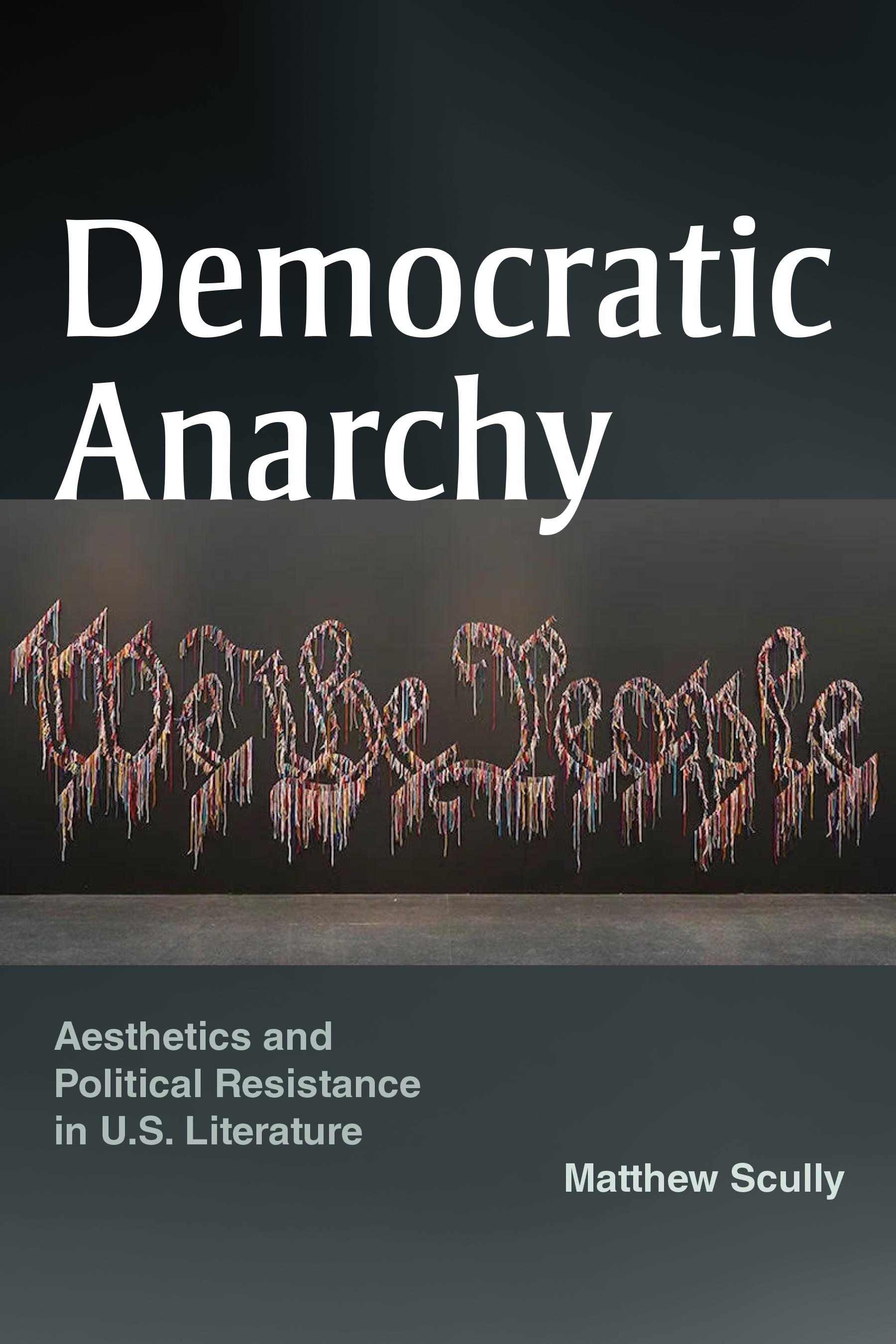
Democratic Anarchy grapples with an uncomfortable but obvious truth inimical to democracy: both aesthetics and politics depend on the structuring antagonism of inclusion and exclusion. Yet in Democratic Anarchy, Matthew Scully asks, how can “the people” be represented in a way that acknowledges what remains unrepresentable? What would it mean to face up to the constitutive exclusions that haunt U.S. democracy and its anxious fantasies of equality?
Synthesizing a broad range of theoretical traditions and interlocutors—including Lacan, Rancière, Edelman, and Hartman—Democratic Anarchy polemically declares that there has never been, nor can there ever be, a realized democracy in the U.S. because democracy always depends on the hierarchical institution of a formal order by one part of the population over another. Engaging with an expansive corpus of American literature and art (Harriet Jacobs, Nathaniel Hawthorne, Louis Zukofsky, Thomas Pynchon, Toni Morrison, Theresa Hak Kyung Cha, Nari Ward, Ocean Vuong, and Safiya Sinclair), Democratic Anarchy argues that many liberal concepts and institutions are in fact structurally opposed to democratic equality because they depend on regulating what can appear and in what form.
By focusing on works that disrupt this regulatory impulse, Scully shows how rhetorical strategies of interruption, excess, and disorder figure the anarchic equality that inegalitarian fantasies of democracy disavow. Democratic Anarchy develops a rigorous theory of equality that refuses to repeat the inequalities against which it positions itself, and it does so by turning to moments of resistance—both aesthetic and political—inaugurated by the equality that inheres in and antagonizes the order of things.
Before Memmo my notes were scattered across PDFs. Now a workspace pulls everything into one place — I see exactly what's still left to study.
Memmo's summaries are gold before exams. I don't have to re-read 800 pages two weeks before — just the important parts.
The AI chat has saved me the night before an exam more than once. I just keep asking until I get it — no waiting on a study group to reply.
The quizzes hit exactly what I need to know. Memmo tracks what I get stuck on — so I only practice what's worth it.
Flashcards with spaced repetition are magic. Memmo knows when I'm about to forget something and brings it back.
The AI podcasts are my favorite. I listen on my way to school and get a recap without sitting at a computer.

Handbok i kvalitativa metoder
281 kr

Hållbar utveckling: en introduktion för ingenjörer och andra problemlösare
334 kr

Brymans Samhällsvetenskapliga metoder
390 kr

Projektledning
491 kr

Den orättvisa hälsan: om socioekonomiska skillnader i hälsa och livslängd
326 kr

Organizational Leadership
429 kr

Vetenskapsteori för nybörjare
196 kr

På väg mot läraryrket
172 kr

Det sociala livet i skolan: Socialpsykologiska perspektiv
253 kr

Betygsättningens didaktik
151 kr

Personality
402 kr

Studying Leadership
404 kr

Managing Innovation
477 kr

Introduktion till samhällsvetenskaplig metod
347 kr

The Psychology of Sex and Gender
698 kr

Evidens och kunskap för socialt arbete
207 kr

Introduction to Leadership
605 kr