
Before Memmo my notes were scattered across PDFs. Now a workspace pulls everything into one place — I see exactly what's still left to study.
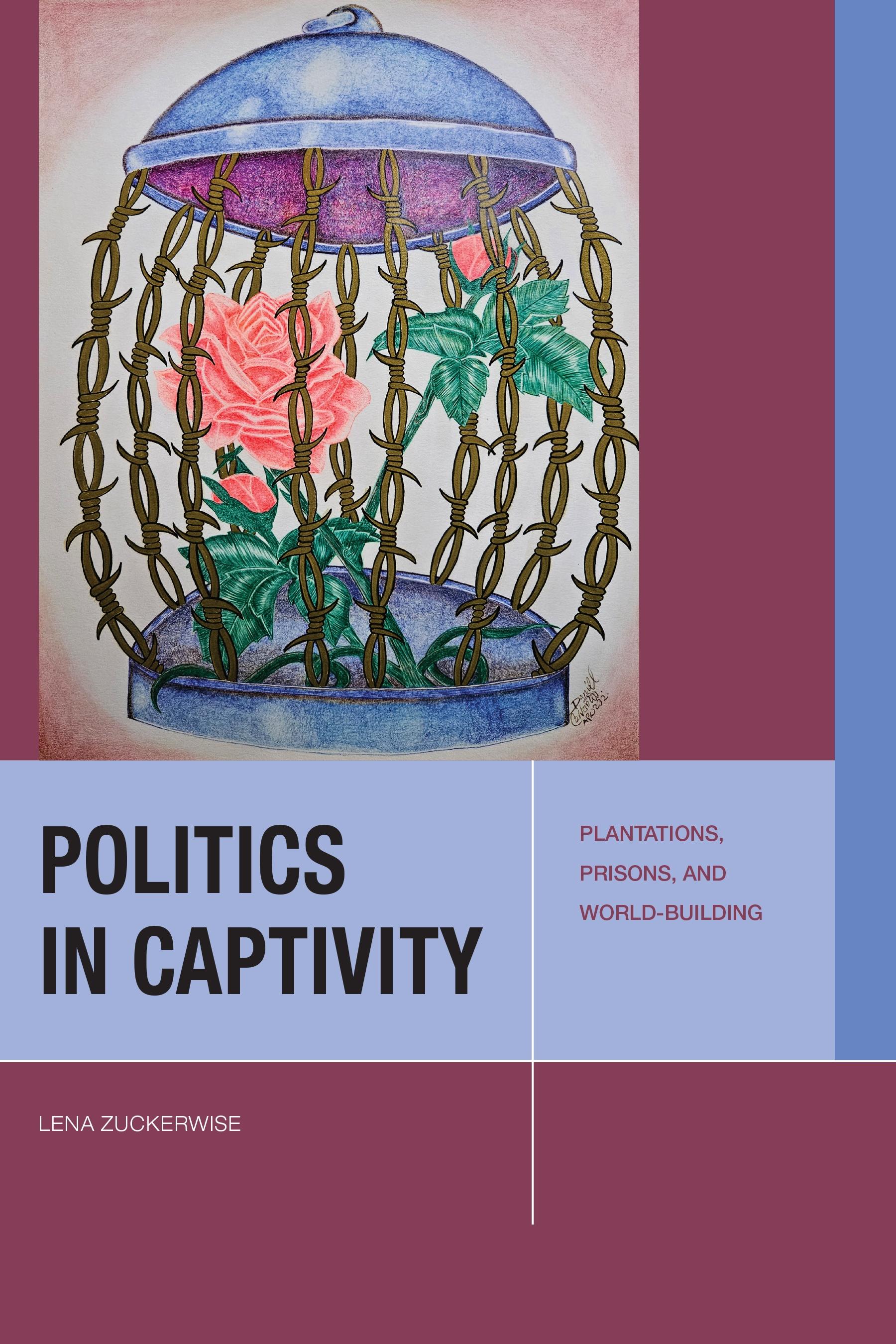
From the 1811 German Coast Slave Rebellion to the 1971 Attica Prison Uprising, from the truancy of enslaved women to the extreme self-discipline exercised by prisoners in solitary confinement, Black Americans have, through time, resisted racial regimes in extraordinary and everyday ways. Though these acts of large and small-scale resistance to slavery and incarceration are radical and transformative, they have often gone unnoticed. This book is about Black rebellion in captivity and the ways that many of the conventional well-worn constructs of academic political theory render its political dimensions obscure and indiscernible. While Hannah Arendt is an unlikely theorist to figure prominently in any discussion of Black politics, her concepts of world and worldlessness offer an indispensable framework for articulating a theory of resistance to chattel and carceral captivity.
Politics in Captivity begins by taking seriously the ways in which slavery and incarceration share important commonalities, including historical continuity. In Zuckerwise’s account of this commonality, the point of connection between enslaved and incarcerated people is not exploited labor, but rather resistance. The relations between the rebellions of both groups appear in the writings of Muhammed Ahmad, Angela Davis, George Jackson, Ruchell Magee, and Assata Shakur, a genre Zuckerwise calls Black carceral political thought. The insights of these thinkers and activists figure into Zuckerwise’s analyses of largescale uprisings and quotidian practices of resistance, which she conceives as acts of world-building, against conditions of forced worldlessness. In a moment when a collective racial reckoning is underway; when Critical Race Theory is a target of the Right; when prison abolition has become more prominent in mainstream political discourse, it is now more important than ever to look to historical and contemporary practices of resistance to white domination.
Before Memmo my notes were scattered across PDFs. Now a workspace pulls everything into one place — I see exactly what's still left to study.
Memmo's summaries are gold before exams. I don't have to re-read 800 pages two weeks before — just the important parts.
The AI chat has saved me the night before an exam more than once. I just keep asking until I get it — no waiting on a study group to reply.
The quizzes hit exactly what I need to know. Memmo tracks what I get stuck on — so I only practice what's worth it.
Flashcards with spaced repetition are magic. Memmo knows when I'm about to forget something and brings it back.
The AI podcasts are my favorite. I listen on my way to school and get a recap without sitting at a computer.

Handbok i kvalitativa metoder
281 kr

Hållbar utveckling: en introduktion för ingenjörer och andra problemlösare
334 kr

Brymans Samhällsvetenskapliga metoder
390 kr

Projektledning
491 kr

Den orättvisa hälsan: om socioekonomiska skillnader i hälsa och livslängd
326 kr

Organizational Leadership
429 kr

Vetenskapsteori för nybörjare
196 kr

På väg mot läraryrket
172 kr

Det sociala livet i skolan: Socialpsykologiska perspektiv
253 kr

Betygsättningens didaktik
151 kr

Personality
402 kr

Studying Leadership
404 kr

Managing Innovation
477 kr

Introduktion till samhällsvetenskaplig metod
347 kr

The Psychology of Sex and Gender
698 kr

Evidens och kunskap för socialt arbete
207 kr

Introduction to Leadership
605 kr