
Before Memmo my notes were scattered across PDFs. Now a workspace pulls everything into one place — I see exactly what's still left to study.
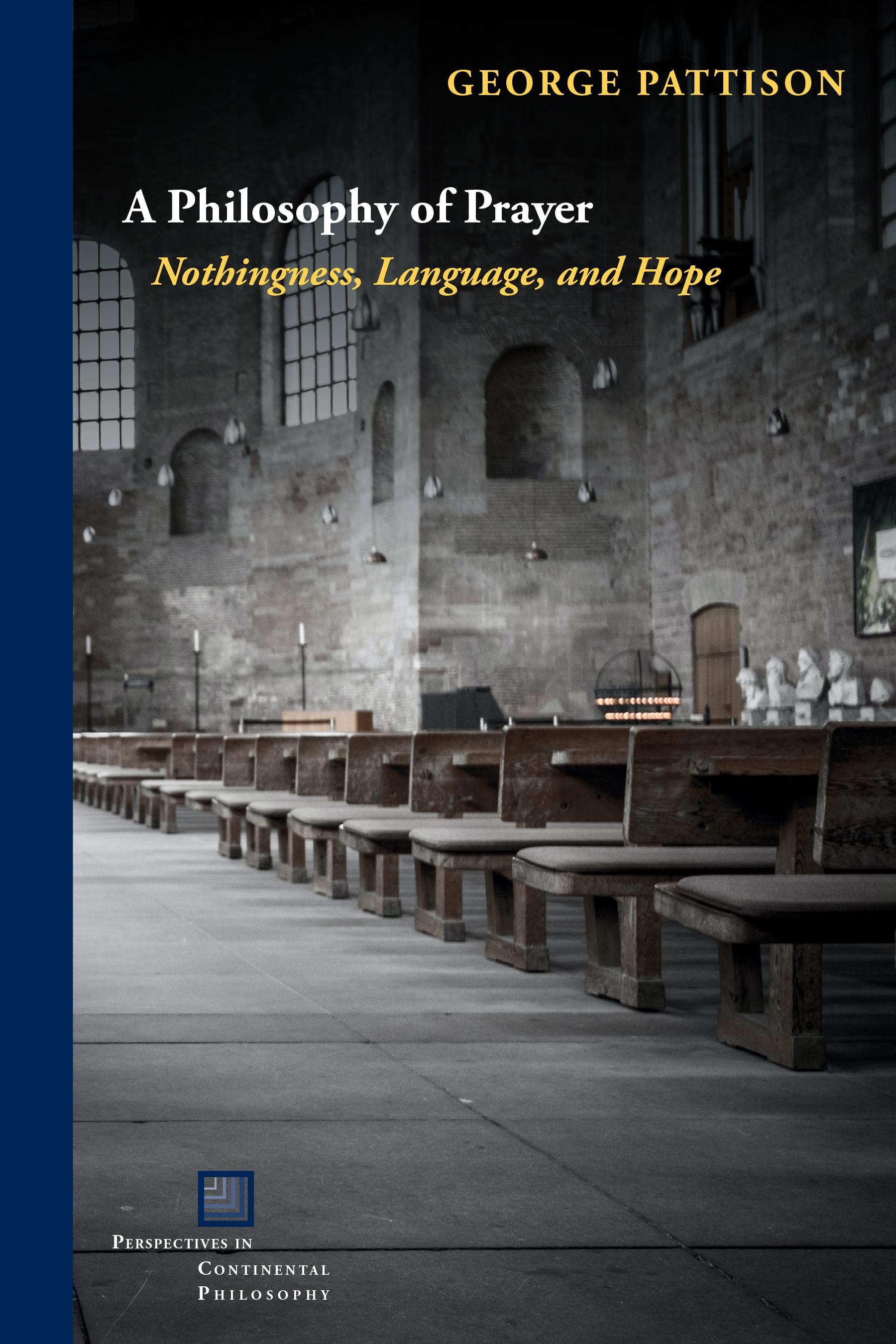
Exploring the silence of prayer in Post-Kantian philosophy and traditional spirituality
A Philosophy of Prayer explores prayer within the perspective of post-Kantian philosophy. Against a background of traditional sources, including Augustine, The Cloud of Unknowing, and the seventeenth-century French school of spirituality, the book uses Schleiermacher, Kierkegaard, Dostoevsky, Heidegger, Berdyaev, Tillich, Marcel, Simone Weil, Emmanuel Levinas, and Jean- Louis Chrétien to provide an interpretation of what is meant by the passivity and self-annihilation of the praying self, suggesting an “apophatics of the personality.”
Pattison pays particular attention to the question of language and the implications of the role given to silence in traditional texts, arguing that language remains a defining element of the human–God relationship and that silence is not to be construed as the negation of language but as the revelation of the depth of language itself. The basic structure of prayer is shown to be implicitly eschatological, oriented toward a coming kingdom of justice and peace while, at the same time, expressing a deep desire for ontological homecoming, a tension manifest in, respectively, Levinas and Heidegger. On Pattison’s reading, prayer calls for and develops a particular orientation of the self toward existence, corresponding to the virtue of humility, long understood as the basic Christian virtue. This is shown to be in tension with modernity’s commitment to strong versions of autonomy. However, the choice of humility is not presented as the reinstatement of religious heteronomy but as a free choice of the praying self.
Before Memmo my notes were scattered across PDFs. Now a workspace pulls everything into one place — I see exactly what's still left to study.
Memmo's summaries are gold before exams. I don't have to re-read 800 pages two weeks before — just the important parts.
The AI chat has saved me the night before an exam more than once. I just keep asking until I get it — no waiting on a study group to reply.
The quizzes hit exactly what I need to know. Memmo tracks what I get stuck on — so I only practice what's worth it.
Flashcards with spaced repetition are magic. Memmo knows when I'm about to forget something and brings it back.
The AI podcasts are my favorite. I listen on my way to school and get a recap without sitting at a computer.

Handbok i kvalitativa metoder
281 kr

Hållbar utveckling: en introduktion för ingenjörer och andra problemlösare
334 kr

Brymans Samhällsvetenskapliga metoder
390 kr

Projektledning
491 kr

Den orättvisa hälsan: om socioekonomiska skillnader i hälsa och livslängd
326 kr

Organizational Leadership
429 kr

Vetenskapsteori för nybörjare
196 kr

På väg mot läraryrket
172 kr

Det sociala livet i skolan: Socialpsykologiska perspektiv
253 kr

Betygsättningens didaktik
151 kr

Personality
402 kr

Studying Leadership
404 kr

Managing Innovation
477 kr

Introduktion till samhällsvetenskaplig metod
347 kr

The Psychology of Sex and Gender
698 kr

Evidens och kunskap för socialt arbete
207 kr

Introduction to Leadership
605 kr