
Before Memmo my notes were scattered across PDFs. Now a workspace pulls everything into one place — I see exactly what's still left to study.
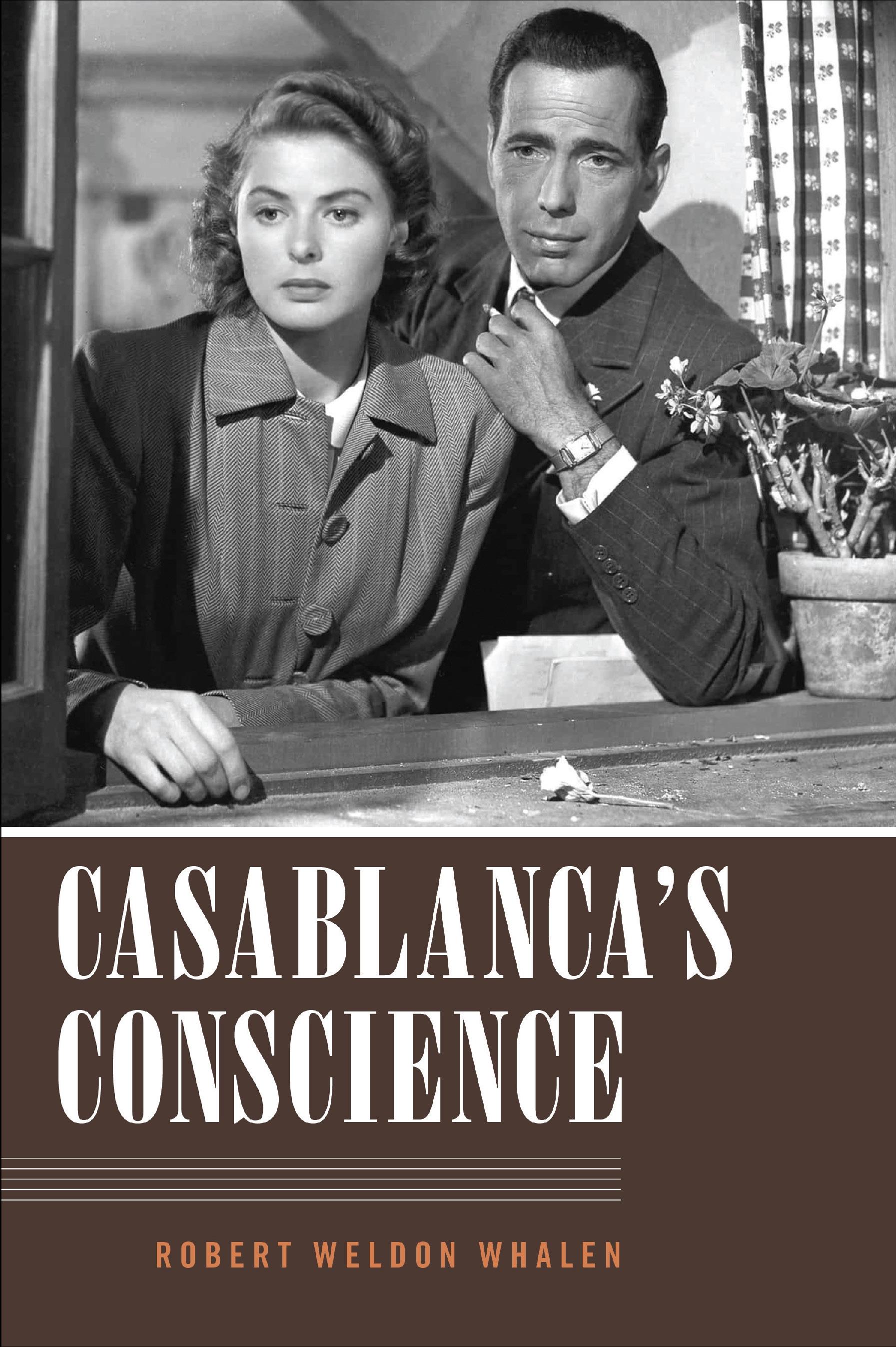
A new look at a beloved classic film that explores the philosophical dynamics of Casablanca
Celebrating its eightieth anniversary this year, Casablanca remains one of the world’s most enduringly favorite movies. It won three Academy Awards for Best Picture, Best Director, and Best Adapted Screenplay. It is still commonly quoted: “We’ll always have Paris” and “Here’s looking at you, kid” And who can forget, “You must remember this…a kiss is just a kiss.” Yet no one expected much to come of this little film, certainly not its blockbuster stars or even the studio producing it. So how did this hastily cranked-out 1940s film, despite its many limitations, become one of the greatest films ever made? How is it that year after year, decade after decade, it continues to appear in the lists of the greatest movies ever produced? And why do audiences still weep when Rick and Ilsa part? The answer, according to Casablanca’s Conscience, is to paraphrase Rick, “It’s true.”
Much has already been written about the film and the career-defining performances of Bogart and Bergman. Casablanca is an epic tale of love, betrayal, and sacrifice set against the backdrop of World War II. Yet decades later, it continues to capture the imagination of filmgoers. In Casablanca’s Conscience, author Robert Weldon Whalen explains why it still resonates so deeply. Applying a new lens to an old classic, Whalen focuses on the film’s timeless themes—Exile, Purgatory, Irony, Love, Resistance, and Memory. He then engages the fictional characters—Rick, Ilsa, and the others—against the philosophical and theological discourse of their real contemporaries, Hannah Arendt, Dietrich Bonhoeffer, and Albert Camus. The relationships between fictional and historical persons illuminate both the film’s era as well as perennial human concerns. Both the film and the work of the philosophers explore dimensions of the human experience, which, while extreme, are familiar to everyone. It’s the themes that resonate with the viewer, that have sustained it as an evergreen classic all these years.
Before Memmo my notes were scattered across PDFs. Now a workspace pulls everything into one place — I see exactly what's still left to study.
Memmo's summaries are gold before exams. I don't have to re-read 800 pages two weeks before — just the important parts.
The AI chat has saved me the night before an exam more than once. I just keep asking until I get it — no waiting on a study group to reply.
The quizzes hit exactly what I need to know. Memmo tracks what I get stuck on — so I only practice what's worth it.
Flashcards with spaced repetition are magic. Memmo knows when I'm about to forget something and brings it back.
The AI podcasts are my favorite. I listen on my way to school and get a recap without sitting at a computer.

Handbok i kvalitativa metoder
281 kr

Hållbar utveckling: en introduktion för ingenjörer och andra problemlösare
334 kr

Brymans Samhällsvetenskapliga metoder
390 kr

Projektledning
491 kr

Den orättvisa hälsan: om socioekonomiska skillnader i hälsa och livslängd
326 kr

Vetenskapsteori för nybörjare
196 kr

Organizational Leadership
429 kr

På väg mot läraryrket
172 kr

Det sociala livet i skolan: Socialpsykologiska perspektiv
253 kr

Betygsättningens didaktik
151 kr

Personality
402 kr

Studying Leadership
404 kr

Managing Innovation
477 kr

Introduktion till samhällsvetenskaplig metod
347 kr

The Psychology of Sex and Gender
698 kr

Evidens och kunskap för socialt arbete
207 kr

Introduction to Leadership
605 kr