
Before Memmo my notes were scattered across PDFs. Now a workspace pulls everything into one place — I see exactly what's still left to study.
A rare and powerful illustration of what it takes to become a sustainable, community-embedded organization that continually grows the next generation of compassionate leaders.
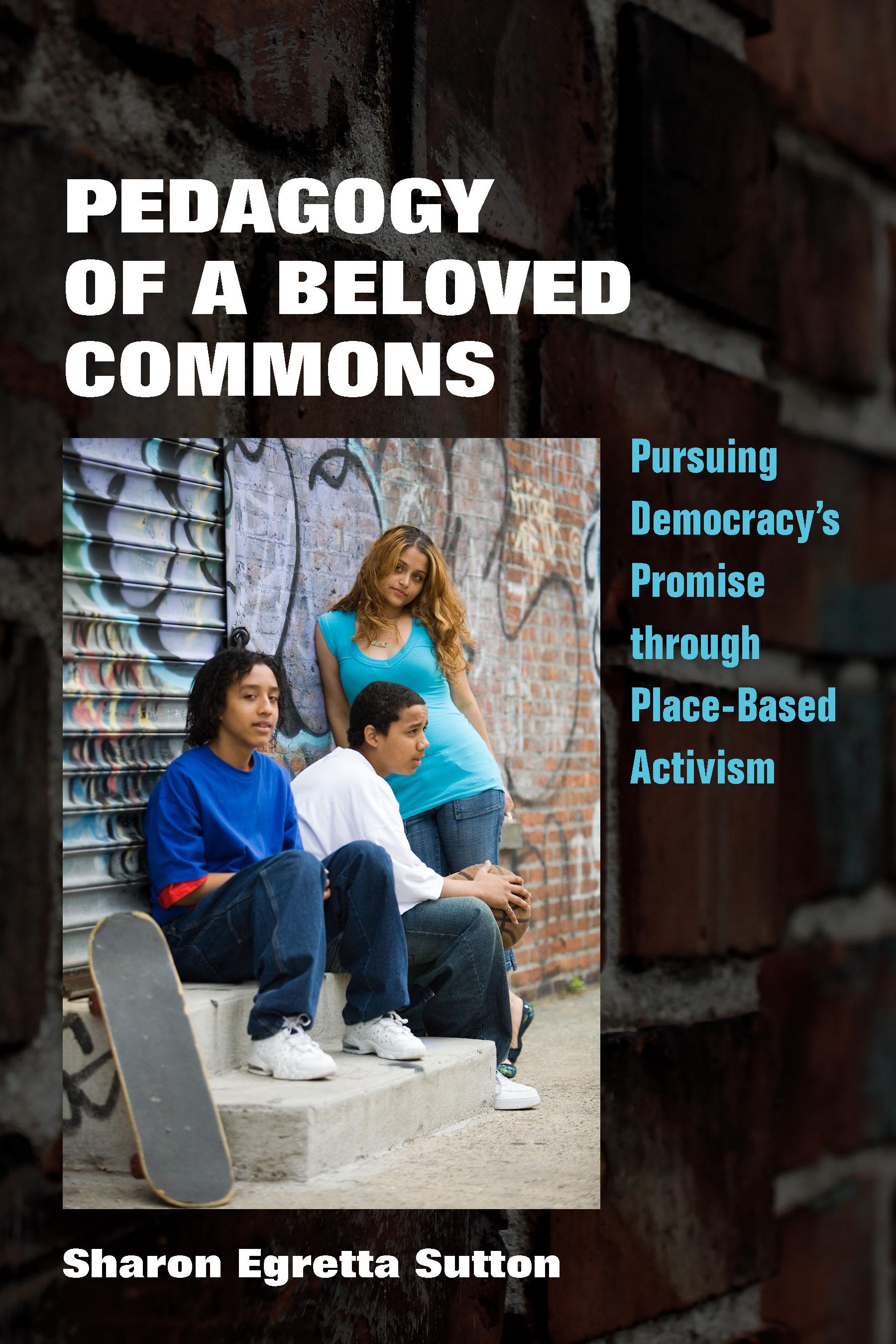
This essential, timely book meets us at our current moment of crisis to offer hope that American democracy’s stalled trajectory toward its founding creed to embrace all, and not just some, can indeed be re-invigorated. Pedagogy of a Beloved Commons is about low-income youth of color working within justice-oriented, community-based organizations to improve the social and spatial conditions in their surroundings. It draws from hundreds of pages of data, some collected over a decade ago by graduate research assistants at three universities and some collected recently by a graduate research assistant at a fourth university, to present verbatim quotes from interviews with constituents of three youth-serving organizations. The book posits that the disinvested neighborhoods where youth experience abandonment and marginality in fact can serve as a call to action, given appropriate organizational support.
Pedagogy of a Beloved Commons envisions a place-based critical pedagogy that can provide young people with the practical skills and deep values to engage with today’s economic, racial, and ecological crises. It offers a welcome antidote to a neoliberal education system that has not only veered away from its public mandate to advance democratic citizenship but that has also reinforced today’s insidious economic inequality, rendering illusive the idea that rich and poor can work together toward a common good. Between these pages resonates a passionate call for an approach to cultivating citizens who have the critical skills to challenge injustice, the courage to hold the rich and powerful accountable, and the empathy to advance not just their own self-interest but also the health and well-being of their communities and the planet. The author proposes that such citizens develop by exercising collective agency in “the commons,” a political and psychic space whose values are mapped out in physical space. Through the expert use of an architect’s lens, this groundbreaking book argues that the three-dimensional concreteness of the nation’s disinvested neighborhoods provides a virtual stage where disenfranchised youth can experiment with collective life, become more discerning about the forces that have shaped their communities, and practice working toward just and inclusive futures.
Merging Paolo Freire’s seminal theory of critical pedagogy with Grace Lee Boggs’s belief that hands-on community-building can disrupt the ever more destructive forces of neoliberal capitalism, Pedagogy of a Beloved Commons refines an aspirational framework for a pathway forward through a careful analysis of three exemplar organizations. It offers rich, unique portraits of young people transforming their communities in southwest Detroit, Wai’anae, and Harlem, respectively illustrating place-based activism through theater, organic farming, and critical inquiry. Here activism is framed as the hands-on engagement of youth in addressing inequities in the commons of their neighborhoods through small but persistent interventions that also help them learn the language of solidarity and collectivity that a sustainable democracy needs. Pedagogy of a Beloved Commons is a must-read for our times and for our future.
Before Memmo my notes were scattered across PDFs. Now a workspace pulls everything into one place — I see exactly what's still left to study.
Memmo's summaries are gold before exams. I don't have to re-read 800 pages two weeks before — just the important parts.
The AI chat has saved me the night before an exam more than once. I just keep asking until I get it — no waiting on a study group to reply.
The quizzes hit exactly what I need to know. Memmo tracks what I get stuck on — so I only practice what's worth it.
Flashcards with spaced repetition are magic. Memmo knows when I'm about to forget something and brings it back.
The AI podcasts are my favorite. I listen on my way to school and get a recap without sitting at a computer.

Handbok i kvalitativa metoder
281 kr

Hållbar utveckling: en introduktion för ingenjörer och andra problemlösare
334 kr

Brymans Samhällsvetenskapliga metoder
390 kr

Projektledning
491 kr

Den orättvisa hälsan: om socioekonomiska skillnader i hälsa och livslängd
326 kr

Vetenskapsteori för nybörjare
196 kr

Organizational Leadership
429 kr

På väg mot läraryrket
172 kr

Det sociala livet i skolan: Socialpsykologiska perspektiv
253 kr

Betygsättningens didaktik
151 kr

Personality
402 kr

Studying Leadership
404 kr

Managing Innovation
477 kr

Introduktion till samhällsvetenskaplig metod
347 kr

The Psychology of Sex and Gender
698 kr

Evidens och kunskap för socialt arbete
207 kr

Introduction to Leadership
605 kr