
Before Memmo my notes were scattered across PDFs. Now a workspace pulls everything into one place — I see exactly what's still left to study.
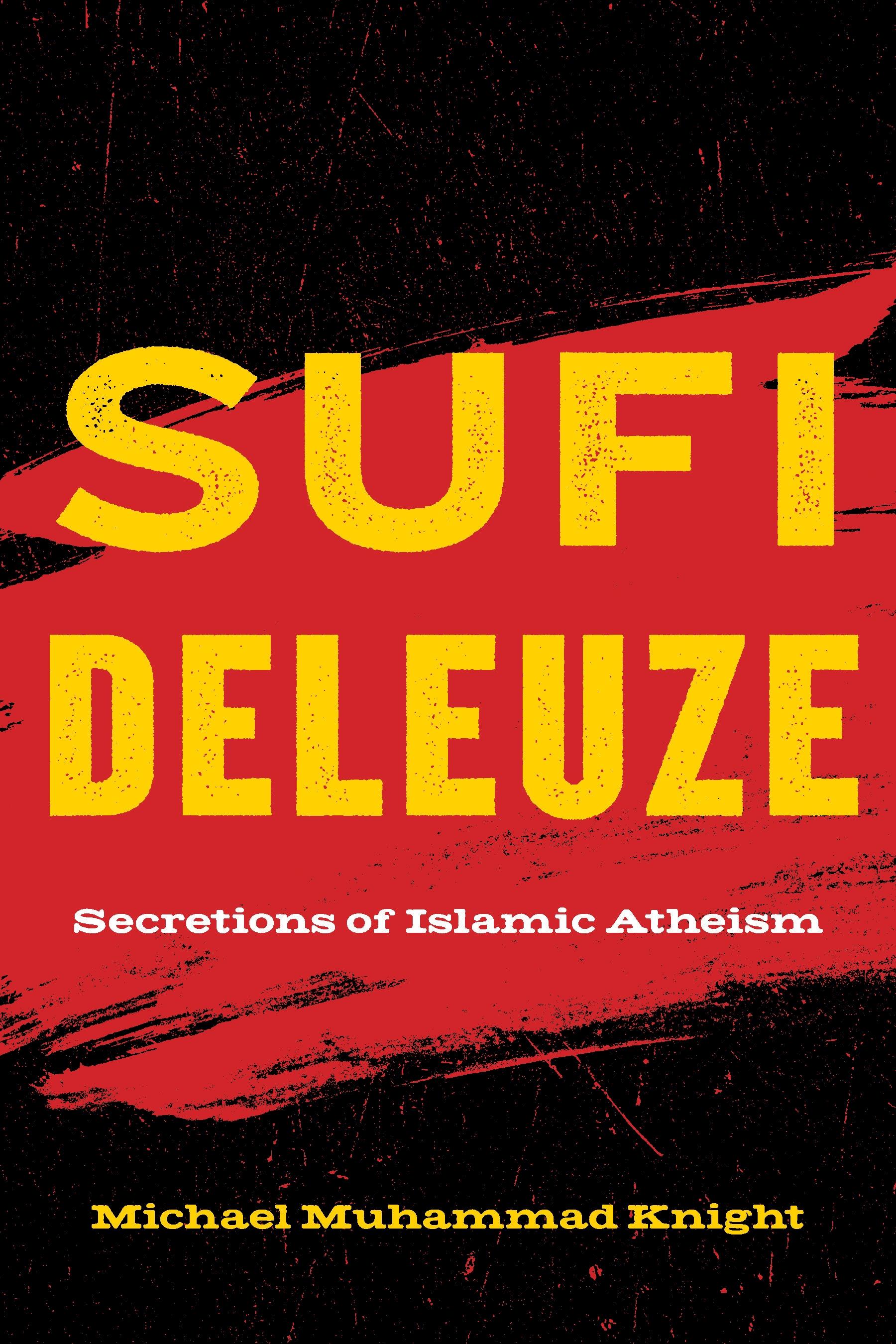
“There is always an atheism to be extracted from a religion,” Deleuze and Guattari write in their final collaboration, What Is Philosophy? Their claim that Christianity “secretes” atheism “more than any other religion,” however, reflects the limits of their archive. Theological projects seeking to engage Deleuze remain embedded within Christian theologies and intellectual histories; whether they embrace, resist, or negotiate with Deleuze’s atheism, the atheism in question remains one extracted from Christian theology, a Christian atheism. In Sufi Deleuze, Michael Muhammad Knight offers an intervention, engaging Deleuzian questions and themes from within Islamic tradition.
Even if Deleuze did not think of himself as a theologian, Knight argues, to place Deleuze in conversation with Islam is a project of comparative theology and faces the challenge of any comparative theology: It seemingly demands that complex, internally diverse traditions can speak as coherent, monolithic wholes. To start from such a place would not only defy Islam’s historical multiplicity but also betray Deleuze’s model of the assemblage, which requires attention to not only the organizing and stabilizing tendencies within a structure but also the points at which a structure resists organization, its internal heterogeneity, and unpredictable “lines of flight.”
A Deleuzian approach to Islamic theology would first have to affirm that there is no such thing as a universal “Islamic theology” that can speak for all Muslims in all historical settings, but rather a multiplicity of power struggles between major and minor forces that contest each other over authenticity, authority, and the making of “orthodoxy.” The discussions in Sufi Deleuze thus highlight Islam’s extraordinary range of possibilities, not only making use of canonically privileged materials such as the Qur’an and major hadith collections, but also exploring a variety of marginalized resources found throughout Islam that challenge the notion of a singular “mainstream” interpretive tradition. To say it in Deleuze’s vocabulary, Islam is a rhizome.
Before Memmo my notes were scattered across PDFs. Now a workspace pulls everything into one place — I see exactly what's still left to study.
Memmo's summaries are gold before exams. I don't have to re-read 800 pages two weeks before — just the important parts.
The AI chat has saved me the night before an exam more than once. I just keep asking until I get it — no waiting on a study group to reply.
The quizzes hit exactly what I need to know. Memmo tracks what I get stuck on — so I only practice what's worth it.
Flashcards with spaced repetition are magic. Memmo knows when I'm about to forget something and brings it back.
The AI podcasts are my favorite. I listen on my way to school and get a recap without sitting at a computer.

Handbok i kvalitativa metoder
281 kr

Hållbar utveckling: en introduktion för ingenjörer och andra problemlösare
334 kr

Brymans Samhällsvetenskapliga metoder
390 kr

Projektledning
491 kr

Den orättvisa hälsan: om socioekonomiska skillnader i hälsa och livslängd
326 kr

Vetenskapsteori för nybörjare
196 kr

Organizational Leadership
429 kr

På väg mot läraryrket
172 kr

Det sociala livet i skolan: Socialpsykologiska perspektiv
253 kr

Betygsättningens didaktik
151 kr

Personality
402 kr

Studying Leadership
404 kr

Managing Innovation
477 kr

Introduktion till samhällsvetenskaplig metod
347 kr

The Psychology of Sex and Gender
698 kr

Evidens och kunskap för socialt arbete
207 kr

Introduction to Leadership
605 kr