
Before Memmo my notes were scattered across PDFs. Now a workspace pulls everything into one place — I see exactly what's still left to study.
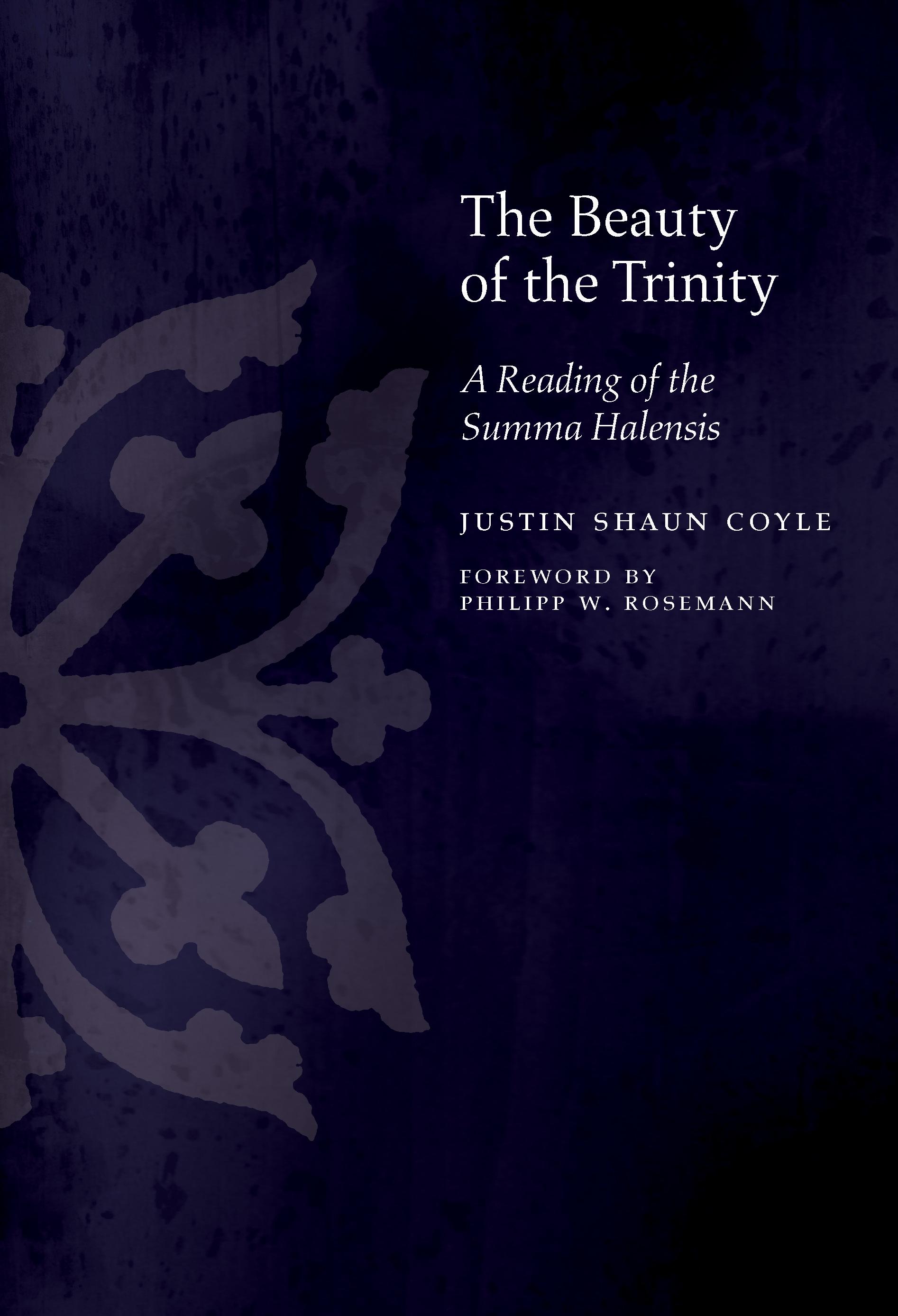
In this book Justin Shaun Coyle remembers the theology of beauty of the forgotten Summa Halensis, an early-thirteenth-century text written by Franciscan friars at the University of Paris. Many scholars vaunt the Summa Halensis—conceived but not drafted entirely by Alexander of Hales (d. 1245)—for its teaching on beauty and its influence on giants of the high scholastic idiom. But few read the text’s teaching theologically—as a teaching about God. The Beauty of the Trinity: A Reading of the Summa Halensis proposes an interpretation of the Summa’s beauty—teaching as deeply and inexorably theological, even trinitarian.
The book takes as its keystone a passage in which the Summa Halensis identifies beauty with the “sacred order of the divine persons.” If beauty names a trinitarian structure rather than a divine attribute, then the text teaches beauty where it teaches trinity. So The Beauty of the Trinity trawls the massive Summa Halensis for beauty across passages largely ignored by the literature. Taking seriously the Summa’s own definition of beauty rather than imposing onto the text modernity’s narrow aesthetic categories allows Coyle to identity beauty nearly everywhere across the text’s pages: in its teaching on the transcendental determinations of being, on the trinity proper, on creation, on psychology, on grace. A medieval text must teach beauty that appreciates beauty theologically beyond the constricted and anachronistic boundaries that often limit study of medieval aesthetics. Readers of medieval theology and theological aesthetics both will find in The Beauty of the Trinity a depiction of how an early scholastic summa thinks beauty according to the mystery of the trinity.
Before Memmo my notes were scattered across PDFs. Now a workspace pulls everything into one place — I see exactly what's still left to study.
Memmo's summaries are gold before exams. I don't have to re-read 800 pages two weeks before — just the important parts.
The AI chat has saved me the night before an exam more than once. I just keep asking until I get it — no waiting on a study group to reply.
The quizzes hit exactly what I need to know. Memmo tracks what I get stuck on — so I only practice what's worth it.
Flashcards with spaced repetition are magic. Memmo knows when I'm about to forget something and brings it back.
The AI podcasts are my favorite. I listen on my way to school and get a recap without sitting at a computer.

Handbok i kvalitativa metoder
281 kr

Hållbar utveckling: en introduktion för ingenjörer och andra problemlösare
334 kr

Brymans Samhällsvetenskapliga metoder
390 kr

Projektledning
491 kr

Den orättvisa hälsan: om socioekonomiska skillnader i hälsa och livslängd
326 kr

Vetenskapsteori för nybörjare
196 kr

Organizational Leadership
429 kr

På väg mot läraryrket
172 kr

Det sociala livet i skolan: Socialpsykologiska perspektiv
253 kr

Betygsättningens didaktik
151 kr

Personality
402 kr

Studying Leadership
404 kr

Managing Innovation
477 kr

Introduktion till samhällsvetenskaplig metod
347 kr

The Psychology of Sex and Gender
698 kr

Evidens och kunskap för socialt arbete
207 kr

Introduction to Leadership
605 kr