
Before Memmo my notes were scattered across PDFs. Now a workspace pulls everything into one place — I see exactly what's still left to study.
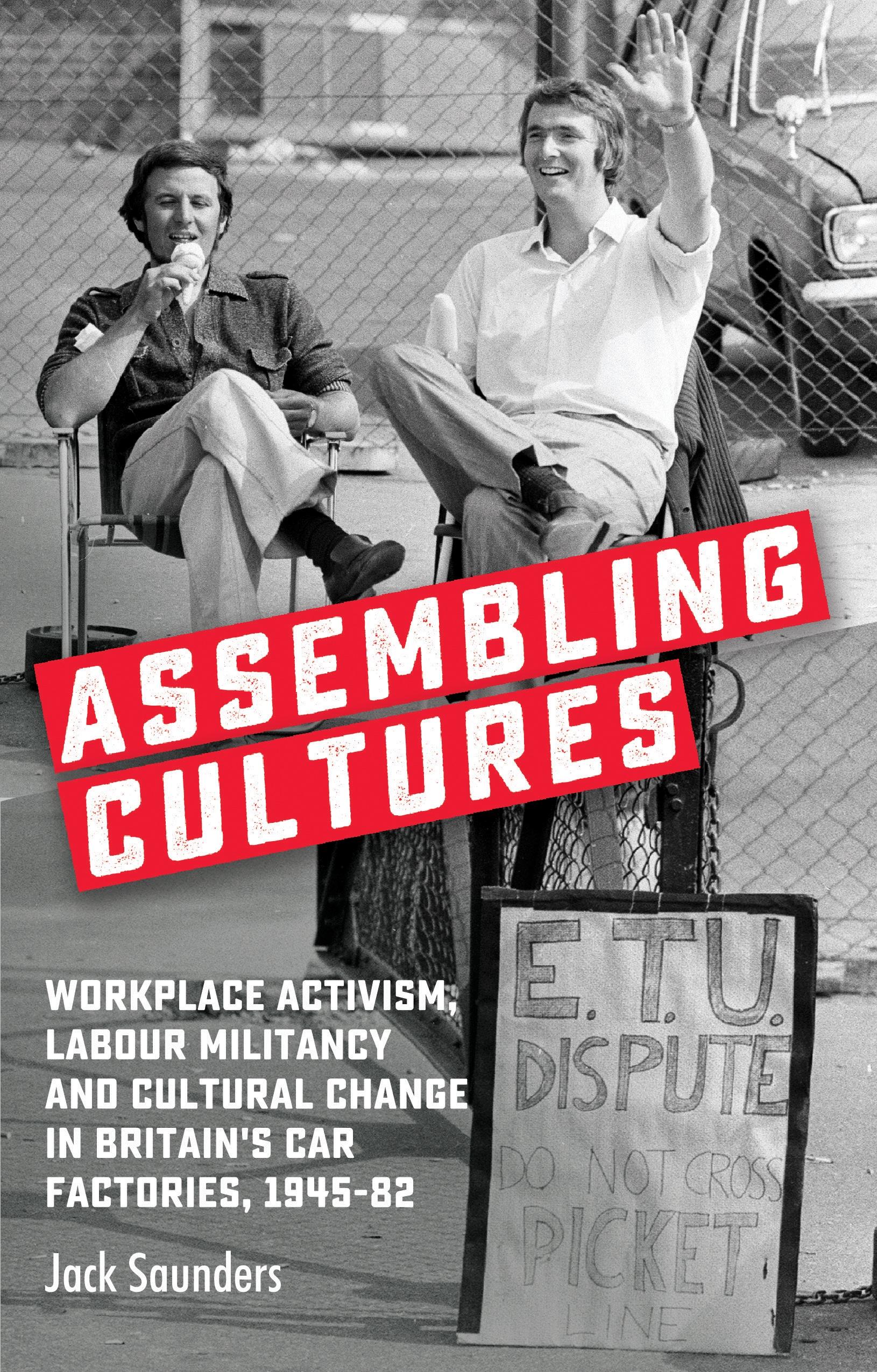
In British political discourse the idea that in the 1970s trade unions 'ran the country' has become a truism, a folk mythology invoked against the twin perils of socialism and strikes. But who exactly wielded power in Britain’s workplaces and on what terms?
Assembling cultures takes a fine-grained look at factory activism in the motor industry between 1945 and 1982, using car manufacturing as a key case for unpicking important narratives around affluence, declinism and class. It traces the development of the militant car worker stereotype and looks at the real social relations that lay behind car manufacturing’s reputation for conflict. In doing so, this book reveals a changing, complex world of social practices, cultural norms and shared values and expectations.
From relatively meagre interwar trade union traditions, during the post-war period car workers developed shop-floor organisations of considerable authority, enabling some to make new demands of their working lives, but constraining others in their more radical political aims. Assembling cultures documents in detail a historic process where, from the 1950s, groups and individuals set about creating and reproducing collective power and asks what that meant for their lives. This is a story of workers and their place in the power relations of post-war Britain.
This book will be invaluable to lecturers and students studying the history, sociology and politics of post-war Britain, particularly those with an interest in power, rationality, class, labour, gender and race. The detailed analysis of just how solidarity, organisation and collective action were generated will also prove useful to trade union activists.
Before Memmo my notes were scattered across PDFs. Now a workspace pulls everything into one place — I see exactly what's still left to study.
Memmo's summaries are gold before exams. I don't have to re-read 800 pages two weeks before — just the important parts.
The AI chat has saved me the night before an exam more than once. I just keep asking until I get it — no waiting on a study group to reply.
The quizzes hit exactly what I need to know. Memmo tracks what I get stuck on — so I only practice what's worth it.
Flashcards with spaced repetition are magic. Memmo knows when I'm about to forget something and brings it back.
The AI podcasts are my favorite. I listen on my way to school and get a recap without sitting at a computer.

Handbok i kvalitativa metoder
281 kr

Hållbar utveckling: en introduktion för ingenjörer och andra problemlösare
334 kr

Brymans Samhällsvetenskapliga metoder
390 kr

Projektledning
491 kr

Den orättvisa hälsan: om socioekonomiska skillnader i hälsa och livslängd
326 kr

Organizational Leadership
429 kr

Vetenskapsteori för nybörjare
196 kr

På väg mot läraryrket
172 kr

Det sociala livet i skolan: Socialpsykologiska perspektiv
253 kr

Betygsättningens didaktik
151 kr

Personality
402 kr

Studying Leadership
404 kr

Managing Innovation
477 kr

Introduktion till samhällsvetenskaplig metod
347 kr

The Psychology of Sex and Gender
698 kr

Evidens och kunskap för socialt arbete
207 kr

Introduction to Leadership
605 kr