
Before Memmo my notes were scattered across PDFs. Now a workspace pulls everything into one place — I see exactly what's still left to study.
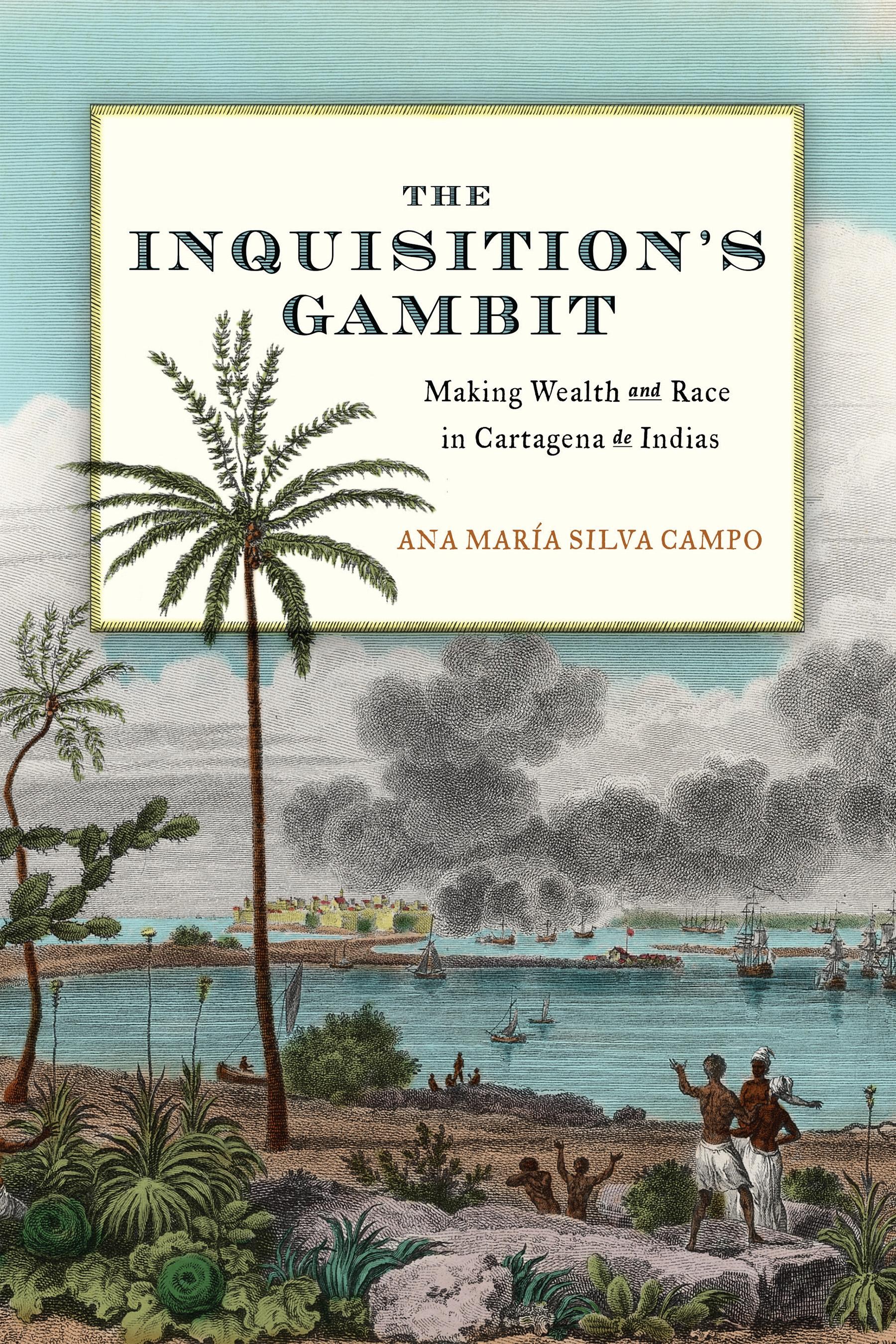
A demonstration of how the Spanish Inquisition’s property confiscations created a racialized economic order in colonial Cartagena de Indias
In 1632, in the port city of Cartagena de Indias in what is now Colombia, officials of the Spanish Inquisition, having recently arrived to take up their posts, arrested Teodora de Salcedo and fifteen other women of African descent who had once been enslaved, each of whom owned a wood-framed house in one of Cartagena’s rapidly changing neighborhoods. The Holy Office declared the women guilty of witchcraft and imposed a range of punishments that included permanent confiscation of all their property. The tribunal then auctioned off their houses to men of Catholic ancestry. During these same years, the Inquisition initially refrained from prosecuting members of the slave-trading elite who were widely suspected of the equally heretical activity of practicing Judaism in secret. It was only later, after they had firmly established themselves in the power structure of the city, that Inquisition officials arrested the Portuguese descendants of Iberian Jews and transferred their property to Old Christian families who were also actively involved in the same trade.
Using rarely studied financial records from the Inquisition’s archives, The Inquisition’s Gambit reveals how this process of selective persecution and wealth redistribution helped create racialized economic hierarchies in a key Spanish colonial city. When the first inquisitors arrived in Cartagena, they found a city where Spanish policies had created an unexpected social order. The Crown had envisioned Christian men controlling wealth and serving as the foundation of Catholic society overseas. Yet imperial policies—the union of the Spanish and Portuguese crowns in 1581 and Spain’s designation of Cartagena as the main port for the trade in African captives in 1595—had enabled descendants of Portuguese Jews and women of African descent to prosper. Ana María Silva Campo demonstrates how, through this targeted approach to dispossession and redistribution of property, the Inquisition shaped racialized economic hierarchies and long-term patterns of capital accumulation in the early modern Spanish world.
Before Memmo my notes were scattered across PDFs. Now a workspace pulls everything into one place — I see exactly what's still left to study.
Memmo's summaries are gold before exams. I don't have to re-read 800 pages two weeks before — just the important parts.
The AI chat has saved me the night before an exam more than once. I just keep asking until I get it — no waiting on a study group to reply.
The quizzes hit exactly what I need to know. Memmo tracks what I get stuck on — so I only practice what's worth it.
Flashcards with spaced repetition are magic. Memmo knows when I'm about to forget something and brings it back.
The AI podcasts are my favorite. I listen on my way to school and get a recap without sitting at a computer.

Handbok i kvalitativa metoder
281 kr

Hållbar utveckling: en introduktion för ingenjörer och andra problemlösare
334 kr

Brymans Samhällsvetenskapliga metoder
390 kr

Projektledning
491 kr

Den orättvisa hälsan: om socioekonomiska skillnader i hälsa och livslängd
326 kr

Vetenskapsteori för nybörjare
196 kr

Organizational Leadership
429 kr

På väg mot läraryrket
172 kr

Det sociala livet i skolan: Socialpsykologiska perspektiv
253 kr

Betygsättningens didaktik
151 kr

Personality
402 kr

Studying Leadership
404 kr

Managing Innovation
477 kr

Introduktion till samhällsvetenskaplig metod
347 kr

The Psychology of Sex and Gender
698 kr

Evidens och kunskap för socialt arbete
207 kr

Introduction to Leadership
605 kr