
Before Memmo my notes were scattered across PDFs. Now a workspace pulls everything into one place — I see exactly what's still left to study.
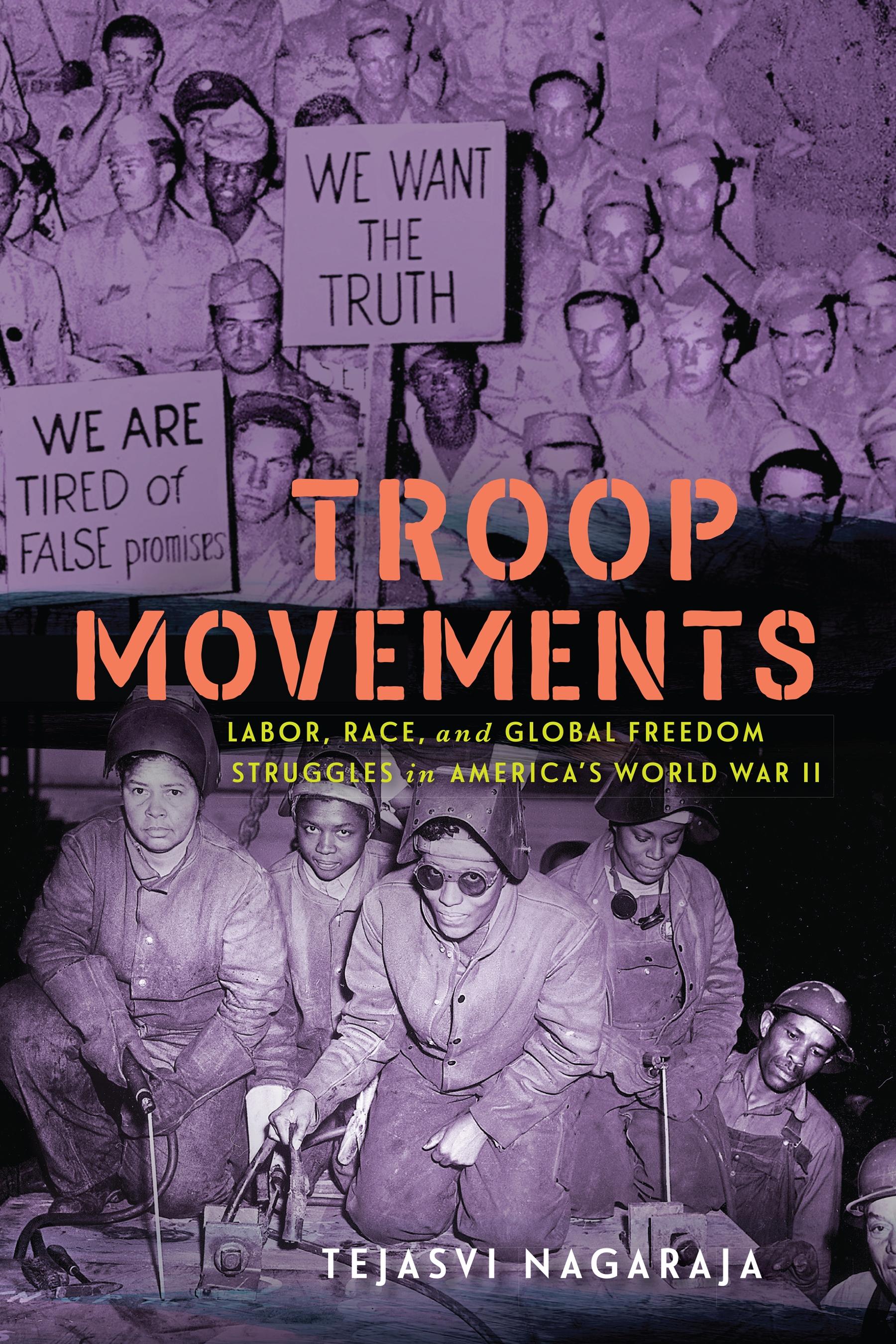
The story of how the mass mobilization for World War II catalyzed the national and international political movements and conflicts of the postwar period
In the popular imagination, World War II is perceived as the last great moment of national consensus, when the United States was united around the collective purpose of battling a clear enemy whose aim was global dominance. The government led an unprecedented mobilization, building an international military force through which the country soon became the preeminent world power. In the context of this mobilization, the military brought together disparate sectors of workers, all of whom were enmeshed in struggles over workers’ rights and civil rights in the wake of the Great Depression and New Deal.
In Troop Movements, Tejasvi Nagaraja explains how this mobilization for world war—involving soldiers and defense workers—provided an opportunity for entangled experiences and alliances across race, class, and global concerns. In the process, this anti-fascist mobilization and the reactions to it catalyzed the national and international political movements and conflicts of the postwar period. Many of these diverse war workers, Nagaraja contends, led a “greatest generation” of labor, Black freedom, and anti-imperial social struggles, which linked racial and economic and international issues. Their struggles took place from Pennsylvania to Panama, Georgia to Germany, Michigan to Manila.
Synthesizing diverse sources—from the US Army and UK Colonial Office archives to labor unions’ and civil rights organizations’ records—Nagaraja reconstructs this story of top-down and bottom-up movements. To understand the entwined history of labor unions and big corporations, Jim Crow and civil rights, US empire and the military industrial complex, he argues, their entanglement during World War II must be accounted for. Troop Movements traces the origins of postwar America’s domestic and foreign politics to this crucible of worldwide war, with a mass workforce at its heart.
Before Memmo my notes were scattered across PDFs. Now a workspace pulls everything into one place — I see exactly what's still left to study.
Memmo's summaries are gold before exams. I don't have to re-read 800 pages two weeks before — just the important parts.
The AI chat has saved me the night before an exam more than once. I just keep asking until I get it — no waiting on a study group to reply.
The quizzes hit exactly what I need to know. Memmo tracks what I get stuck on — so I only practice what's worth it.
Flashcards with spaced repetition are magic. Memmo knows when I'm about to forget something and brings it back.
The AI podcasts are my favorite. I listen on my way to school and get a recap without sitting at a computer.

Handbok i kvalitativa metoder
281 kr

Hållbar utveckling: en introduktion för ingenjörer och andra problemlösare
334 kr

Brymans Samhällsvetenskapliga metoder
390 kr

Projektledning
491 kr

Den orättvisa hälsan: om socioekonomiska skillnader i hälsa och livslängd
326 kr

Vetenskapsteori för nybörjare
196 kr

Organizational Leadership
429 kr

På väg mot läraryrket
172 kr

Det sociala livet i skolan: Socialpsykologiska perspektiv
253 kr

Betygsättningens didaktik
151 kr

Personality
402 kr

Studying Leadership
404 kr

Managing Innovation
477 kr

Introduktion till samhällsvetenskaplig metod
347 kr

The Psychology of Sex and Gender
698 kr

Evidens och kunskap för socialt arbete
207 kr

Introduction to Leadership
605 kr