
Before Memmo my notes were scattered across PDFs. Now a workspace pulls everything into one place — I see exactly what's still left to study.
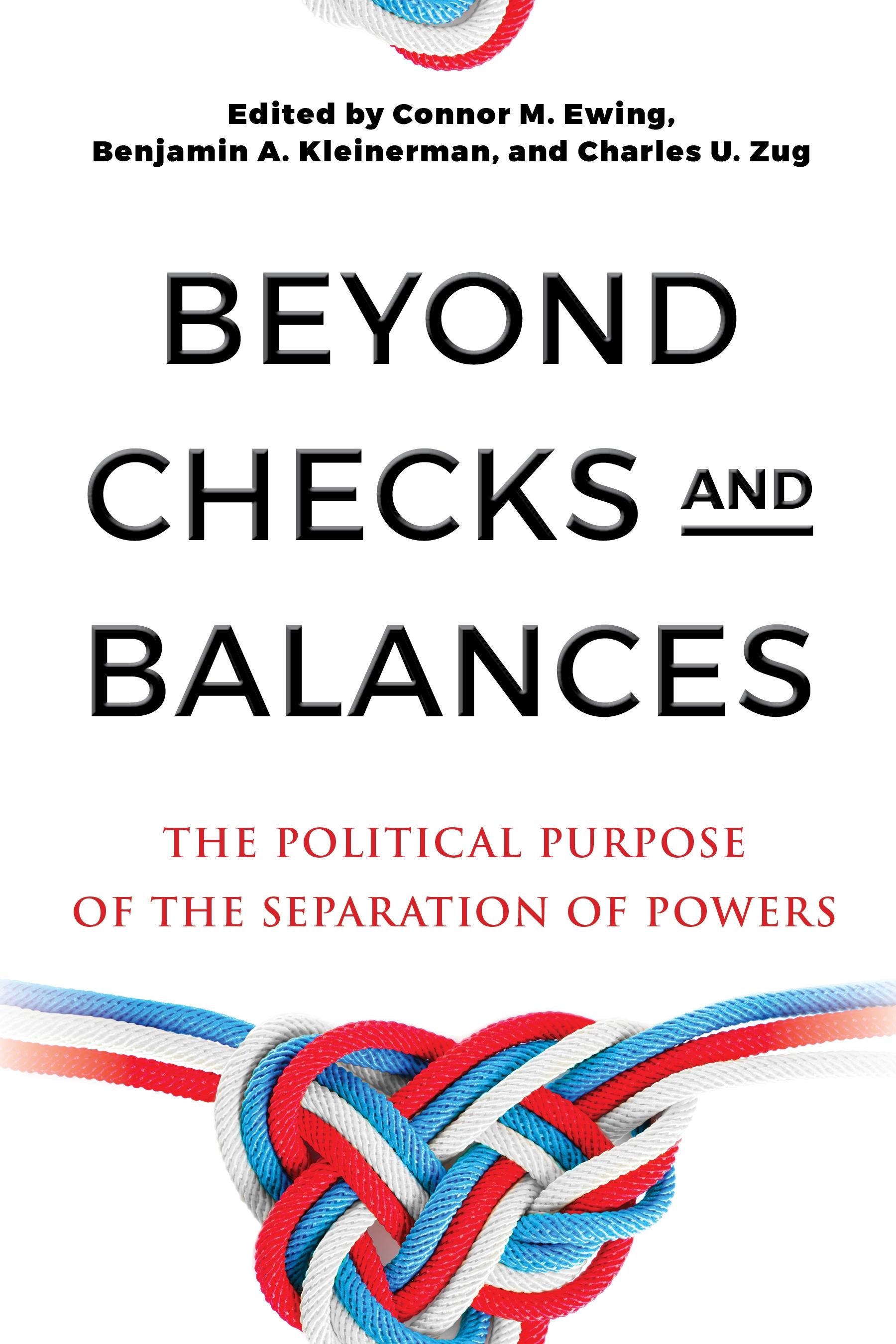
An argument for understanding the separation of powers as a political arrangement designed to pursue the common democratic good
Beyond Checks and Balances seeks to rescue the democratic concept of the separation of powers from a popular caricature of it: that checks and balances exist between branches of government to frustrate, slow, and inhibit change. Long regarded as a legal doctrine that must be adjudicated by the federal courts, political scientists Connor M. Ewing, Benjamin A. Kleinerman, and Charles U. Zug have gathered leading scholars’ analyses into a volume that argues that the separation of powers is instead best understood politically. When cast as a configuration of powers, incentives, and institutions designed to pursue the foundational ends of politics, it becomes clear that separation of powers does not exist to stymie collective action, though it certainly is capable of doing so.
The book is divided into two sections: the first examines the foundations of statement-of-powers doctrine and thought. The second set of chapters analyzes the application of the doctrine and addresses more specific topics, such as the power to declare war, the scope of executive powers, and the impeachment of federal judges. The contributors spotlight the substantive constitutional goodsthat the arrangement commonly referred to as the separation of powers is designed to achieve.
The collection shows that—as a concept dedicated to creating collaborative, good democratic government—the separation of powers includes, but cannot be reduced to, constraints on governmental power. By incentivizing conflict and negotiation between different constitutional offices, the separation of powers brings diverse governmental perspectives to bear on the basic problems of politics, promoting political values like deliberation, decisiveness, and inclusion across branches.
Contributors: Sotirios A. Barber, Thomas R. Bell, Paul Carrese, Connor M. Ewing, Brigid Flaherty Staab, Benjamin A. Kleinerman, David J. Siemers, George Thomas, Kathleen Tipler, Jeffrey K. Tulis, Keith E. Whittington, Mariah Zeisberg, Charles U. Zug.
Before Memmo my notes were scattered across PDFs. Now a workspace pulls everything into one place — I see exactly what's still left to study.
Memmo's summaries are gold before exams. I don't have to re-read 800 pages two weeks before — just the important parts.
The AI chat has saved me the night before an exam more than once. I just keep asking until I get it — no waiting on a study group to reply.
The quizzes hit exactly what I need to know. Memmo tracks what I get stuck on — so I only practice what's worth it.
Flashcards with spaced repetition are magic. Memmo knows when I'm about to forget something and brings it back.
The AI podcasts are my favorite. I listen on my way to school and get a recap without sitting at a computer.

Handbok i kvalitativa metoder
281 kr

Hållbar utveckling: en introduktion för ingenjörer och andra problemlösare
334 kr

Brymans Samhällsvetenskapliga metoder
390 kr

Projektledning
491 kr

Den orättvisa hälsan: om socioekonomiska skillnader i hälsa och livslängd
326 kr

Organizational Leadership
429 kr

Vetenskapsteori för nybörjare
196 kr

På väg mot läraryrket
172 kr

Det sociala livet i skolan: Socialpsykologiska perspektiv
253 kr

Betygsättningens didaktik
151 kr

Personality
402 kr

Studying Leadership
404 kr

Managing Innovation
477 kr

Introduktion till samhällsvetenskaplig metod
347 kr

The Psychology of Sex and Gender
698 kr

Evidens och kunskap för socialt arbete
207 kr

Introduction to Leadership
605 kr