
Before Memmo my notes were scattered across PDFs. Now a workspace pulls everything into one place — I see exactly what's still left to study.
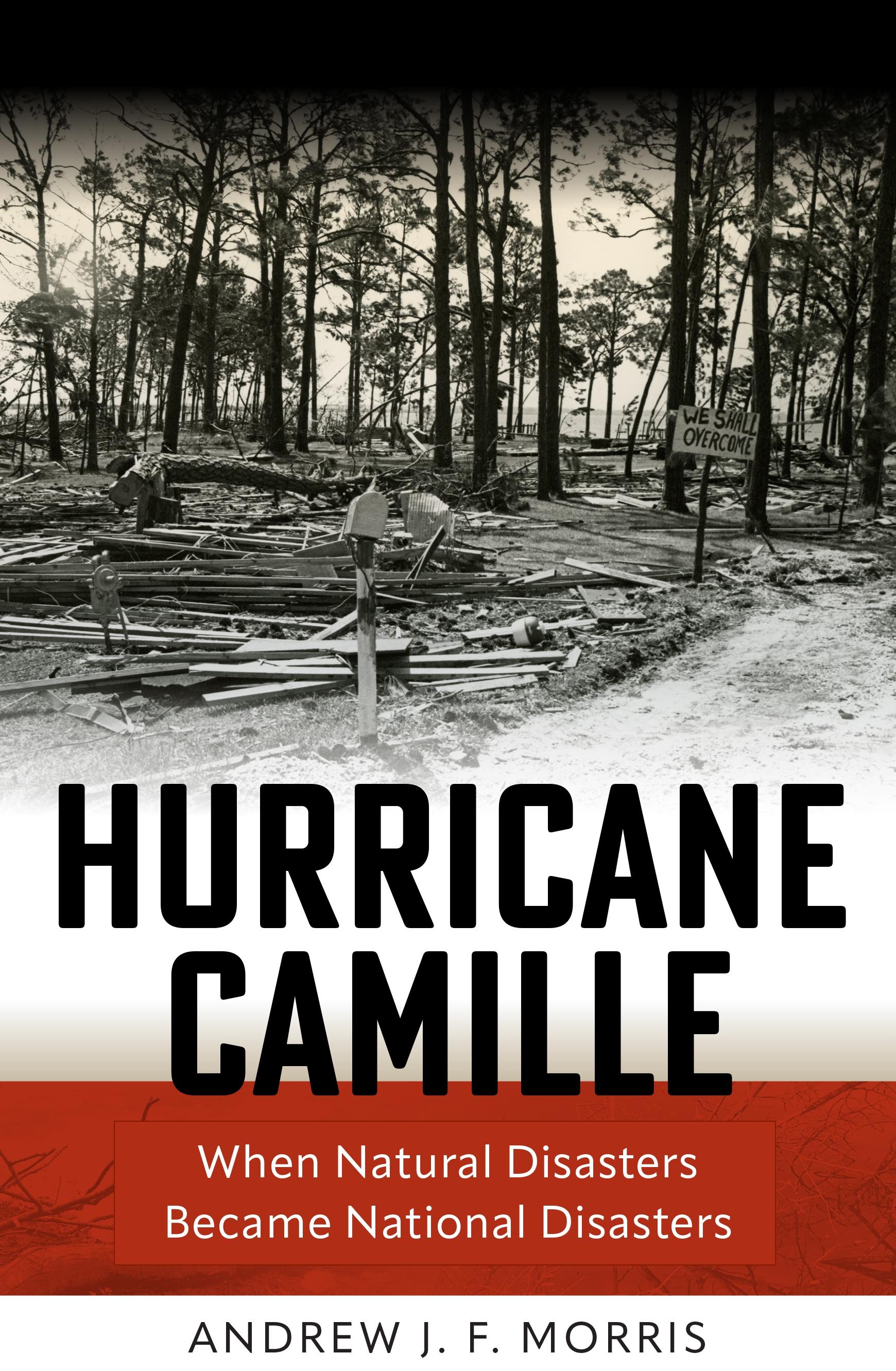
The story of how Hurricane Camille, which struck the Mississippi Gulf Coast in 1969 as a Category 5, changed the way the nation responded to disasters
Hurricane Camille, which struck the Mississippi Gulf Coast in 1969, was one of only three Category 5 hurricanes to hit the United States in the twentieth century. In this book, Andrew Morris tells the story of how this one storm changed the way the nation responded to disasters. From that point forward, Americans came to expect the federal government to play a major role in aiding individual disaster victims and helping disaster-struck communities rebuild.
For most of US history, Morris recounts, this was not the case. Localities, states, and charities such as the American Red Cross were on the front line of disaster response. But after World War II, the nation's prosperity and growth put billions of dollars of homes and businesses in harm’s way—particularly in storm-prone regions like the Mississippi Gulf Coast—and exceeded the capacity of this system to respond.
When Hurricane Camille struck Mississippi, it ravaged a vibrant coastal economy buoyed by tourism and federal military and space facilities. Moreover, it struck a state that was in the last throes of resistance to the application of federal civil rights laws. And it struck at a particular political juncture in American politics during which a Congress still dominated by the Democratic Party had an expansive view of the nation’s commitment to the less fortunate while newly elected President Richard Nixon sought to draw conservative southerners into the Republican party.
Morris argues that all of these dynamics—the sheer scale of destruction, the activism by civil rights advocates for equitable care of African American disaster victims, the desire of southern elites for government subsidies to rebuild a risky coastal economy, and the openness of officials in Congress and the White House to broaden the reach of federal authority—led to a system in which, in the twenty-first century, Americans assume the federal government will be there for them in the wake of disaster.
Before Memmo my notes were scattered across PDFs. Now a workspace pulls everything into one place — I see exactly what's still left to study.
Memmo's summaries are gold before exams. I don't have to re-read 800 pages two weeks before — just the important parts.
The AI chat has saved me the night before an exam more than once. I just keep asking until I get it — no waiting on a study group to reply.
The quizzes hit exactly what I need to know. Memmo tracks what I get stuck on — so I only practice what's worth it.
Flashcards with spaced repetition are magic. Memmo knows when I'm about to forget something and brings it back.
The AI podcasts are my favorite. I listen on my way to school and get a recap without sitting at a computer.

Handbok i kvalitativa metoder
281 kr

Hållbar utveckling: en introduktion för ingenjörer och andra problemlösare
334 kr

Brymans Samhällsvetenskapliga metoder
390 kr

Projektledning
491 kr

Den orättvisa hälsan: om socioekonomiska skillnader i hälsa och livslängd
326 kr

Organizational Leadership
429 kr

Vetenskapsteori för nybörjare
196 kr

På väg mot läraryrket
172 kr

Det sociala livet i skolan: Socialpsykologiska perspektiv
253 kr

Betygsättningens didaktik
151 kr

Personality
402 kr

Studying Leadership
404 kr

Managing Innovation
477 kr

Introduktion till samhällsvetenskaplig metod
347 kr

The Psychology of Sex and Gender
698 kr

Evidens och kunskap för socialt arbete
207 kr

Introduction to Leadership
605 kr