
Before Memmo my notes were scattered across PDFs. Now a workspace pulls everything into one place — I see exactly what's still left to study.
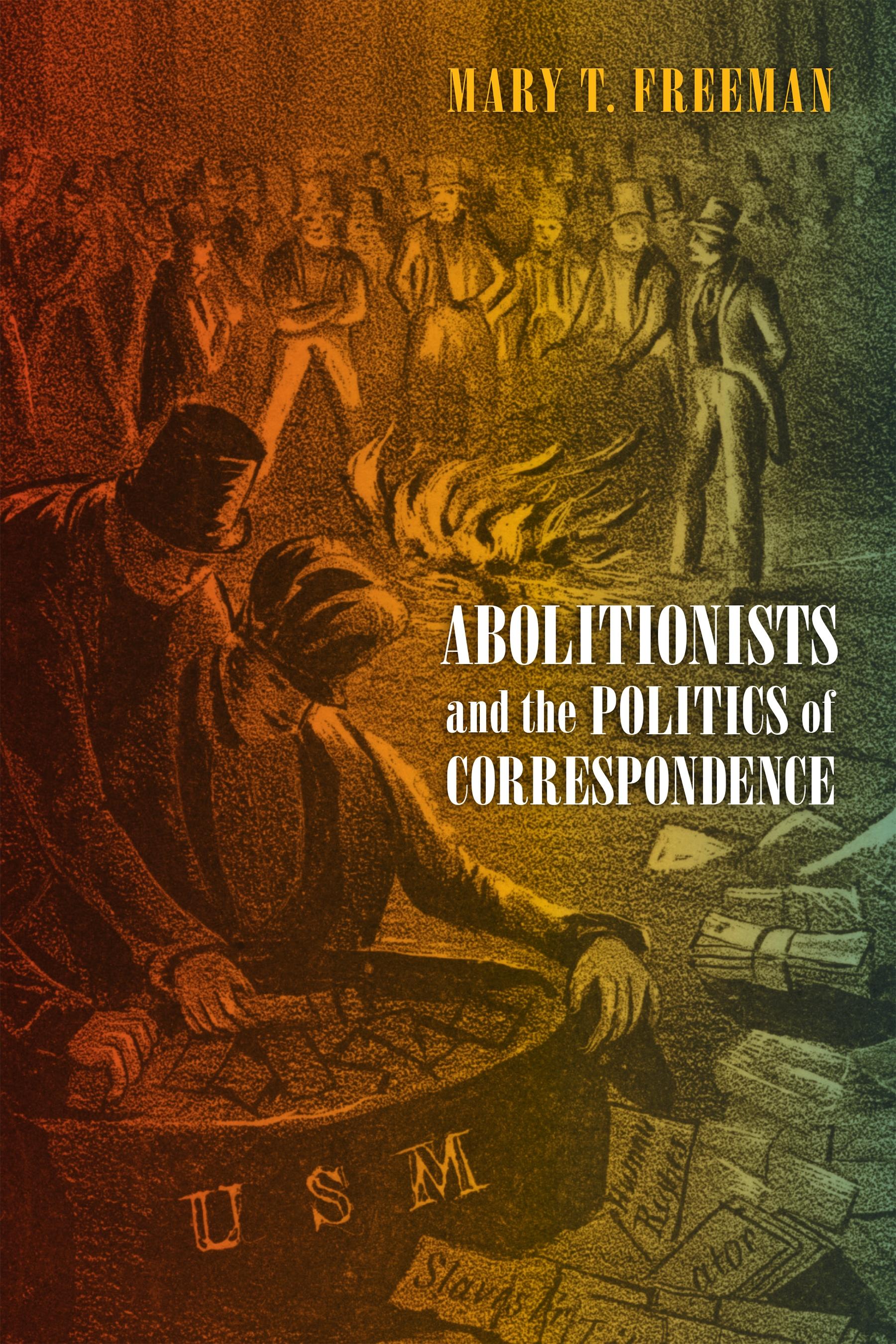
Argues that letter writing enabled a disparate and politically marginal assortment of abolitionists to take shape as a mass movement
Abolitionists and the Politics of Correspondence examines how opponents of slavery harnessed the power of letter writing to further their political aims, arguing that this practice enabled a disparate and politically marginal assortment of people to take shape as a coherent and powerful movement.
Mary T. Freeman fuses a political and social study of abolitionists with a focus on letter writing and epistolary culture. Through the analysis of correspondence, Freeman portrays abolitionism as a mass movement, made up of participants from a wide range of backgrounds, and she emphasizes the diversity of the movement’s geography, membership, and political activities. The book highlights everyday Americans’ involvement in abolition, shifting focus away from the affluent and publicly prominent white leadership. It pays particular attention to those who used letters to intervene in politics when other avenues were closed to them, especially women and Black Americans.
Freeman expands scholarly understandings of abolitionism by showing how letters enabled activists to transmit information and ideas across long distances in a relatively secure format and how they connected people who otherwise would remain strangers. Correspondence also provided a means of political expression to people on the political fringes and disfranchised persons. Even antislavery leaders and those whose social positions were seemingly secure often used the semi-private medium of correspondence strategically. Letter writers could hone their ideas beyond the purview of public audiences, or, when private letters became public, cultural norms granted their contents a stamp of authenticity and directness. Abolitionists and the Politics of Correspondence concerns not just what people wrote about but also how they wrote about it: how they manipulated, exploited, and subverted cultural conventions to make political statements and claims.
Before Memmo my notes were scattered across PDFs. Now a workspace pulls everything into one place — I see exactly what's still left to study.
Memmo's summaries are gold before exams. I don't have to re-read 800 pages two weeks before — just the important parts.
The AI chat has saved me the night before an exam more than once. I just keep asking until I get it — no waiting on a study group to reply.
The quizzes hit exactly what I need to know. Memmo tracks what I get stuck on — so I only practice what's worth it.
Flashcards with spaced repetition are magic. Memmo knows when I'm about to forget something and brings it back.
The AI podcasts are my favorite. I listen on my way to school and get a recap without sitting at a computer.

Handbok i kvalitativa metoder
281 kr

Hållbar utveckling: en introduktion för ingenjörer och andra problemlösare
334 kr

Brymans Samhällsvetenskapliga metoder
390 kr

Projektledning
491 kr

Den orättvisa hälsan: om socioekonomiska skillnader i hälsa och livslängd
326 kr

Vetenskapsteori för nybörjare
196 kr

Organizational Leadership
429 kr

På väg mot läraryrket
172 kr

Det sociala livet i skolan: Socialpsykologiska perspektiv
253 kr

Betygsättningens didaktik
151 kr

Personality
402 kr

Studying Leadership
404 kr

Managing Innovation
477 kr

Introduktion till samhällsvetenskaplig metod
347 kr

The Psychology of Sex and Gender
698 kr

Evidens och kunskap för socialt arbete
207 kr

Introduction to Leadership
605 kr