
Before Memmo my notes were scattered across PDFs. Now a workspace pulls everything into one place — I see exactly what's still left to study.
Traces the rise of Black empowerment politics in the United States and Africa
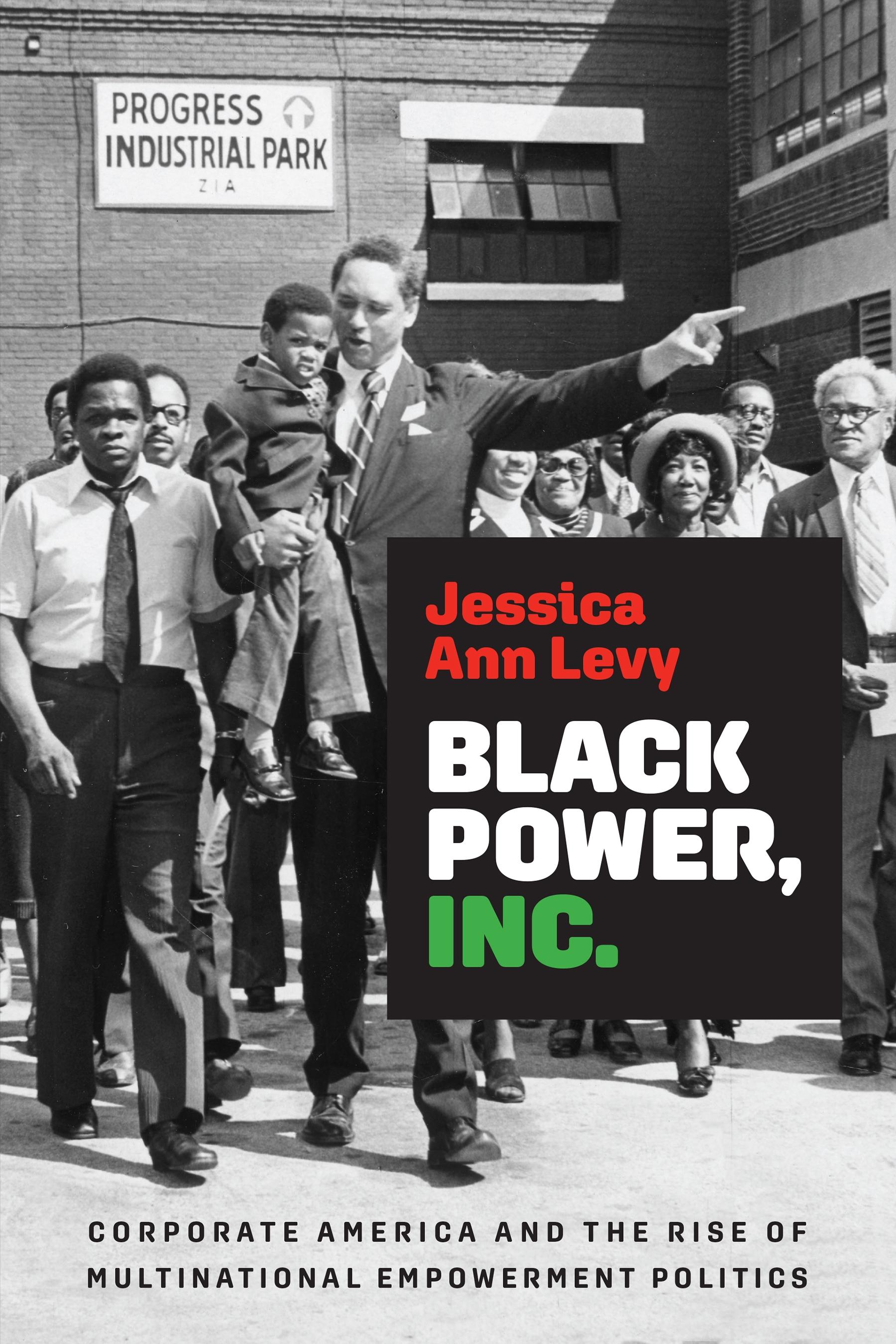
On a cold January day in 1964, civil rights minister turned entrepreneur Rev. Leon Howard Sullivan declared to a group of supporters gathered to witness the launch of Sullivan’s latest venture, Opportunities Industrialization Centers, Inc., “The day has come when we must do more than protest—we must now also PREPARE and PRODUCE!” Occasionally linked with the movement for Black Power, Sullivan and others, including Coca-Cola vice president Carl Ware and Atlanta mayor Andrew Young, were in fact architects of Black empowerment—an intellectual and political movement that championed private enterprise as the key to Black people’s prosperity.
Jessica Ann Levy traces Black empowerment’s rise in American politics—from early twentieth-century influences including Booker T. Washington and Marcus Garvey to the cities of postwar America into corporate boardrooms and government offices—and across the Atlantic Ocean to Africa. Civil rights leaders, Black entrepreneurs, white corporate executives, and government officials all championed Black empowerment as a means to address multiple crises in US cities and to blunt some of the more radical aspects of the Black Power movement. Black empowerment politics likewise found application overseas in various Cold War efforts to promote American-style free enterprise in Africa. This was especially the case in South Africa, where US corporate executives and government officials wielded Black empowerment politics to oppose apartheid and divestment.
By the early twenty-first century, the idea that private enterprise, including small-scale entrepreneurs and large multinational corporations, should play a leading role in combating racial inequality and empowering Black and other marginalized people featured prominently in various policies and programs at the local, national, and international level. By tracing Black empowerment politics’ evolution, Black Power, Inc. explains its popularity, championed by leaders from Bill Clinton to Nelson Mandela, while also revealing its role in expanding US corporate power, locally and globally.
Before Memmo my notes were scattered across PDFs. Now a workspace pulls everything into one place — I see exactly what's still left to study.
Memmo's summaries are gold before exams. I don't have to re-read 800 pages two weeks before — just the important parts.
The AI chat has saved me the night before an exam more than once. I just keep asking until I get it — no waiting on a study group to reply.
The quizzes hit exactly what I need to know. Memmo tracks what I get stuck on — so I only practice what's worth it.
Flashcards with spaced repetition are magic. Memmo knows when I'm about to forget something and brings it back.
The AI podcasts are my favorite. I listen on my way to school and get a recap without sitting at a computer.

Handbok i kvalitativa metoder
281 kr

Hållbar utveckling: en introduktion för ingenjörer och andra problemlösare
334 kr

Brymans Samhällsvetenskapliga metoder
390 kr

Projektledning
491 kr

Den orättvisa hälsan: om socioekonomiska skillnader i hälsa och livslängd
326 kr

Vetenskapsteori för nybörjare
196 kr

Organizational Leadership
429 kr

På väg mot läraryrket
172 kr

Det sociala livet i skolan: Socialpsykologiska perspektiv
253 kr

Betygsättningens didaktik
151 kr

Personality
402 kr

Studying Leadership
404 kr

Managing Innovation
477 kr

Introduktion till samhällsvetenskaplig metod
347 kr

The Psychology of Sex and Gender
698 kr

Evidens och kunskap för socialt arbete
207 kr

Introduction to Leadership
605 kr