
Before Memmo my notes were scattered across PDFs. Now a workspace pulls everything into one place — I see exactly what's still left to study.
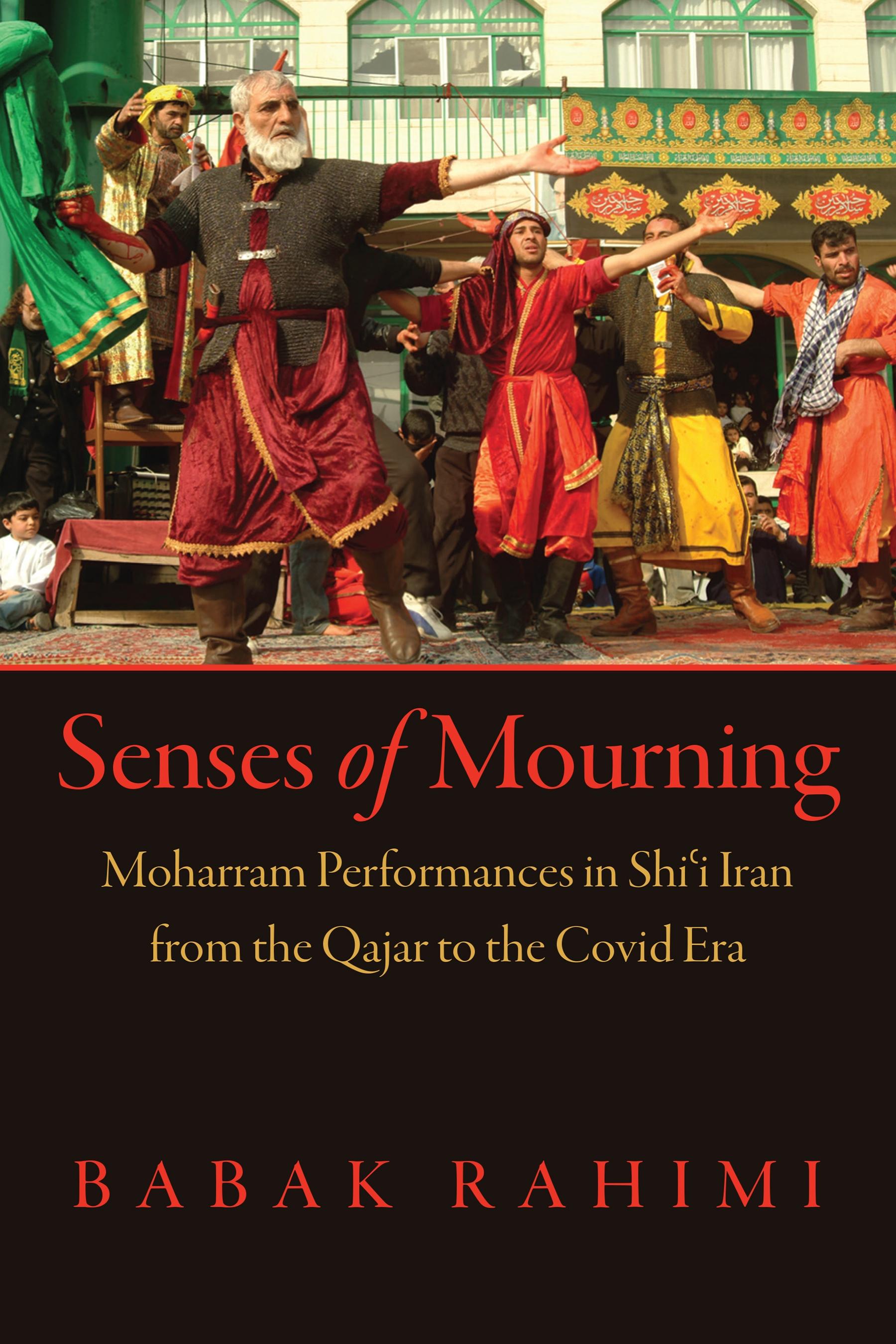
A multisensory approach to the study of Shiʿi Iran that examines how devotional Moharram performances changed over time
The mourning traditions of Moharram comprise a body of Shiʿi Muslim devotional performances commemorating the martyrdom of Hosayn ibn ʿAli, the grandson of the Prophet Muhammad and the Third Imam of the Shiʿi, in 680 CE. These traditional rites are performed during a period of communal mourning when Shiʿis remember Hosayn’s sacrifice and affirm their allegiance to him and to the Prophet’s family. Through remembering the martyrs of Karbala, Shiʿi Muslims reflect on their own afflictions and aspirations, and how these bear consequences for everyday ethical and devotional conduct.
Babak Rahimi analyzes Moharram in Iran through the five senses—sight, sound, touch, smell, and taste—with an emphasis on the relationship between religious practices as embodied experiences and how these performances—and practitioners’ experiences of them—have changed over time. Rahimi begins his investigation in the nineteenth-century Qajar period, when Moharram became a pervasive urban communal practice across most of Iran. He covers the Qajar-era dramatic performances of taʿziyeh, their transformation into cultural spectacles during the Pahlavi era, the public processions in the form of urban street protests in 1978, the tent-burning rituals in the southern city of Bushehr in 2006, and, lastly, the votive performances during Moharram in the digital sphere during the pandemic in 2020.
Through the study of mourning in terms of the senses in a specific historical and social context, Senses of Mourning not only shows the changing embodied dimensions of religious practices that have played an integral role in the complex lifeworld of Shiʿi Iranians but also details the transformation of Moharram within the broader history of Shiʿi Iran in an increasingly interconnected global era. The book’s multisensory approach sheds new light on the performativity of embodied practices, in which spiritualities, materialities, and the politics of the sacred are articulated through lived performances over time.
Before Memmo my notes were scattered across PDFs. Now a workspace pulls everything into one place — I see exactly what's still left to study.
Memmo's summaries are gold before exams. I don't have to re-read 800 pages two weeks before — just the important parts.
The AI chat has saved me the night before an exam more than once. I just keep asking until I get it — no waiting on a study group to reply.
The quizzes hit exactly what I need to know. Memmo tracks what I get stuck on — so I only practice what's worth it.
Flashcards with spaced repetition are magic. Memmo knows when I'm about to forget something and brings it back.
The AI podcasts are my favorite. I listen on my way to school and get a recap without sitting at a computer.

Handbok i kvalitativa metoder
281 kr

Hållbar utveckling: en introduktion för ingenjörer och andra problemlösare
334 kr

Brymans Samhällsvetenskapliga metoder
390 kr

Projektledning
491 kr

Den orättvisa hälsan: om socioekonomiska skillnader i hälsa och livslängd
326 kr

Organizational Leadership
429 kr

Vetenskapsteori för nybörjare
196 kr

På väg mot läraryrket
172 kr

Det sociala livet i skolan: Socialpsykologiska perspektiv
253 kr

Betygsättningens didaktik
151 kr

Personality
402 kr

Studying Leadership
404 kr

Managing Innovation
477 kr

Introduktion till samhällsvetenskaplig metod
347 kr

The Psychology of Sex and Gender
698 kr

Evidens och kunskap för socialt arbete
207 kr

Introduction to Leadership
605 kr