
Before Memmo my notes were scattered across PDFs. Now a workspace pulls everything into one place — I see exactly what's still left to study.
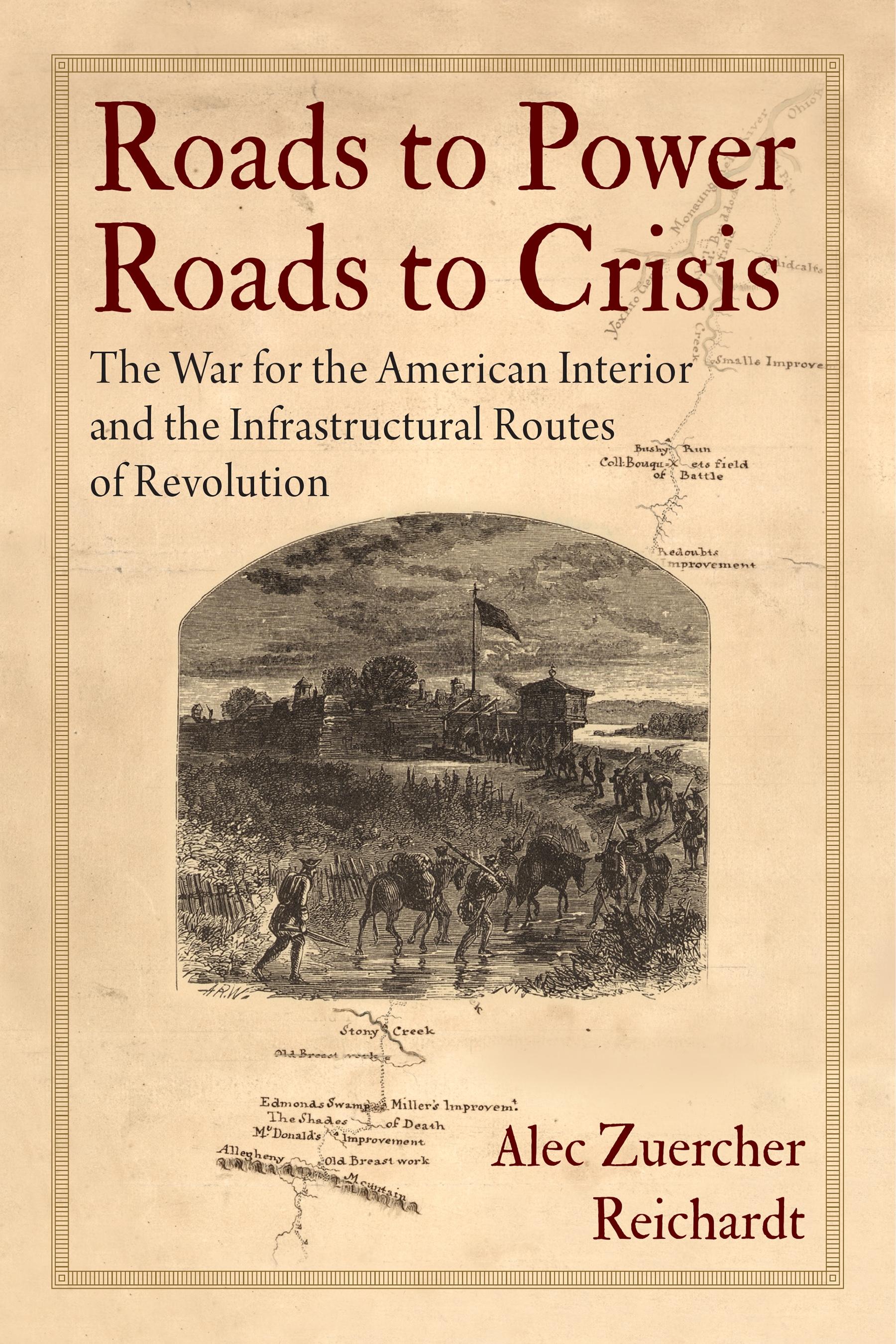
Infrastructure was key to British victory in the Seven Years’ War yet was its undoing on the roads to revolution
Roads to Power, Roads to Crisis maps the Seven Years’ War for the American Interior and reconstructs the inter-imperial roots of the American Revolution. Centering on the eighteenth-century geopolitical struggle for the greater Ohio Valley, Alec Zuercher Reichardt reframes a familiar story by uncovering the larger imperial competition to gain, control, and exploit communication networks across North America and the Atlantic. Through a comparative perspective, Reichardt traces British infrastructural development alongside the efforts of other major powers in North America, including the French Empire, the Haudenosaunee Confederacy, the Cherokee Nation, and other Indigenous polities.
By the height of the Seven Years’ War, this contest for the American Interior had propelled the British to construct imperial communications infrastructure that outpaced and overwhelmed the efforts of France, its primary European rival, and that co-opted key Native information and transportation channels. British success in wartime was borne not just of a newly enlarged and centralized infrastructure state, but also of that expanded state's ability to exploit extra-governmental circuits, notably metropolitan and colonial newspapers and Indigenous ally networks.
The rise of the British North American infrastructure state, however, was also the empire’s undoing. The same roads, printing presses, and postal networks constructed and funded by the War Office and imperial treasury also became the primary routes of incendiary print, popular mobilization, and propaganda. In the wake of the Seven Years’ War, the ligaments of the British empire inadvertently provided the material channels for those who sought to oppose the British state. The roads that led to British imperial power, then, became routes to imperial crisis.
Before Memmo my notes were scattered across PDFs. Now a workspace pulls everything into one place — I see exactly what's still left to study.
Memmo's summaries are gold before exams. I don't have to re-read 800 pages two weeks before — just the important parts.
The AI chat has saved me the night before an exam more than once. I just keep asking until I get it — no waiting on a study group to reply.
The quizzes hit exactly what I need to know. Memmo tracks what I get stuck on — so I only practice what's worth it.
Flashcards with spaced repetition are magic. Memmo knows when I'm about to forget something and brings it back.
The AI podcasts are my favorite. I listen on my way to school and get a recap without sitting at a computer.

Handbok i kvalitativa metoder
281 kr

Hållbar utveckling: en introduktion för ingenjörer och andra problemlösare
334 kr

Brymans Samhällsvetenskapliga metoder
390 kr

Projektledning
491 kr

Den orättvisa hälsan: om socioekonomiska skillnader i hälsa och livslängd
326 kr

Organizational Leadership
429 kr

Vetenskapsteori för nybörjare
196 kr

På väg mot läraryrket
172 kr

Det sociala livet i skolan: Socialpsykologiska perspektiv
253 kr

Betygsättningens didaktik
151 kr

Personality
402 kr

Studying Leadership
404 kr

Managing Innovation
477 kr

Introduktion till samhällsvetenskaplig metod
347 kr

The Psychology of Sex and Gender
698 kr

Evidens och kunskap för socialt arbete
207 kr

Introduction to Leadership
605 kr