
Before Memmo my notes were scattered across PDFs. Now a workspace pulls everything into one place — I see exactly what's still left to study.
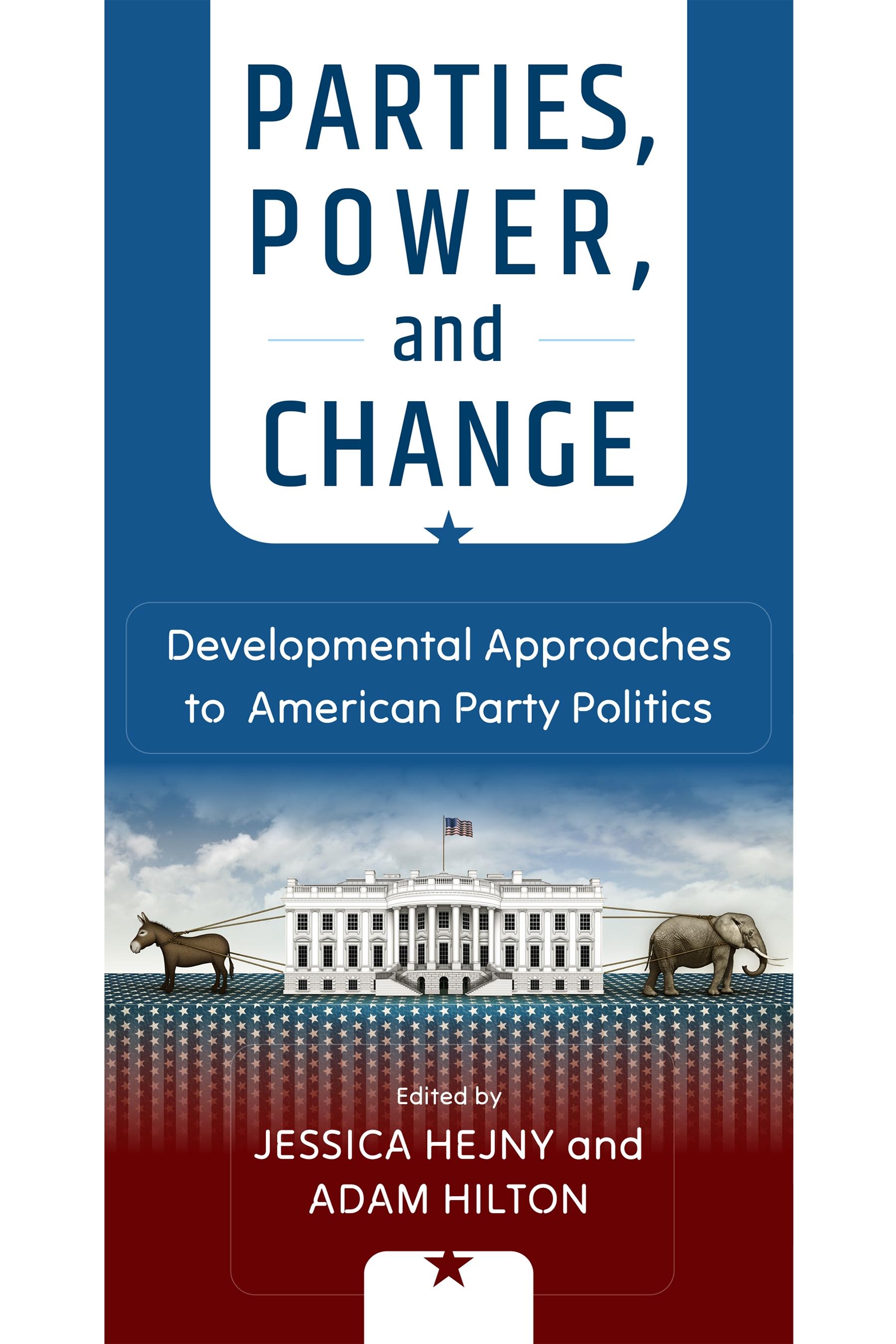
How can citizens make sense of the complex mixture of durability and dynamism that animates American party politics? How should Americans understand—and come to terms with—contemporary partisan polarization and the democratic backsliding afflicting politics in the United States today? In this volume, contributors argue that the historical-institutionalist approach practiced by scholars of American Political Development (APD) offers enormous potential and can shed light on the paradoxical character of American party politics in general and the present conflicts plaguing the polity in particular.
Parties, Power, and Change draws together a broad range of contributions from a new generation of historically oriented social scientists for the first time, and foregrounds political parties in the study of APD. By doing so, the volume highlights the ways in which party development has both been shaped by, and contributed to, changes in governing institutions and the democratic polity. The essays illuminate the developments that gave rise to salient features of the contemporary political landscape that occupy both academic and public discourse today, including shifts in ideology, group affiliations, and issue positions of the parties; changes in party structures; and partisan-driven democratic backsliding. Finally, this volume argues that, by viewing American politics through the lens of the historical development of party politics, readers can better understand the essential role that parties play in American history and see how parties can be mediating institutions that both sustain and undermine democracy.
Contributors: Amel Ahmed, Gwendoline M. Alphonso, Julia Azari, Rachel M. Blum, Jeffrey D. Broxmeyer, Boris Heersink, Jessica Hejny, Adam Hilton, Daniel Klinghard, Didi Kuo, Matthew J. Lacombe, Verlan Lewis, Nicole Mellow, Sam Rosenfeld, Jeffrey S. Selinger, Daniel Schlozman.
Before Memmo my notes were scattered across PDFs. Now a workspace pulls everything into one place — I see exactly what's still left to study.
Memmo's summaries are gold before exams. I don't have to re-read 800 pages two weeks before — just the important parts.
The AI chat has saved me the night before an exam more than once. I just keep asking until I get it — no waiting on a study group to reply.
The quizzes hit exactly what I need to know. Memmo tracks what I get stuck on — so I only practice what's worth it.
Flashcards with spaced repetition are magic. Memmo knows when I'm about to forget something and brings it back.
The AI podcasts are my favorite. I listen on my way to school and get a recap without sitting at a computer.

Handbok i kvalitativa metoder
281 kr

Hållbar utveckling: en introduktion för ingenjörer och andra problemlösare
334 kr

Brymans Samhällsvetenskapliga metoder
390 kr

Projektledning
491 kr

Den orättvisa hälsan: om socioekonomiska skillnader i hälsa och livslängd
326 kr

Vetenskapsteori för nybörjare
196 kr

Organizational Leadership
429 kr

På väg mot läraryrket
172 kr

Det sociala livet i skolan: Socialpsykologiska perspektiv
253 kr

Betygsättningens didaktik
151 kr

Personality
402 kr

Studying Leadership
404 kr

Managing Innovation
477 kr

Introduktion till samhällsvetenskaplig metod
347 kr

The Psychology of Sex and Gender
698 kr

Evidens och kunskap för socialt arbete
207 kr

Introduction to Leadership
605 kr