
Before Memmo my notes were scattered across PDFs. Now a workspace pulls everything into one place — I see exactly what's still left to study.
A provocative new history of modern black liberalism
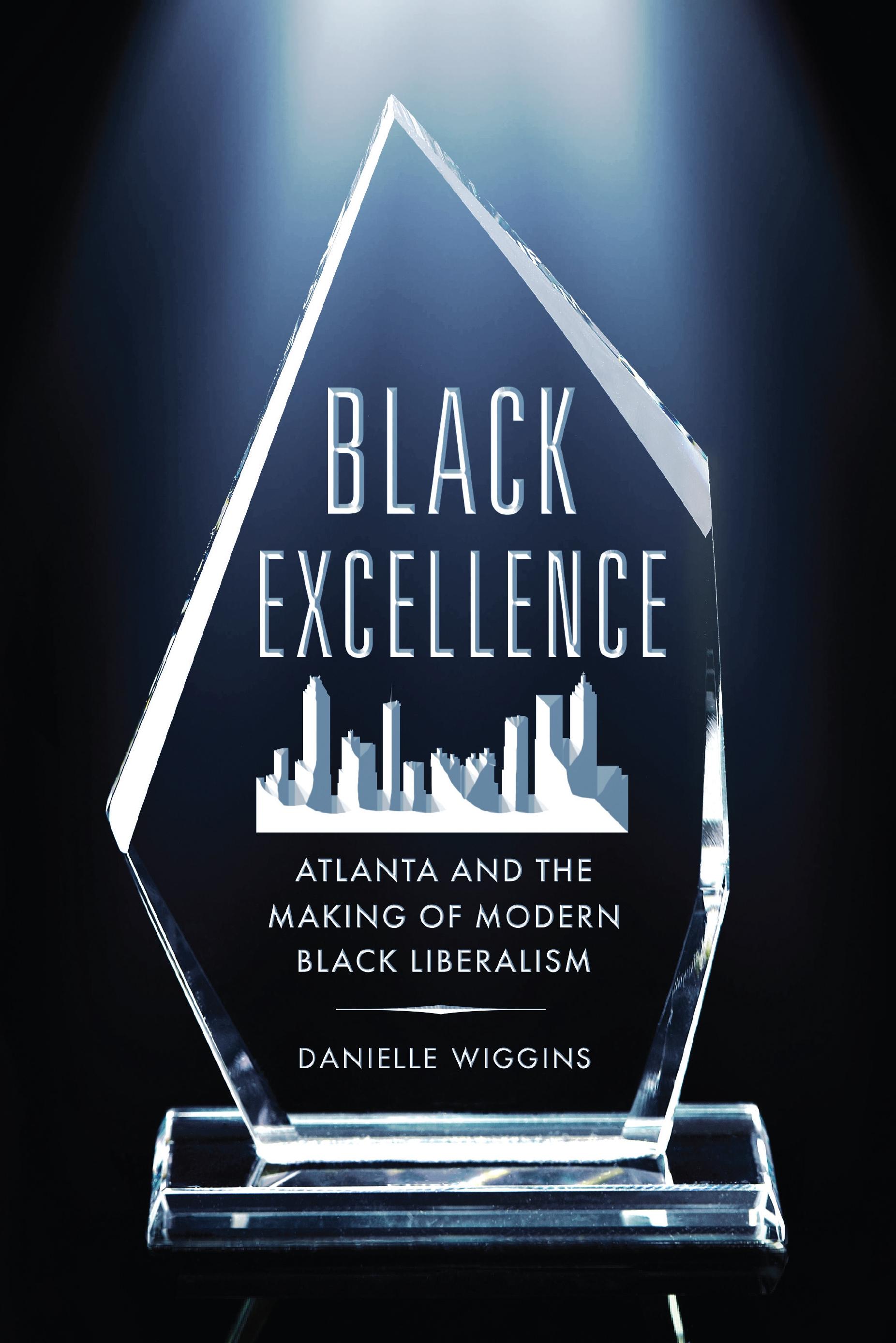
Black Excellence offers a provocative new history of modern black liberalism by situating the seemingly conservative tendencies of black elected officials in the post–civil rights era within neoliberal American politics and an enduring black liberal tradition.
In the 1970s and ’80s, cities across the country elected black mayors for the first time. Just as these officials gained political power, however, their cities felt the full brunt of white flight and deindustrialization. Tasked with governing cities in crisis, black political leaders responded in seemingly conservative ways to the social problems that austerity worsened. Nowhere was this response more evident than in Atlanta. In the nation’s preeminent black urban regime, black leaders such as mayors Maynard Jackson and Andrew Young employed the power of policing and the private sector to discipline black Atlantans, hoping they would equip vulnerable communities with the tools to manage the volatility of the era.
Danielle Wiggins shows that these punitive responses to the problems of crime, family instability, and unemployment were informed by black liberalism’s disciplinary impulse: an enduring tendency to reform behaviors believed to threaten black survival in a white supremacist nation. Forged in response to the violence of Jim Crow, the disciplinary impulse relied upon notions of pathology and its inverse, black excellence. Wiggins identifies several black liberal efforts to cultivate excellent black communities, families, and workers in the post–civil rights era, including community policing, corporate-sponsored family initiatives, and black entrepreneurship.
In embracing disciplinary strategies, however, black liberals often focused on behavior at the expense of addressing structural inequality. Consequently, their approaches dovetailed with those of the “New” Democrats, whose post–Great Society social policies were informed by urban black liberals. Black Excellence reveals thus how urban black liberals not only reshaped black politics but, as Democrats, also helped build the neoliberal Democratic Party.
Before Memmo my notes were scattered across PDFs. Now a workspace pulls everything into one place — I see exactly what's still left to study.
Memmo's summaries are gold before exams. I don't have to re-read 800 pages two weeks before — just the important parts.
The AI chat has saved me the night before an exam more than once. I just keep asking until I get it — no waiting on a study group to reply.
The quizzes hit exactly what I need to know. Memmo tracks what I get stuck on — so I only practice what's worth it.
Flashcards with spaced repetition are magic. Memmo knows when I'm about to forget something and brings it back.
The AI podcasts are my favorite. I listen on my way to school and get a recap without sitting at a computer.

Handbok i kvalitativa metoder
281 kr

Hållbar utveckling: en introduktion för ingenjörer och andra problemlösare
334 kr

Brymans Samhällsvetenskapliga metoder
390 kr

Projektledning
491 kr

Den orättvisa hälsan: om socioekonomiska skillnader i hälsa och livslängd
326 kr

Vetenskapsteori för nybörjare
196 kr

Organizational Leadership
429 kr

På väg mot läraryrket
172 kr

Det sociala livet i skolan: Socialpsykologiska perspektiv
253 kr

Betygsättningens didaktik
151 kr

Personality
402 kr

Studying Leadership
404 kr

Managing Innovation
477 kr

Introduktion till samhällsvetenskaplig metod
347 kr

The Psychology of Sex and Gender
698 kr

Evidens och kunskap för socialt arbete
207 kr

Introduction to Leadership
605 kr