
Before Memmo my notes were scattered across PDFs. Now a workspace pulls everything into one place — I see exactly what's still left to study.
A social and transnational history of black abolitionism in Brazil
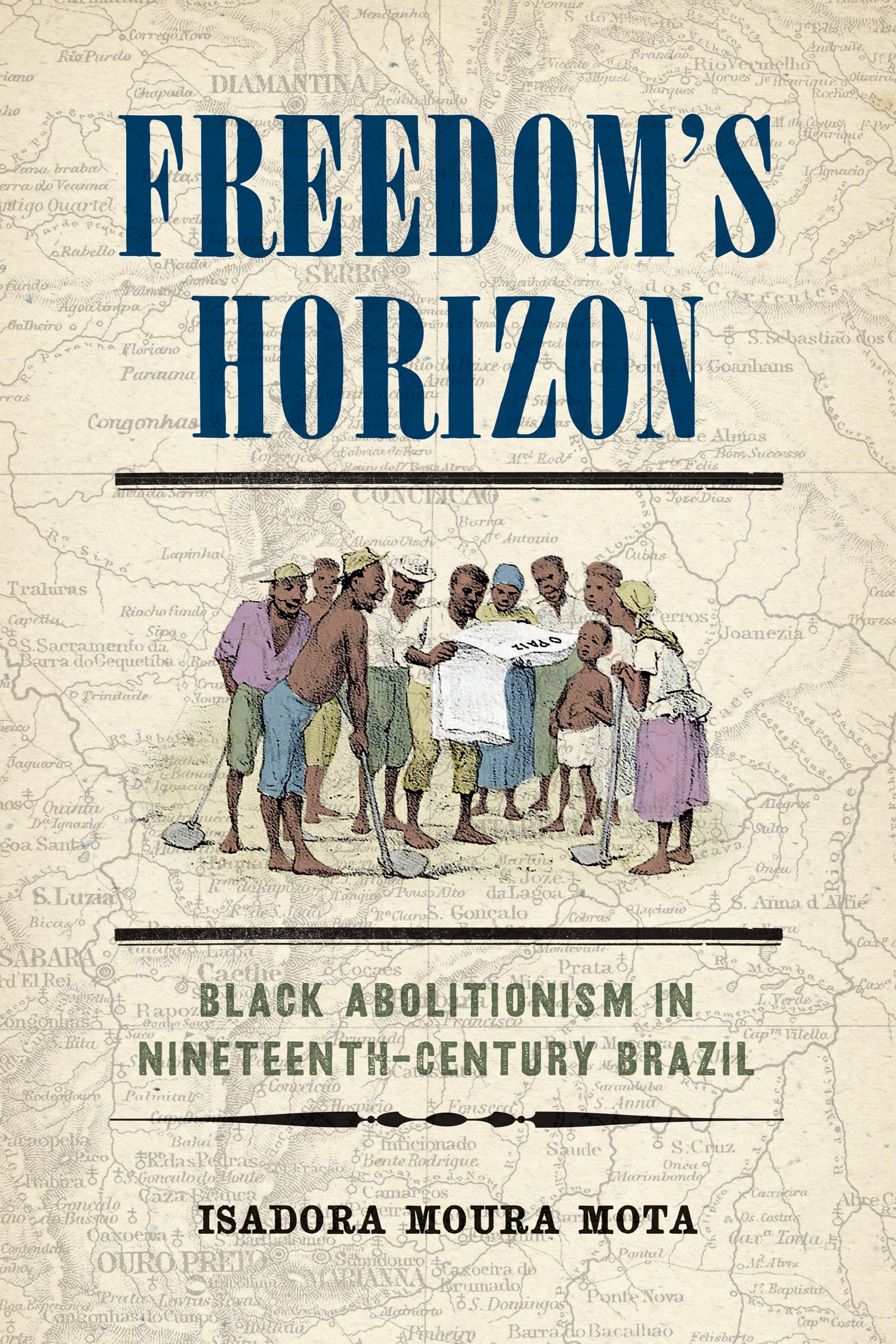
Freedom’s Horizon is a transnational history of black abolitionism in Brazil. In the last country to abolish slavery in the Western Hemisphere, enslaved and free Africans and their descendants crafted their visions of liberation by thinking comparatively about the uneven spread of abolition across the Atlantic world. Between the 1840s and 1860s, they acted on the idea that the end of slavery anywhere placed freedom on the horizon in Brazil. Thus, they pursued alliances with British diplomats; rose in arms at the sight of both Union and Confederate warships off Brazil’s Atlantic coast; sought free soil at foreign consulates, on ships, and in maroon settlements (called quilombos); and organized uprisings for immediate abolition after learning of international emancipation struggles in the newspapers.
Isadora Moura Mota shows that through flight, marronage, rebellion, and literacy practices, enslaved and freed peoples in Brazil developed a geopolitical imagination in dialogue with the British campaign against the slave trade (banned in Brazil in 1850), French antislavery, the Haitian Revolution, the US Civil War, and the Triple Alliance War (1865–1870) in South America. Traditionally, historical research has focused on the 1870s and 1880s, when abolition emerged as Brazil’s first national mass political movement, ultimately leading to the outlawing of slavery in 1888. By turning attention to earlier decades and to the role of literacy in the associational lives of afro-Brazilians, Freedom’s Horizon reveals that abolitionism was more than just the cause of North Atlantic reformers, Latin American modernizing elites, or middle-class advocates. It was a grassroots movement that originated in the social and conceptual worlds of the enslaved and connected to a hemispheric black radical tradition.
Before Memmo my notes were scattered across PDFs. Now a workspace pulls everything into one place — I see exactly what's still left to study.
Memmo's summaries are gold before exams. I don't have to re-read 800 pages two weeks before — just the important parts.
The AI chat has saved me the night before an exam more than once. I just keep asking until I get it — no waiting on a study group to reply.
The quizzes hit exactly what I need to know. Memmo tracks what I get stuck on — so I only practice what's worth it.
Flashcards with spaced repetition are magic. Memmo knows when I'm about to forget something and brings it back.
The AI podcasts are my favorite. I listen on my way to school and get a recap without sitting at a computer.

Handbok i kvalitativa metoder
281 kr

Hållbar utveckling: en introduktion för ingenjörer och andra problemlösare
334 kr

Brymans Samhällsvetenskapliga metoder
390 kr

Projektledning
491 kr

Den orättvisa hälsan: om socioekonomiska skillnader i hälsa och livslängd
326 kr

Organizational Leadership
429 kr

Vetenskapsteori för nybörjare
196 kr

På väg mot läraryrket
172 kr

Det sociala livet i skolan: Socialpsykologiska perspektiv
253 kr

Betygsättningens didaktik
151 kr

Personality
402 kr

Studying Leadership
404 kr

Managing Innovation
477 kr

Introduktion till samhällsvetenskaplig metod
347 kr

The Psychology of Sex and Gender
698 kr

Evidens och kunskap för socialt arbete
207 kr

Introduction to Leadership
605 kr