
Before Memmo my notes were scattered across PDFs. Now a workspace pulls everything into one place — I see exactly what's still left to study.
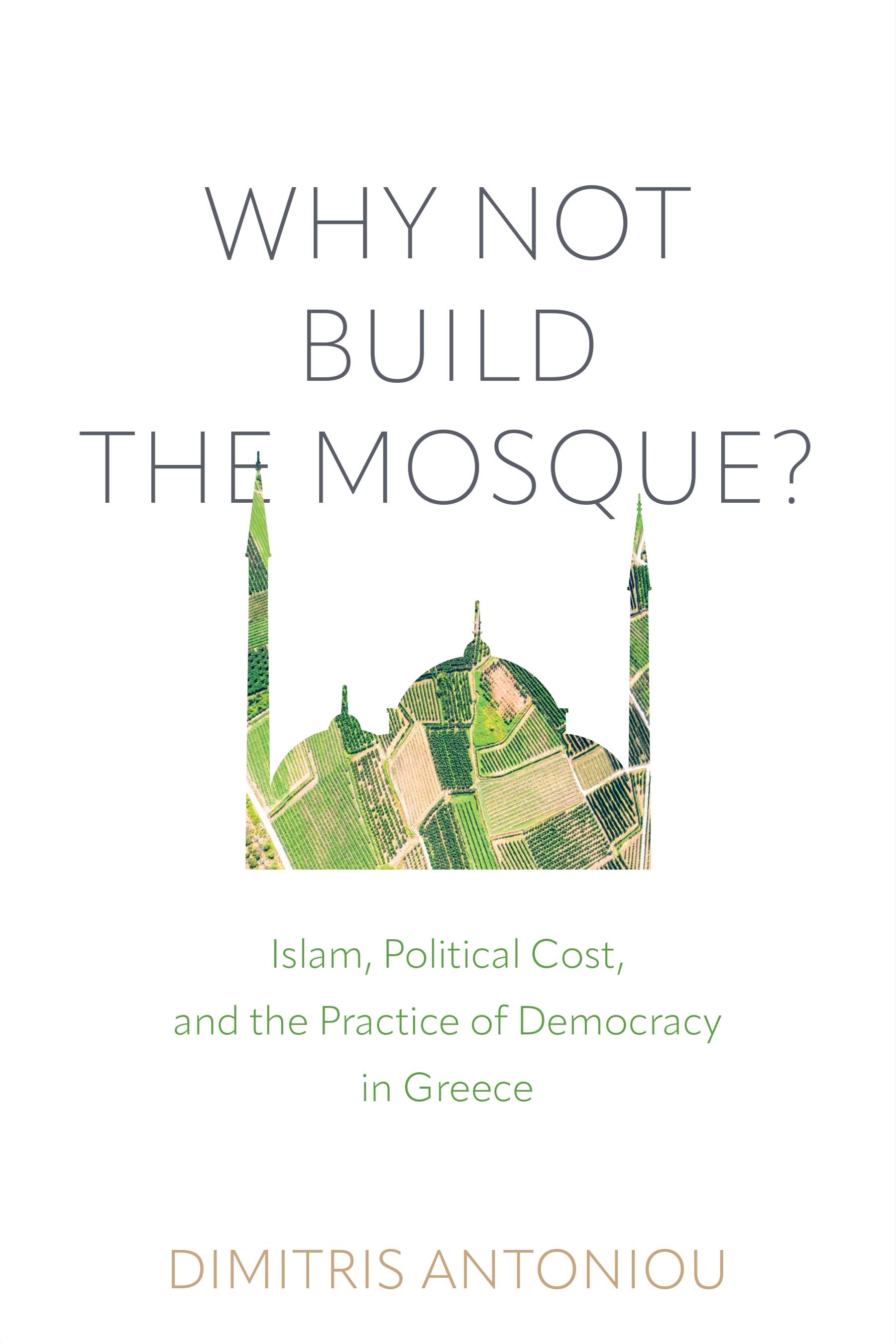
An ethnography of a long-unbuilt mosque in Greece that explores government operations and contemporary democracy
Why Not Build the Mosque? tells the story of the Greek state’s centuries-long attempt to build a central mosque. After the fall of Ottoman Empire, Greek Orthodoxy entwined with Greek nationalism, and by the twentieth century, the state came to imagine Islam as incompatible with a Greek-speaking Orthodox Christian identity. And so as late as 2020, the contemporary Greek state did not have a mosque, even as its Islamic population grew and increasingly required a place of worship.
Focusing on the failed effort in the early 2000s to build a mosque in a suburb of Athens and on the subsequent, successful realization of the project in 2020, Dimitris Antoniou investigates the roles that the Orthodox Church, politicians concerned about the “political cost” of supporting a mosque, and the community played in the project’s delays, failures, and its bittersweet success. The mosque that was ultimately built in 2020 was itself a compromise, a modest building that failed to deliver on the dreamed-of and finally illusory building discussed in the 2000s.
As Antoniou brings readers from under-the-radar home mosques to the offices of polling companies, politicians, and media corporations, he reveals that the years-long debate over if, how, and where to build a mosque wasa matter greater than religion or nationalism alone. Indeed, the story of the central mosque in Athens compellingly demonstrates how productive unrealized plans can be for some stakeholders—here politicians and members of media who built reputations on their support for or opposition to the unbuilt mosque—while leaving other stakeholders unable to move a project forward even when the will of the majority is with them. Ultimately, Why Not Build the Mosque? sheds light on what it takes for a government to make tangible changes—to infrastructure, in development, for a community—happen in contemporary democracies.
Before Memmo my notes were scattered across PDFs. Now a workspace pulls everything into one place — I see exactly what's still left to study.
Memmo's summaries are gold before exams. I don't have to re-read 800 pages two weeks before — just the important parts.
The AI chat has saved me the night before an exam more than once. I just keep asking until I get it — no waiting on a study group to reply.
The quizzes hit exactly what I need to know. Memmo tracks what I get stuck on — so I only practice what's worth it.
Flashcards with spaced repetition are magic. Memmo knows when I'm about to forget something and brings it back.
The AI podcasts are my favorite. I listen on my way to school and get a recap without sitting at a computer.

Handbok i kvalitativa metoder
281 kr

Hållbar utveckling: en introduktion för ingenjörer och andra problemlösare
334 kr

Brymans Samhällsvetenskapliga metoder
390 kr

Projektledning
491 kr

Den orättvisa hälsan: om socioekonomiska skillnader i hälsa och livslängd
326 kr

Organizational Leadership
429 kr

Vetenskapsteori för nybörjare
196 kr

På väg mot läraryrket
172 kr

Det sociala livet i skolan: Socialpsykologiska perspektiv
253 kr

Betygsättningens didaktik
151 kr

Personality
402 kr

Studying Leadership
404 kr

Managing Innovation
477 kr

Introduktion till samhällsvetenskaplig metod
347 kr

The Psychology of Sex and Gender
698 kr

Evidens och kunskap för socialt arbete
207 kr

Introduction to Leadership
605 kr