
Before Memmo my notes were scattered across PDFs. Now a workspace pulls everything into one place — I see exactly what's still left to study.
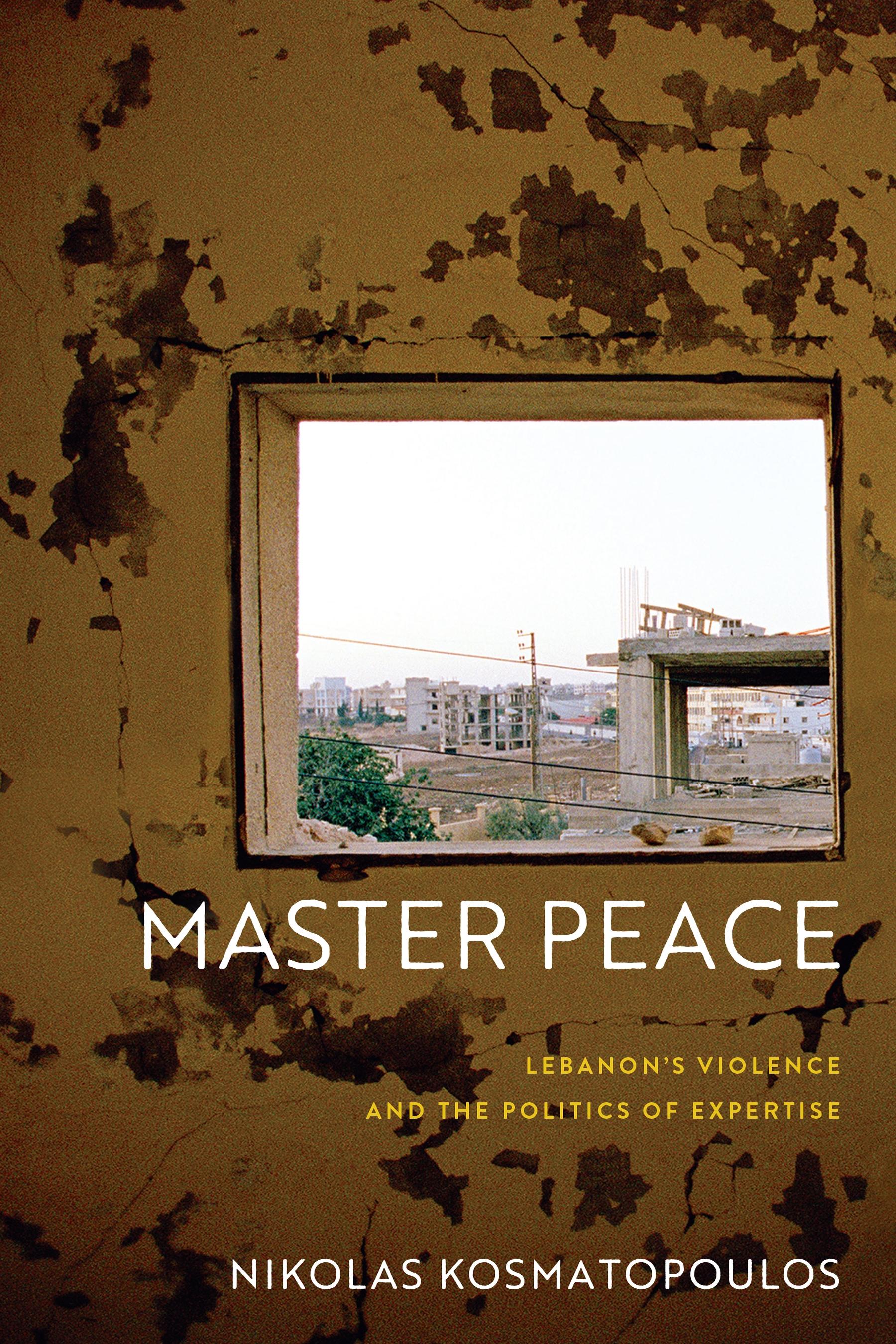
Examines the politics of expertise in the practices of peacemaking in post–civil war Lebanon
Based on multi-sited ethnographic research centering on Beirut, but tracing international peace work as far as Switzerland and the United States, Master Peace examines the politics of expertise in the application of metropolitan theories of violence and practices of peacemaking in post–civil war Lebanon. Through ethnographic encounters, archival research, and interviews that shed light on the worlds of academic research, UN agencies, NGOs, and think tanks, Nikolas Kosmatopoulos argues that so-called experts, from violence researchers to peace professionals, have often misrepresented and exacerbated the violence they claim to be tackling, through their deployment of racialized tropes of conflict and communalizing peace practices.
The assemblage of these tropes and practices, which Kosmatopoulos calls “master peace,” naturalizes social and structural inequalities by collapsing them into supposedly innate cultural and sectarian divisions. Master peace installs unequal relations of domination through the work of metropolitan theories, as in “ethnic conflict” and “failed state,” and practices, such as conflict resolution workshops and crisis reports, converting the radical demand for just peace into a postcolonial regime of dependence on technocratic tools, unaccountable experts, and external donors.
Kosmatopoulos shows how master peace has been framing debates, designing interventions of peace and war, and defining the problem of violence in Lebanon and the Middle East for decades, to deleterious effect. As the supposed moral high ground that justifies external intervention and precludes political solutions or democratic forms of action, master peace has obscured the geopolitical and ideological nature of violence in the region, substituting democratic notions of peace for an elitist antipolitics of expertise characterized by dependence, domination, and epistemic violence.
Before Memmo my notes were scattered across PDFs. Now a workspace pulls everything into one place — I see exactly what's still left to study.
Memmo's summaries are gold before exams. I don't have to re-read 800 pages two weeks before — just the important parts.
The AI chat has saved me the night before an exam more than once. I just keep asking until I get it — no waiting on a study group to reply.
The quizzes hit exactly what I need to know. Memmo tracks what I get stuck on — so I only practice what's worth it.
Flashcards with spaced repetition are magic. Memmo knows when I'm about to forget something and brings it back.
The AI podcasts are my favorite. I listen on my way to school and get a recap without sitting at a computer.

Handbok i kvalitativa metoder
281 kr

Hållbar utveckling: en introduktion för ingenjörer och andra problemlösare
334 kr

Brymans Samhällsvetenskapliga metoder
390 kr

Projektledning
491 kr

Den orättvisa hälsan: om socioekonomiska skillnader i hälsa och livslängd
326 kr

Organizational Leadership
429 kr

Vetenskapsteori för nybörjare
196 kr

På väg mot läraryrket
172 kr

Det sociala livet i skolan: Socialpsykologiska perspektiv
253 kr

Betygsättningens didaktik
151 kr

Personality
402 kr

Studying Leadership
404 kr

Managing Innovation
477 kr

Introduktion till samhällsvetenskaplig metod
347 kr

The Psychology of Sex and Gender
698 kr

Evidens och kunskap för socialt arbete
207 kr

Introduction to Leadership
605 kr