
Before Memmo my notes were scattered across PDFs. Now a workspace pulls everything into one place — I see exactly what's still left to study.
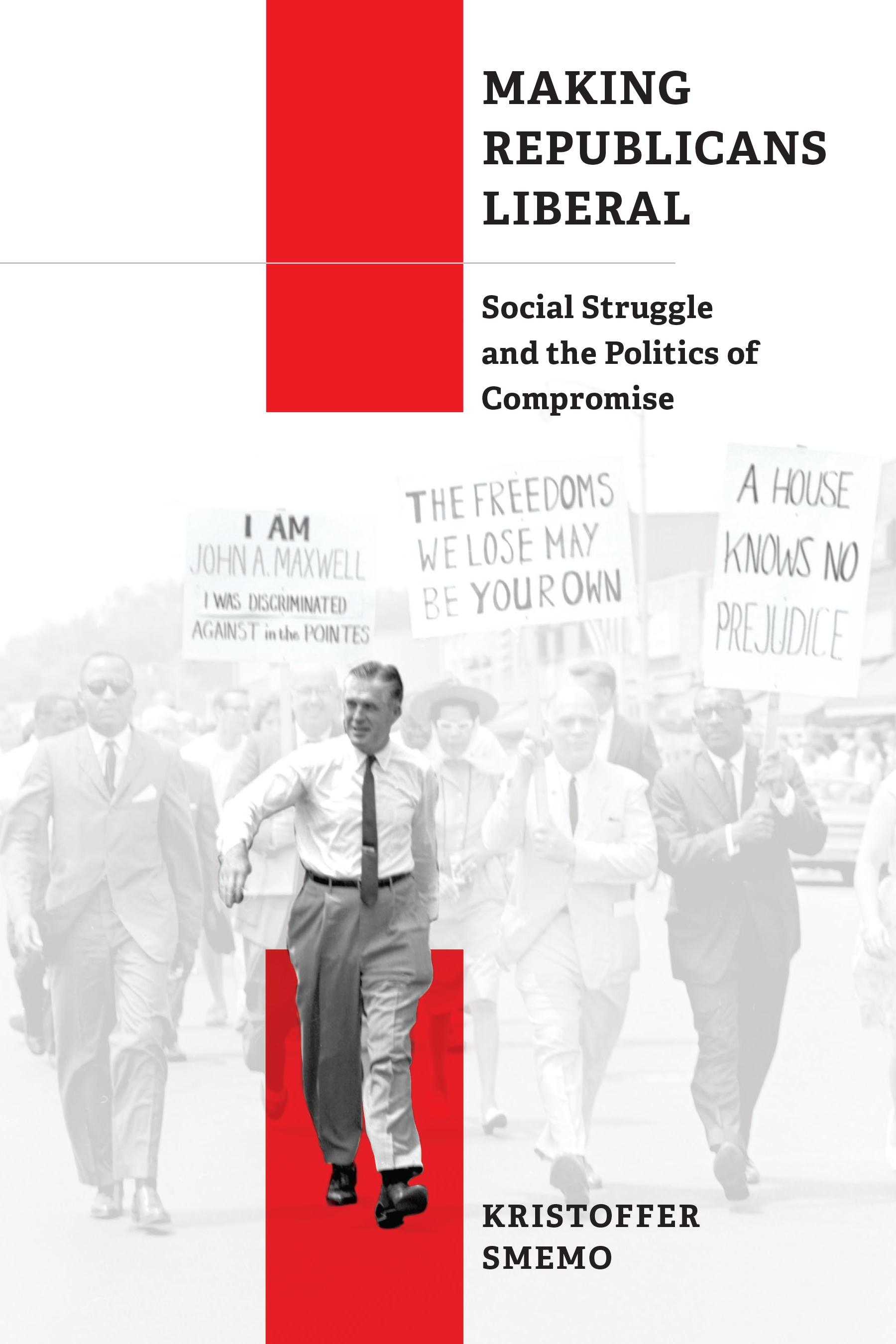
Mass movements and social protest forced mid-century Republicans to articulate their own form of liberalism
As poor and working people organized themselves on the job, in the streets, and at the polls during the mid-twentieth century, they forced Republicans to reckon with new demands for political and social citizenship in big cities across the Northeast, Midwest, and Pacific Coast. While rightwing Republicans mobilized to crush those movements, Making Republicans Liberal explores how another wing of the party responded to intensifying mass movement pressure. Beginning in the 1930s, Republican governors such as Earl Warren of California, George Romney of Michigan, and Nelson Rockefeller of New York spent the next four decades articulating their own vision of liberalism. These Republican liberals believed that strategically they could not win elections and govern in places where unions, civil rights groups, and other social movements organized voters.
What may have begun as an opportunistic strategy soon mutated into an ideological commitment to use state power to realize working people’s demands for a greater say, and stake, in the decisions governing their lives. Republican liberals accepted labor’s right to organize, legislated antidiscrimination laws, and legalized abortion. Yet at the same time, each of those policies proved weaker than the alternatives supported by organized labor or mainline civil rights groups and paled in comparison to what people on strike and on the march really wanted. Kristoffer Smemo shows how this was the contradiction of Republican liberalism as a policy program and as an ideology. The reforms it ushered in at once asked too much from core, conservative Republican constituencies and offered too little to the movements struggling for change. As the movements making Republicans compromise fragmented and collapsed in the late twentieth century, so too did the material foundation for Republican liberalism.
Before Memmo my notes were scattered across PDFs. Now a workspace pulls everything into one place — I see exactly what's still left to study.
Memmo's summaries are gold before exams. I don't have to re-read 800 pages two weeks before — just the important parts.
The AI chat has saved me the night before an exam more than once. I just keep asking until I get it — no waiting on a study group to reply.
The quizzes hit exactly what I need to know. Memmo tracks what I get stuck on — so I only practice what's worth it.
Flashcards with spaced repetition are magic. Memmo knows when I'm about to forget something and brings it back.
The AI podcasts are my favorite. I listen on my way to school and get a recap without sitting at a computer.

Handbok i kvalitativa metoder
281 kr

Hållbar utveckling: en introduktion för ingenjörer och andra problemlösare
334 kr

Brymans Samhällsvetenskapliga metoder
390 kr

Projektledning
491 kr

Den orättvisa hälsan: om socioekonomiska skillnader i hälsa och livslängd
326 kr

Vetenskapsteori för nybörjare
196 kr

Organizational Leadership
429 kr

På väg mot läraryrket
172 kr

Det sociala livet i skolan: Socialpsykologiska perspektiv
253 kr

Betygsättningens didaktik
151 kr

Personality
402 kr

Studying Leadership
404 kr

Managing Innovation
477 kr

Introduktion till samhällsvetenskaplig metod
347 kr

The Psychology of Sex and Gender
698 kr

Evidens och kunskap för socialt arbete
207 kr

Introduction to Leadership
605 kr