
Before Memmo my notes were scattered across PDFs. Now a workspace pulls everything into one place — I see exactly what's still left to study.
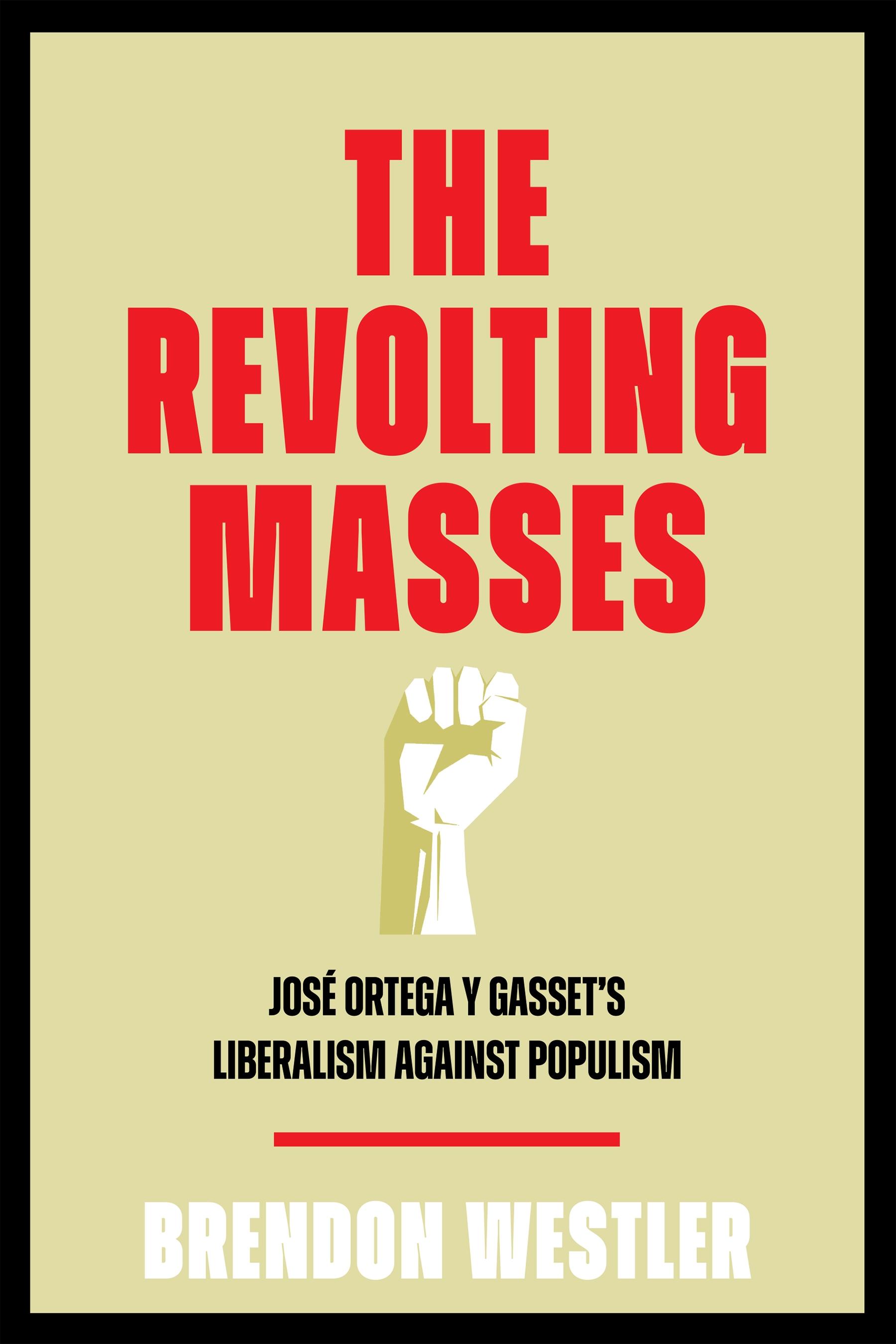
José Ortega y Gasset (1883–1955) was a Spanish philosopher and essayist best known for The Revolt of the Masses, first translated into English in 1932. In it, Ortega critiques a populist deformation of democracy by the rise of a “mass mentality” characterized by selfishness, a lack of curiosity, and a general indifference to the opinions and attitudes of others. However, as Brendon Westler makes clear, we need to look beyond Ortega’s arguments about populism and democracy in his most famous work to recover the philosopher’s expansive political outlook and to identify his valuable contributions to the history and advancement of liberalism.
Westler’s book reconstructs Ortega’s political theory, underscoring its distinctive historical origins as well as the ways in which it might be instructive to us today. Through an exploration of works less familiar to an English-speaking audience, such as Concord and Liberty, “Vieja y nueva política,” “De Europa meditatio Quaedam,” and “Democracia morbosa,” combined with a sensitivity to larger social and political ideas circulating within Spain, The Revolting Masses traces the contours of Ortega’s approach to politics. Westler argues that reading texts written over the course of the philosopher’s entire career, in combination with The Revolt of the Masses, offers a more complete picture of Ortega’s political thought—one that advocates for a liberal ethos as an answer to populism and promotes both individual freedom and the preservation of community bonds.
As The Revolting Masses shows, Ortega was, above all, a philosopher who reflected on what it would take for people of differing beliefs to live together. His unique conception of liberalism, grounded in the Spanish tradition, not only emphasizes pluralism and diversity of thought and institutions but also serves as a potential antidote to the populism of our present moment.
Before Memmo my notes were scattered across PDFs. Now a workspace pulls everything into one place — I see exactly what's still left to study.
Memmo's summaries are gold before exams. I don't have to re-read 800 pages two weeks before — just the important parts.
The AI chat has saved me the night before an exam more than once. I just keep asking until I get it — no waiting on a study group to reply.
The quizzes hit exactly what I need to know. Memmo tracks what I get stuck on — so I only practice what's worth it.
Flashcards with spaced repetition are magic. Memmo knows when I'm about to forget something and brings it back.
The AI podcasts are my favorite. I listen on my way to school and get a recap without sitting at a computer.

Handbok i kvalitativa metoder
281 kr

Hållbar utveckling: en introduktion för ingenjörer och andra problemlösare
334 kr

Brymans Samhällsvetenskapliga metoder
390 kr

Projektledning
491 kr

Den orättvisa hälsan: om socioekonomiska skillnader i hälsa och livslängd
326 kr

Vetenskapsteori för nybörjare
196 kr

Organizational Leadership
429 kr

På väg mot läraryrket
172 kr

Det sociala livet i skolan: Socialpsykologiska perspektiv
253 kr

Betygsättningens didaktik
151 kr

Personality
402 kr

Studying Leadership
404 kr

Managing Innovation
477 kr

Introduktion till samhällsvetenskaplig metod
347 kr

The Psychology of Sex and Gender
698 kr

Evidens och kunskap för socialt arbete
207 kr

Introduction to Leadership
605 kr