
Before Memmo my notes were scattered across PDFs. Now a workspace pulls everything into one place — I see exactly what's still left to study.
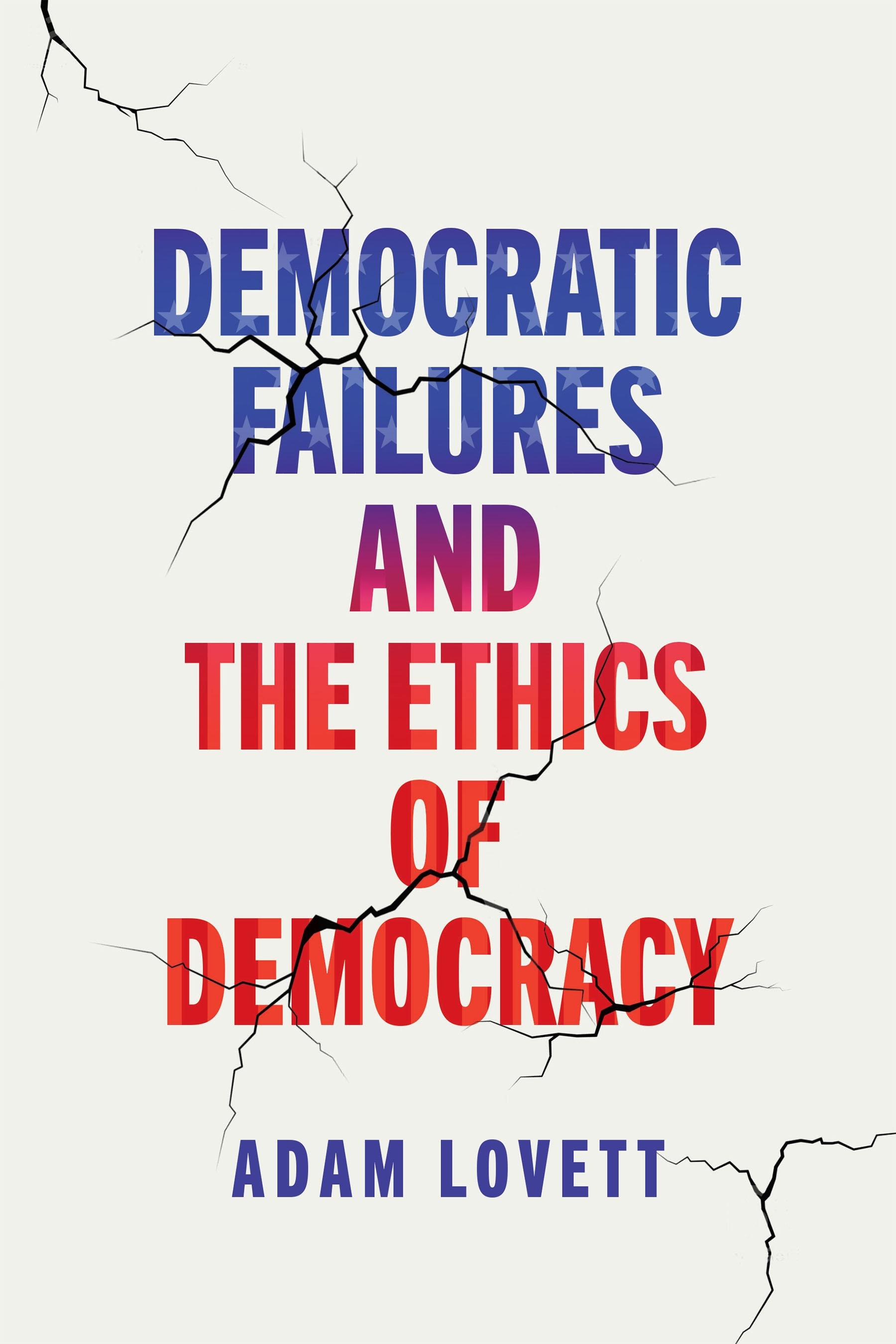
In Democratic Failures and the Ethics of Democracy, political philosopher Adam Lovett argues that when it comes to democratic ideals, the United States is a failed democracy. Specifically, he contends that American democracy has failed to advance equality and self-rule for its citizens—qualities he identifies as essential components of democracy’s intrinsic value. Drawing on rich empirical research, Lovett applies original philosophical analysis to reveal real-world democratic failures and evaluate their philosophical and ethical consequences.
His research locates democratic failures at both the level of political elites and at the level of the masses. At the elite level, elected officials shape policy to prioritize the interests of their supporters, where wealthy individuals and corporations are the most influential. At the mass level, ordinary citizens are motivated to vote not to introduce specific policies but by party identification. By mapping how these failures erode equality and self-rule, he demonstrates that they in fact undermine the ethics of democracy itself. After all, Lovett argues, when a state fails to represent ordinary citizens, those ordinary citizens are not morally obligated to follow the laws of the state.
Because the state fails to achieve democratic values in any meaningful way, its claim to political authority and legitimacy is diminished. However, Lovett does not conclude that American democracy is doomed—he instead proposes solutions from voting only on referendums to delegating aspects of public policy to unelected experts without partisan obligation. These reforms are vital for compelling the state to act on behalf of all citizens, not just the partisan or the powerful. Of interest to political scientists and political philosophers alike, Democratic Failures and the Ethics of Democracy sheds light on an increasingly troubled democratic ethos and proposes solutions for how ordinary citizens can work to save it.
Before Memmo my notes were scattered across PDFs. Now a workspace pulls everything into one place — I see exactly what's still left to study.
Memmo's summaries are gold before exams. I don't have to re-read 800 pages two weeks before — just the important parts.
The AI chat has saved me the night before an exam more than once. I just keep asking until I get it — no waiting on a study group to reply.
The quizzes hit exactly what I need to know. Memmo tracks what I get stuck on — so I only practice what's worth it.
Flashcards with spaced repetition are magic. Memmo knows when I'm about to forget something and brings it back.
The AI podcasts are my favorite. I listen on my way to school and get a recap without sitting at a computer.

Handbok i kvalitativa metoder
281 kr

Hållbar utveckling: en introduktion för ingenjörer och andra problemlösare
334 kr

Brymans Samhällsvetenskapliga metoder
390 kr

Projektledning
491 kr

Den orättvisa hälsan: om socioekonomiska skillnader i hälsa och livslängd
326 kr

Organizational Leadership
429 kr

Vetenskapsteori för nybörjare
196 kr

På väg mot läraryrket
172 kr

Det sociala livet i skolan: Socialpsykologiska perspektiv
253 kr

Betygsättningens didaktik
151 kr

Personality
402 kr

Studying Leadership
404 kr

Managing Innovation
477 kr

Introduktion till samhällsvetenskaplig metod
347 kr

The Psychology of Sex and Gender
698 kr

Evidens och kunskap för socialt arbete
207 kr

Introduction to Leadership
605 kr