
Before Memmo my notes were scattered across PDFs. Now a workspace pulls everything into one place — I see exactly what's still left to study.
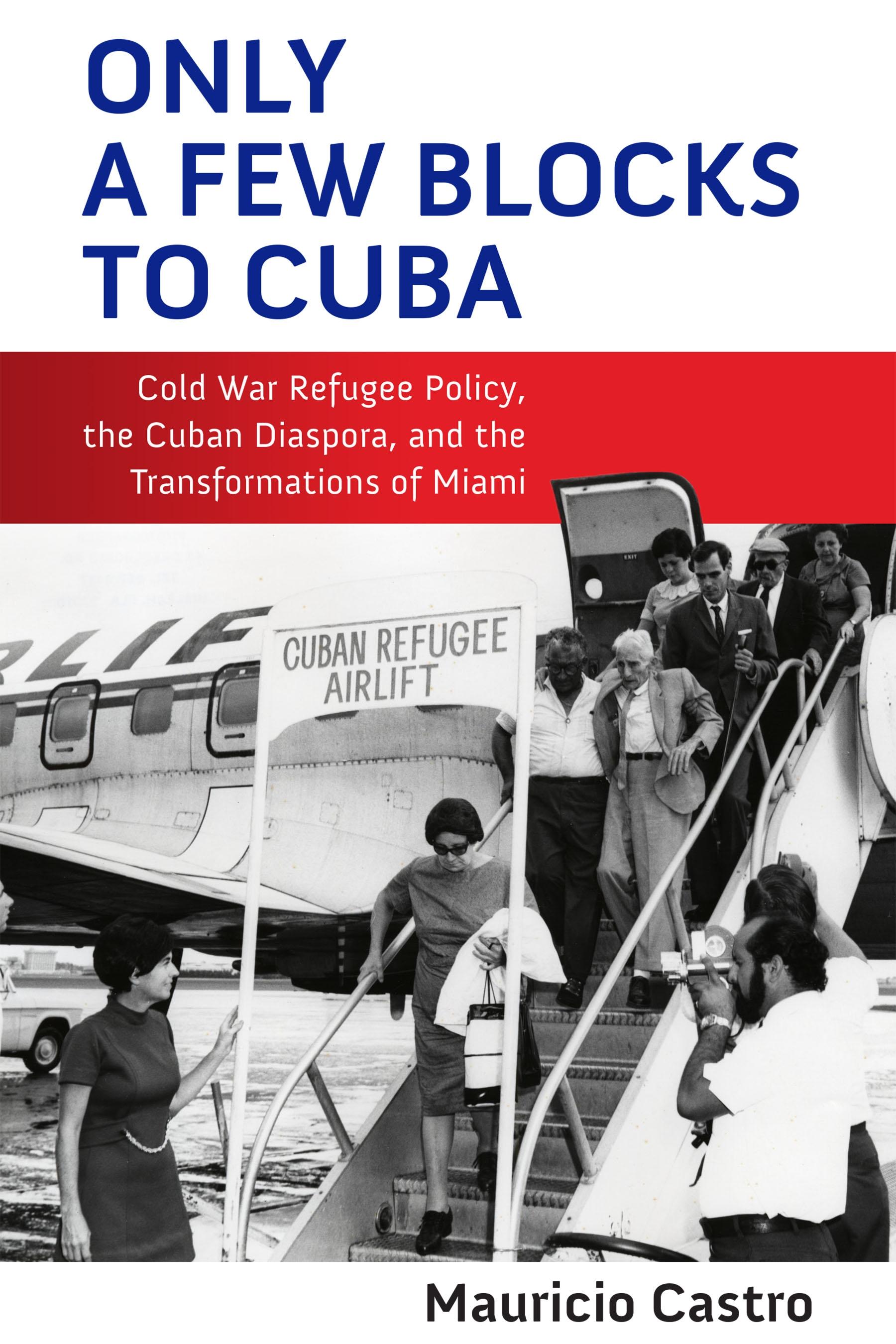
In Only a Few Blocks to Cuba, Mauricio Castro shows how the U.S. government came to view Cuban migration to Miami as a strategic asset during the Cold War, in the process investing heavily in the city’s development and shaping its future as a global metropolis.
When Cuban refugees fleeing Communist revolution began to arrive in Miami in 1959, the city was faced with a humanitarian crisis it was ill-equipped to handle and sought to have the federal government solve what local politicians clearly viewed as a Cold War geopolitical problem. In response, the Eisenhower and Kennedy administrations, and their successors, provided an unprecedented level of federal largesse and freedom of transit to these refugees. The changes to the city this investment wrought were as impactful and permanent as they were unintended. What was meant to be a short-term geopolitical stratagem instead became a new reality in South Florida. A growing and increasingly powerful Cuban community contested their place in Miami and navigated challenges like bilingualism, internal political disputes, socioeconomic polarization, and ongoing struggles and negotiations with Washington and Havana in the decades that followed. This contested process, argues Mauricio Castro, not only transformed South Florida, but American foreign policy and the calculus of national politics.
Castro uses extensive archival research in local and national sources to demonstrate that the Cuban diaspora and Cold War refugee policy made South Florida a key space to understanding the shifting landscape of the late twentieth century. In this way, Miami serves as an example of both the lived effects of defense spending in urban spaces and of how local communities can shape national politics and international relations. American politics, foreign relations, immigration policy, and urban development all intersected on the streets of Miami.
Before Memmo my notes were scattered across PDFs. Now a workspace pulls everything into one place — I see exactly what's still left to study.
Memmo's summaries are gold before exams. I don't have to re-read 800 pages two weeks before — just the important parts.
The AI chat has saved me the night before an exam more than once. I just keep asking until I get it — no waiting on a study group to reply.
The quizzes hit exactly what I need to know. Memmo tracks what I get stuck on — so I only practice what's worth it.
Flashcards with spaced repetition are magic. Memmo knows when I'm about to forget something and brings it back.
The AI podcasts are my favorite. I listen on my way to school and get a recap without sitting at a computer.

Handbok i kvalitativa metoder
281 kr

Hållbar utveckling: en introduktion för ingenjörer och andra problemlösare
334 kr

Brymans Samhällsvetenskapliga metoder
390 kr

Projektledning
491 kr

Den orättvisa hälsan: om socioekonomiska skillnader i hälsa och livslängd
326 kr

Vetenskapsteori för nybörjare
196 kr

Organizational Leadership
429 kr

På väg mot läraryrket
172 kr

Det sociala livet i skolan: Socialpsykologiska perspektiv
253 kr

Betygsättningens didaktik
151 kr

Personality
402 kr

Studying Leadership
404 kr

Managing Innovation
477 kr

Introduktion till samhällsvetenskaplig metod
347 kr

The Psychology of Sex and Gender
698 kr

Evidens och kunskap för socialt arbete
207 kr

Introduction to Leadership
605 kr