
Before Memmo my notes were scattered across PDFs. Now a workspace pulls everything into one place — I see exactly what's still left to study.
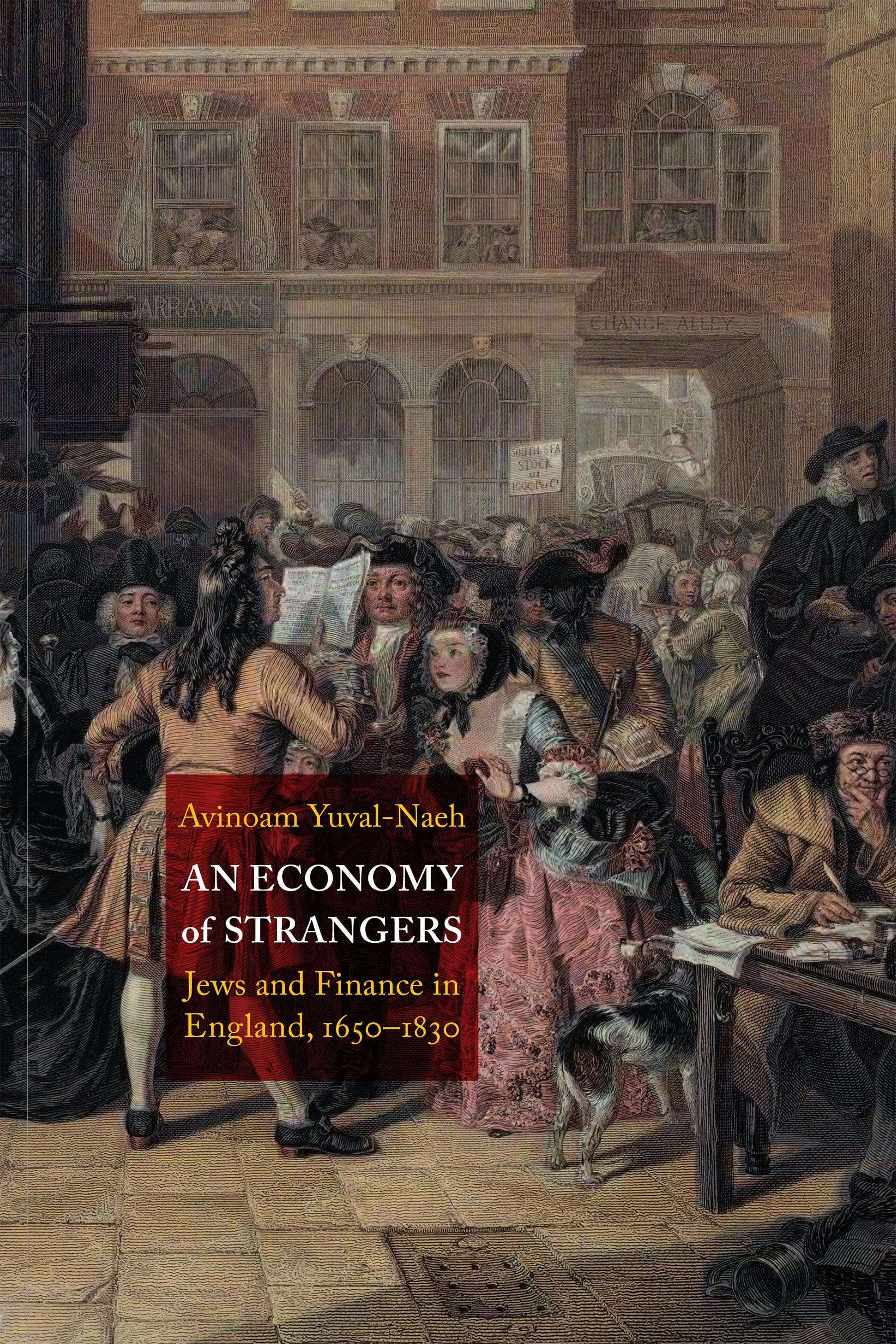
One of the most persistent, powerful, and dangerous notions in the history of the Jews in the diaspora is the prodigious talent attributed to them in all things economic. From the medieval Jewish usurer through the early-modern port-Jew and court-Jew to the grand financier of the nineteenth and twentieth centuries and contemporary investors, Jews loom large in the economic imagination. For capitalists and Marxists, libertarians and radical reformers, Jews are intertwined with the economy. This association has become so natural that we often overlook the history behind the making and remaking of the complex cluster of perceptions about Jews and economy, which emerged within different historical contexts to meet a variety of personal and societal anxieties and needs.
In An Economy of Strangers, Avinoam Yuval-Naeh historicizes this association by focusing on one specific time and place—the financial revolution that England underwent from the late seventeenth century that coincided with the reestablishment of the Jewish population there for the first time in almost four hundred years. European Christian societies had to that point shunned finance and constructed a normative system to avoid it, relying on the figure of the Jew as a foil. But as the economy modernized in the seventeenth century, finance became the hinge of national power. Finance’s rise in England provoked intense national debates. Could financial economy, based on lending money on interest, be accommodated within Christian state and society when it had previously been understood as a Jewish practice?
By projecting the modern economy and the Jewish community onto each other, the Christian majority imbued them with interrelated meanings. This braiding together of parallel developments, Yuval-Naeh argues, reveals in a meaningful way how the contemporary and wide-ranging association of Jews with the modern economy could be created.
Before Memmo my notes were scattered across PDFs. Now a workspace pulls everything into one place — I see exactly what's still left to study.
Memmo's summaries are gold before exams. I don't have to re-read 800 pages two weeks before — just the important parts.
The AI chat has saved me the night before an exam more than once. I just keep asking until I get it — no waiting on a study group to reply.
The quizzes hit exactly what I need to know. Memmo tracks what I get stuck on — so I only practice what's worth it.
Flashcards with spaced repetition are magic. Memmo knows when I'm about to forget something and brings it back.
The AI podcasts are my favorite. I listen on my way to school and get a recap without sitting at a computer.

Handbok i kvalitativa metoder
281 kr

Hållbar utveckling: en introduktion för ingenjörer och andra problemlösare
334 kr

Brymans Samhällsvetenskapliga metoder
390 kr

Projektledning
491 kr

Den orättvisa hälsan: om socioekonomiska skillnader i hälsa och livslängd
326 kr

Vetenskapsteori för nybörjare
196 kr

Organizational Leadership
429 kr

På väg mot läraryrket
172 kr

Det sociala livet i skolan: Socialpsykologiska perspektiv
253 kr

Betygsättningens didaktik
151 kr

Personality
402 kr

Studying Leadership
404 kr

Managing Innovation
477 kr

Introduktion till samhällsvetenskaplig metod
347 kr

The Psychology of Sex and Gender
698 kr

Evidens och kunskap för socialt arbete
207 kr

Introduction to Leadership
605 kr