
Before Memmo my notes were scattered across PDFs. Now a workspace pulls everything into one place — I see exactly what's still left to study.
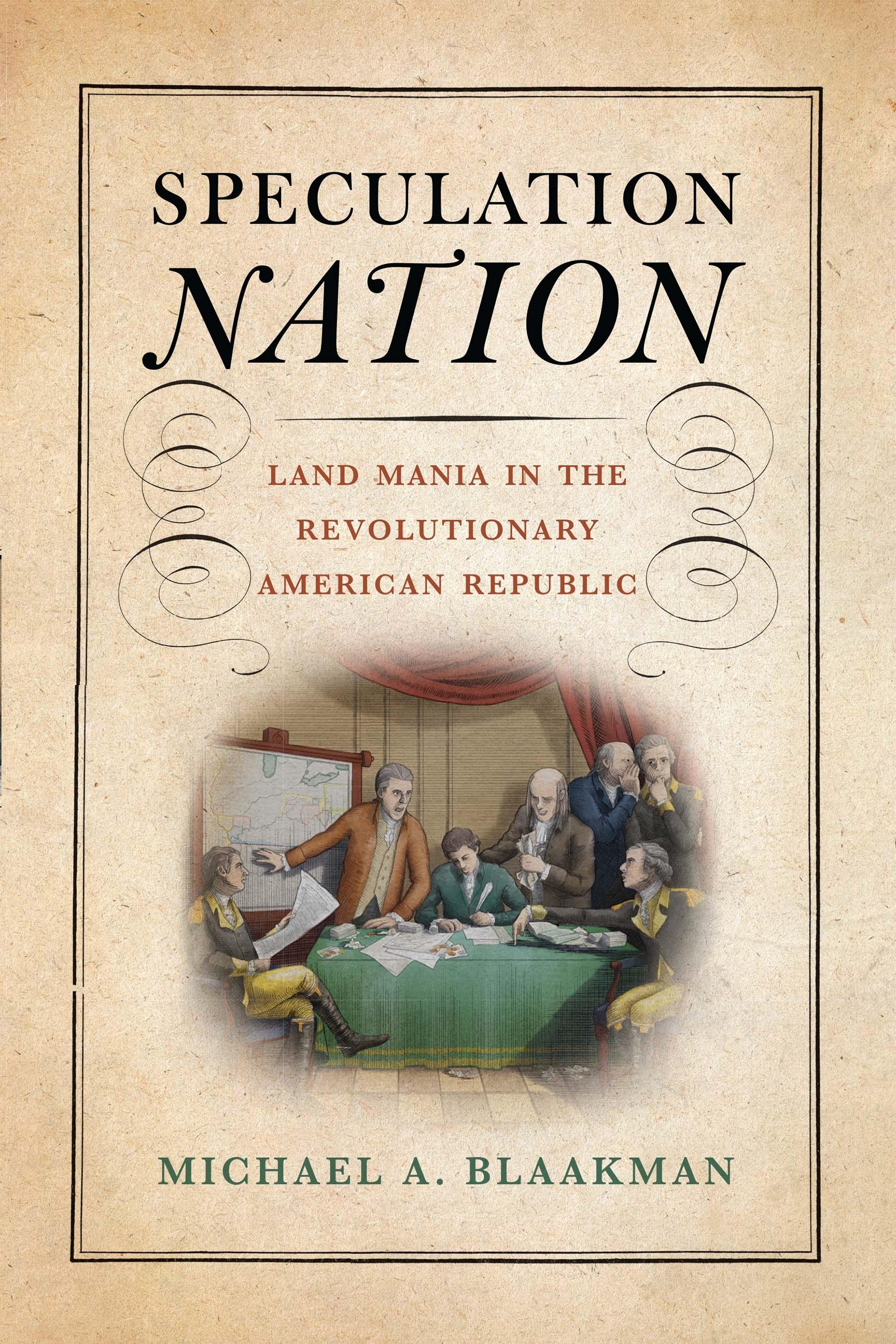
During the first quarter-century after its founding, the United States was swept by a wave of land speculation so unprecedented in intensity and scale that contemporaries and historians alike have dubbed it a “mania.” In Speculation Nation, Michael A. Blaakman uncovers the revolutionary origins of this real-estate bonanza—a story of ambition, corruption, capitalism, and statecraft that stretched across millions of acres from Maine to the Mississippi and Georgia to the Great Lakes.
Patriot leaders staked the success of their revolution on the seizure and public sale of Native American territory. Initially, they hoped that fledgling state and national governments could pay the hefty costs of the War for Independence and extend a republican society of propertied citizens by selling expropriated land directly to white farmers. But those democratic plans quickly ran aground of a series of obstacles, including an economic depression and the ability of many Native nations to repel U.S. invasion. Wily merchants, lawyers, planters, and financiers rushed into the breach. Scrambling to profit off future expansion, they lobbied governments to convey massive tracts for pennies an acre, hounded revolutionary veterans to sell their land bounties for a pittance, and marketed the rustic ideal of a yeoman’s republic—the early American dream—while waiting for land values to rise.
When the land business crashed in the late 1790s, scores of “land mad” speculators found themselves imprisoned for debt or declaring bankruptcy. But through their visionary schemes and corrupt machinations, U.S. speculators and statesmen had spawned a distinctive and enduring form of settler colonialism: a financialized frontier, which transformed vast swaths of contested land into abstract commodities. Speculation Nation reveals how the era of land mania made Native dispossession a founding premise of the American republic and ultimately rooted the United States’ “empire of liberty” in speculative capitalism.
Before Memmo my notes were scattered across PDFs. Now a workspace pulls everything into one place — I see exactly what's still left to study.
Memmo's summaries are gold before exams. I don't have to re-read 800 pages two weeks before — just the important parts.
The AI chat has saved me the night before an exam more than once. I just keep asking until I get it — no waiting on a study group to reply.
The quizzes hit exactly what I need to know. Memmo tracks what I get stuck on — so I only practice what's worth it.
Flashcards with spaced repetition are magic. Memmo knows when I'm about to forget something and brings it back.
The AI podcasts are my favorite. I listen on my way to school and get a recap without sitting at a computer.

Handbok i kvalitativa metoder
281 kr

Hållbar utveckling: en introduktion för ingenjörer och andra problemlösare
334 kr

Brymans Samhällsvetenskapliga metoder
390 kr

Projektledning
491 kr

Den orättvisa hälsan: om socioekonomiska skillnader i hälsa och livslängd
326 kr

Vetenskapsteori för nybörjare
196 kr

Organizational Leadership
429 kr

På väg mot läraryrket
172 kr

Det sociala livet i skolan: Socialpsykologiska perspektiv
253 kr

Betygsättningens didaktik
151 kr

Personality
402 kr

Studying Leadership
404 kr

Managing Innovation
477 kr

Introduktion till samhällsvetenskaplig metod
347 kr

The Psychology of Sex and Gender
698 kr

Evidens och kunskap för socialt arbete
207 kr

Introduction to Leadership
605 kr