
Before Memmo my notes were scattered across PDFs. Now a workspace pulls everything into one place — I see exactly what's still left to study.
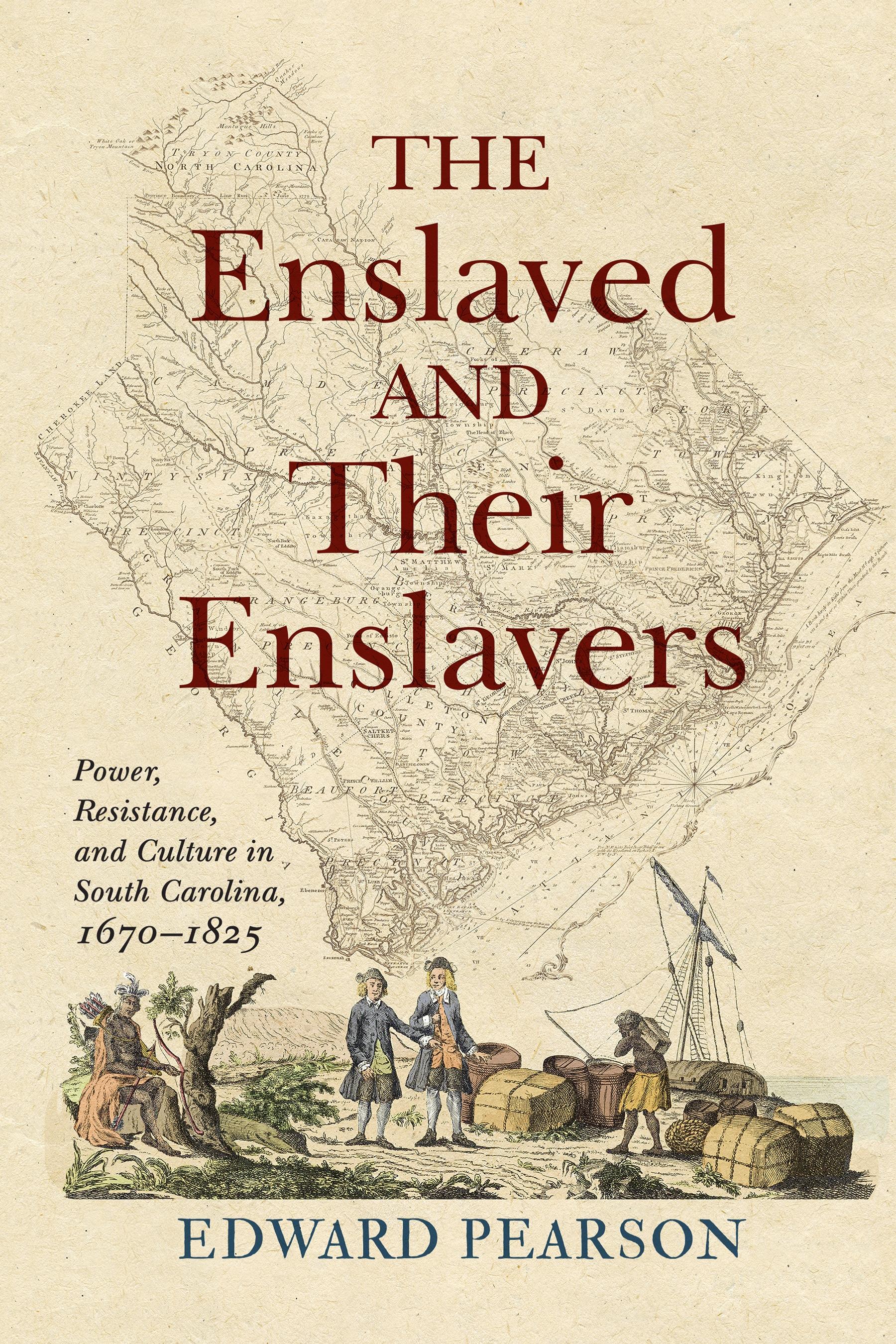
In The Enslaved and Their Enslavers, Edward Pearson offers a sweeping history of slavery in South Carolina, from British settlement in 1670 to the dawn of the Civil War. For enslaved peoples, the shape of their daily lives depended primarily on the particular environment in which they lived and worked, and Pearson examines three distinctive settings in the province: the extensive rice and indigo plantations of the coastal plain; the streets, workshops, and wharves of Charleston; and the farms and estates of the upcountry. In doing so, he provides a fine-grained analysis of how enslaved laborers interacted with their enslavers in the workplace and other locations where they encountered one another as plantation agriculture came to dominate the colony.
The Enslaved and Their Enslavers sets this portrait of early South Carolina against broader political events, economic developments, and social trends that also shaped the development of slavery in the region. For example, the outbreak of the American Revolution and the subsequent war against the British in the 1770s and early 1780s as well as the French and Haitian revolutions all had a profound impact on the institution’s development, both in terms of what enslaved people drew from these events and how their enslavers responded to them.
Throughout South Carolina’s long history, enslaved people never accepted their enslavement passively and regularly demonstrated their fundamental opposition to the institution by engaging in acts of resistance, which ranged from vandalism to arson to escape, and, on rare occasions, organizing collectively against their oppression. Their attempts to subvert the institution in which they were held captive not only resulted in slaveowners tightening formal and informal mechanisms of control but also generated new forms of thinking about race and slavery among whites that eventually mutated into pro-slavery ideology and the myth of southern exceptionalism.
Before Memmo my notes were scattered across PDFs. Now a workspace pulls everything into one place — I see exactly what's still left to study.
Memmo's summaries are gold before exams. I don't have to re-read 800 pages two weeks before — just the important parts.
The AI chat has saved me the night before an exam more than once. I just keep asking until I get it — no waiting on a study group to reply.
The quizzes hit exactly what I need to know. Memmo tracks what I get stuck on — so I only practice what's worth it.
Flashcards with spaced repetition are magic. Memmo knows when I'm about to forget something and brings it back.
The AI podcasts are my favorite. I listen on my way to school and get a recap without sitting at a computer.

Handbok i kvalitativa metoder
281 kr

Hållbar utveckling: en introduktion för ingenjörer och andra problemlösare
334 kr

Brymans Samhällsvetenskapliga metoder
390 kr

Projektledning
491 kr

Den orättvisa hälsan: om socioekonomiska skillnader i hälsa och livslängd
326 kr

Vetenskapsteori för nybörjare
196 kr

Organizational Leadership
429 kr

På väg mot läraryrket
172 kr

Det sociala livet i skolan: Socialpsykologiska perspektiv
253 kr

Betygsättningens didaktik
151 kr

Personality
402 kr

Studying Leadership
404 kr

Managing Innovation
477 kr

Introduktion till samhällsvetenskaplig metod
347 kr

The Psychology of Sex and Gender
698 kr

Evidens och kunskap för socialt arbete
207 kr

Introduction to Leadership
605 kr