
Before Memmo my notes were scattered across PDFs. Now a workspace pulls everything into one place — I see exactly what's still left to study.
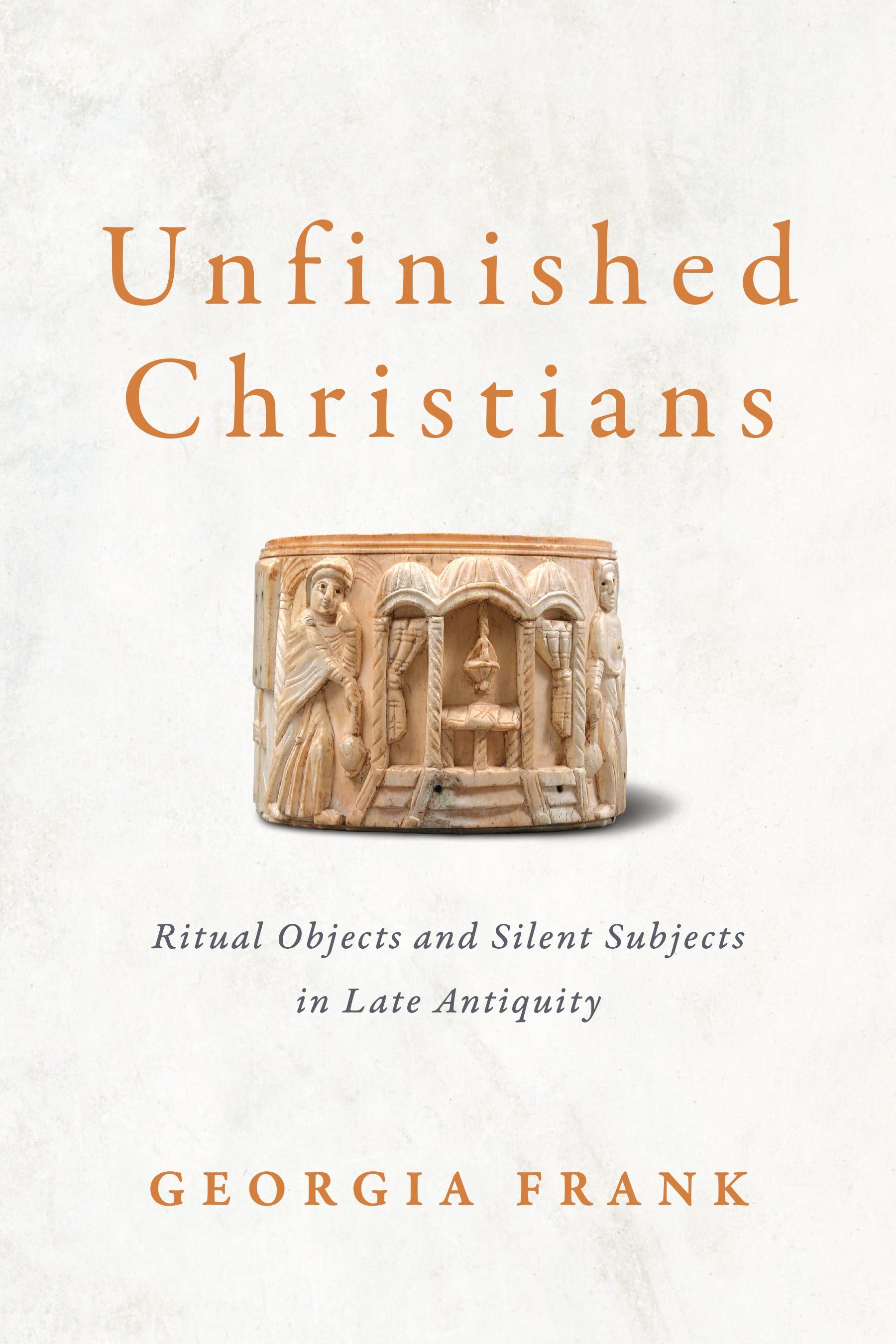
What can we know about the everyday experiences of Christians during the fourth, fifth, and sixth centuries? How did non-elite men and women, enslaved, freed, and free persons, who did not renounce sex or choose voluntary poverty become Christian? They neither led a religious community nor did they live in entirely Christian settings. In this period, an age marked by “extraordinary” Christians—wonderworking saints, household ascetics, hermits, monks, nuns, pious aristocrats, pilgrims, and bishops—ordinary Christians went about their daily lives, in various occupations, raising families, sharing households, kitchens, and baths in religiously diverse cities. Occasionally they attended church liturgies, sought out local healers, and visited martyrs’ shrines. Barely and rarely mentioned in ancient texts, common Christians remain nameless and undifferentiated.
Unfinished Christians explores the sensory and affective dimensions of ordinary Christians who assembled for rituals. With precious few first-person accounts by common Christians, it relies on written sources not typically associated with lived religion: sermons, liturgical instruction books, and festal hymns. All three genres of writing are composed by clergy for use in ritual settings. Yet they may also provide glimpses of everyday Christians’ lives and experiences. This book investigates the habits, objects, behaviors, and movements of ordinary Christians by mining festal preaching by John Chrysostom, Cyril of Jerusalem, Gregory of Nyssa, and Romanos the Melodist, among others. It also mines liturgical instructions to explore the psalms and other songs performed on various feast days. “Unfinished,” then, connotes the creativity and agency of unremarkable Christians who engaged in making religious experiences: the “Christian-in-progress” who learns to work with material and bring something into being; the artisans who attended sermons; and, more widely, the bearers of embodied knowing.
Before Memmo my notes were scattered across PDFs. Now a workspace pulls everything into one place — I see exactly what's still left to study.
Memmo's summaries are gold before exams. I don't have to re-read 800 pages two weeks before — just the important parts.
The AI chat has saved me the night before an exam more than once. I just keep asking until I get it — no waiting on a study group to reply.
The quizzes hit exactly what I need to know. Memmo tracks what I get stuck on — so I only practice what's worth it.
Flashcards with spaced repetition are magic. Memmo knows when I'm about to forget something and brings it back.
The AI podcasts are my favorite. I listen on my way to school and get a recap without sitting at a computer.

Handbok i kvalitativa metoder
281 kr

Hållbar utveckling: en introduktion för ingenjörer och andra problemlösare
334 kr

Brymans Samhällsvetenskapliga metoder
390 kr

Projektledning
491 kr

Den orättvisa hälsan: om socioekonomiska skillnader i hälsa och livslängd
326 kr

Vetenskapsteori för nybörjare
196 kr

Organizational Leadership
429 kr

På väg mot läraryrket
172 kr

Det sociala livet i skolan: Socialpsykologiska perspektiv
253 kr

Betygsättningens didaktik
151 kr

Personality
402 kr

Studying Leadership
404 kr

Managing Innovation
477 kr

Introduktion till samhällsvetenskaplig metod
347 kr

The Psychology of Sex and Gender
698 kr

Evidens och kunskap för socialt arbete
207 kr

Introduction to Leadership
605 kr