
Before Memmo my notes were scattered across PDFs. Now a workspace pulls everything into one place — I see exactly what's still left to study.
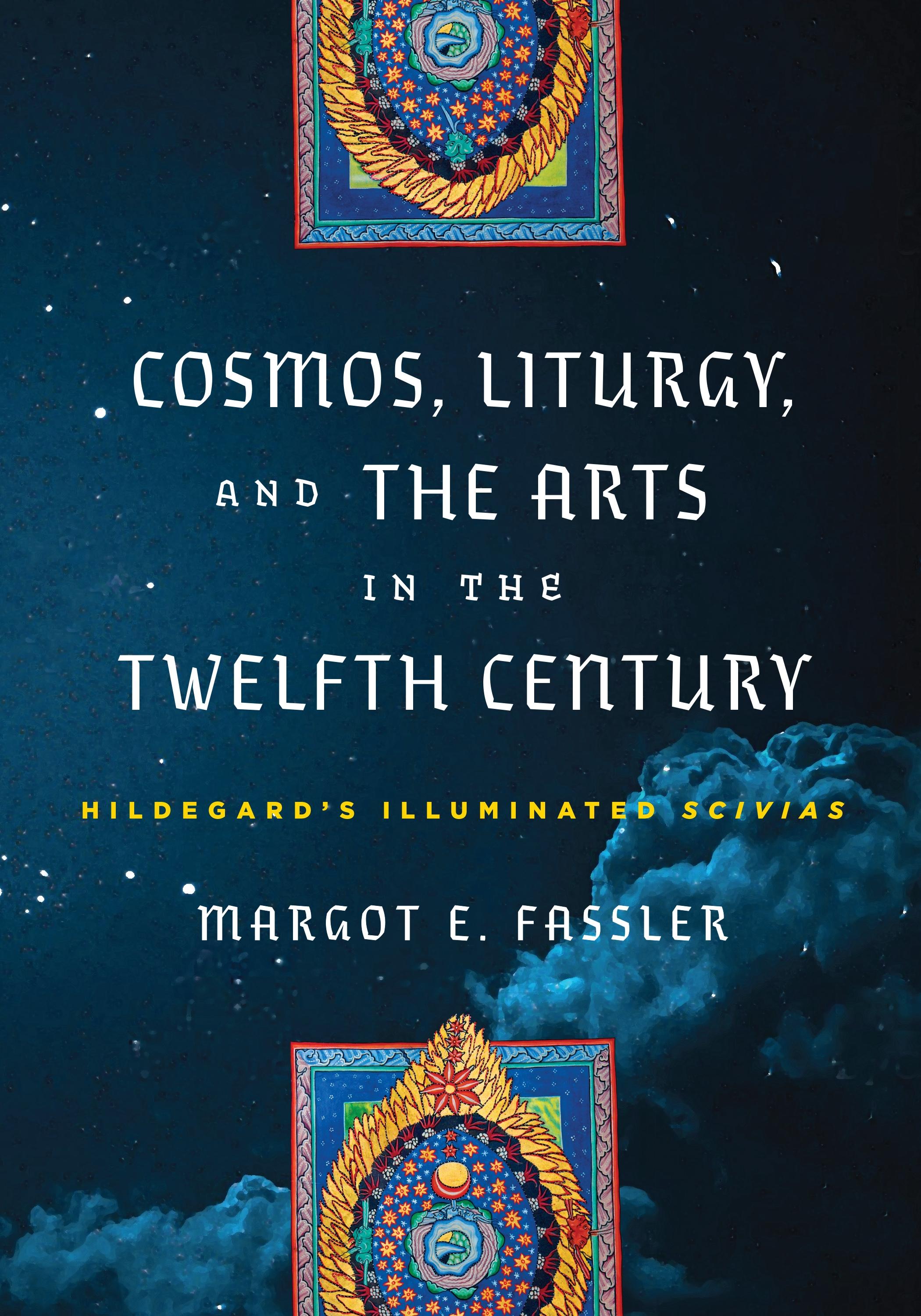
In Cosmos, Liturgy, and the Arts in the Twelfth Century, Margot E. Fassler takes readers into the rich, complex world of Hildegard of Bingen’s Scivias (meaning “Know the ways”) to explore how medieval thinkers understood and imagined the universe. Hildegard, renowned for her contributions to theology, music, literature, and art, developed unique methods for integrating these forms of thought and expression into a complete vision of the cosmos and of the human journey. Scivias was Hildegard’s first major theological work and the only one of her writings that was both illuminated and copied by scribes from her monastery during her lifetime. It contains not just religious visions and theological commentary, but also a shortened version of Hildegard’s play Ordo virtutum (“Play of the virtues”), plus the texts of fourteen musical compositions.
These elements of Scivias, Fassler contends, form a coherent whole demonstrating how Hildegard used theology and the liturgical arts to lead and to teach the nuns of her community. Hildegard’s visual and sonic images unfold slowly and deliberately, opening up varied paths of knowing. Hildegard and her nuns adapted forms of singing that they believed to be crucial to the reform of the Church in their day and central to the ongoing turning of the heavens and to the nature of time itself. Hildegard’s vision of the universe is a “Cosmic Egg,” as described in Scivias, filled with strife and striving, and at its center unfolds the epic drama of every human soul, embodied through sound and singing. Though Hildegard’s view of the cosmos is far removed from modern understanding, Fassler’s analysis reveals how this dynamic cosmological framework from the Middle Ages resonates with contemporary thinking in surprising ways, and underscores the vitality of the arts as embodied modes of theological expression and knowledge.
Before Memmo my notes were scattered across PDFs. Now a workspace pulls everything into one place — I see exactly what's still left to study.
Memmo's summaries are gold before exams. I don't have to re-read 800 pages two weeks before — just the important parts.
The AI chat has saved me the night before an exam more than once. I just keep asking until I get it — no waiting on a study group to reply.
The quizzes hit exactly what I need to know. Memmo tracks what I get stuck on — so I only practice what's worth it.
Flashcards with spaced repetition are magic. Memmo knows when I'm about to forget something and brings it back.
The AI podcasts are my favorite. I listen on my way to school and get a recap without sitting at a computer.

Handbok i kvalitativa metoder
281 kr

Hållbar utveckling: en introduktion för ingenjörer och andra problemlösare
334 kr

Brymans Samhällsvetenskapliga metoder
390 kr

Projektledning
491 kr

Den orättvisa hälsan: om socioekonomiska skillnader i hälsa och livslängd
326 kr

Vetenskapsteori för nybörjare
196 kr

Organizational Leadership
429 kr

På väg mot läraryrket
172 kr

Det sociala livet i skolan: Socialpsykologiska perspektiv
253 kr

Betygsättningens didaktik
151 kr

Personality
402 kr

Studying Leadership
404 kr

Managing Innovation
477 kr

Introduktion till samhällsvetenskaplig metod
347 kr

The Psychology of Sex and Gender
698 kr

Evidens och kunskap för socialt arbete
207 kr

Introduction to Leadership
605 kr