
Before Memmo my notes were scattered across PDFs. Now a workspace pulls everything into one place — I see exactly what's still left to study.
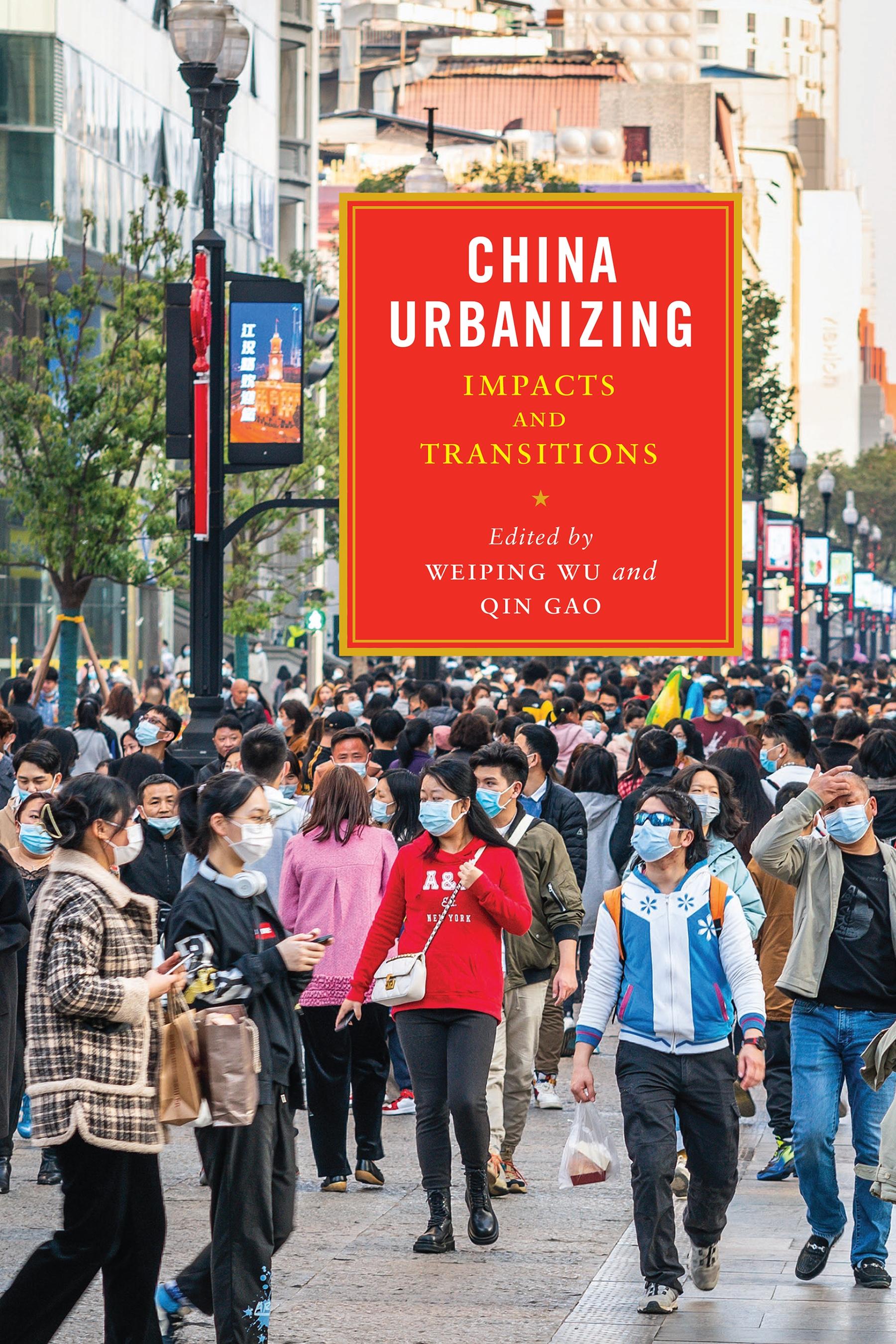
China turned majority urban only in the recent decade, a dramatic leap given that less than 20 percent of its population lived in cities before 1980. This book situates China’s urbanization in the interconnected forces of historical legacies, contemporary state interventions, and human and ecological conditions. It captures the complexity of the phenomenon of urbanization in its historical and regional variations, and explores its impact on the country’s socioeconomic welfare, environment and resources, urban form and lifestyle, and population and health. It is also a book about China, in which the contributors provide new perspectives to understand the transitions underway and the gravity of the progress, particularly in the context of demographic shifts and climate change.
The chapters in China Urbanizing, written by American and Chinese scholars, achieve three interconnected aims. The first is to explore how the process of urbanization has shaped and been influenced by the social, economic, and physical interactions that take place in and beyond cities, and the state interventions intended to regulate such interactions. The second is to examine the shifts and evolutions emerging in urban China, such as the economic slowdown, population aging and low fertility rates, and how cities interact with the environment and planet given China’s rising role in the global discourse on climate change. The third is to explore new sources of information for conducting research on urban China, such as satellite and street-level imagery data and online listings, to account for the complexity and heterogeneity that characterize contemporary Chinese urbanization.
Contributors: Juan Chen, Dean Curran, Deborah Davis, Peilei Fan, Qin Gao, Pierre F. Landry, Shi Li, Shiqi Ma, Justin Remais, Alan Smart, Shin Bin Tan, Jeremy Wallace, Sarah Williams, Binbin Wu, Weiping Wu, Guibin Xiong, Wenfei Xu.
Before Memmo my notes were scattered across PDFs. Now a workspace pulls everything into one place — I see exactly what's still left to study.
Memmo's summaries are gold before exams. I don't have to re-read 800 pages two weeks before — just the important parts.
The AI chat has saved me the night before an exam more than once. I just keep asking until I get it — no waiting on a study group to reply.
The quizzes hit exactly what I need to know. Memmo tracks what I get stuck on — so I only practice what's worth it.
Flashcards with spaced repetition are magic. Memmo knows when I'm about to forget something and brings it back.
The AI podcasts are my favorite. I listen on my way to school and get a recap without sitting at a computer.

Handbok i kvalitativa metoder
281 kr

Hållbar utveckling: en introduktion för ingenjörer och andra problemlösare
334 kr

Brymans Samhällsvetenskapliga metoder
390 kr

Projektledning
491 kr

Den orättvisa hälsan: om socioekonomiska skillnader i hälsa och livslängd
326 kr

Vetenskapsteori för nybörjare
196 kr

Organizational Leadership
429 kr

På väg mot läraryrket
172 kr

Det sociala livet i skolan: Socialpsykologiska perspektiv
253 kr

Betygsättningens didaktik
151 kr

Personality
402 kr

Studying Leadership
404 kr

Managing Innovation
477 kr

Introduktion till samhällsvetenskaplig metod
347 kr

The Psychology of Sex and Gender
698 kr

Evidens och kunskap för socialt arbete
207 kr

Introduction to Leadership
605 kr