
Before Memmo my notes were scattered across PDFs. Now a workspace pulls everything into one place — I see exactly what's still left to study.
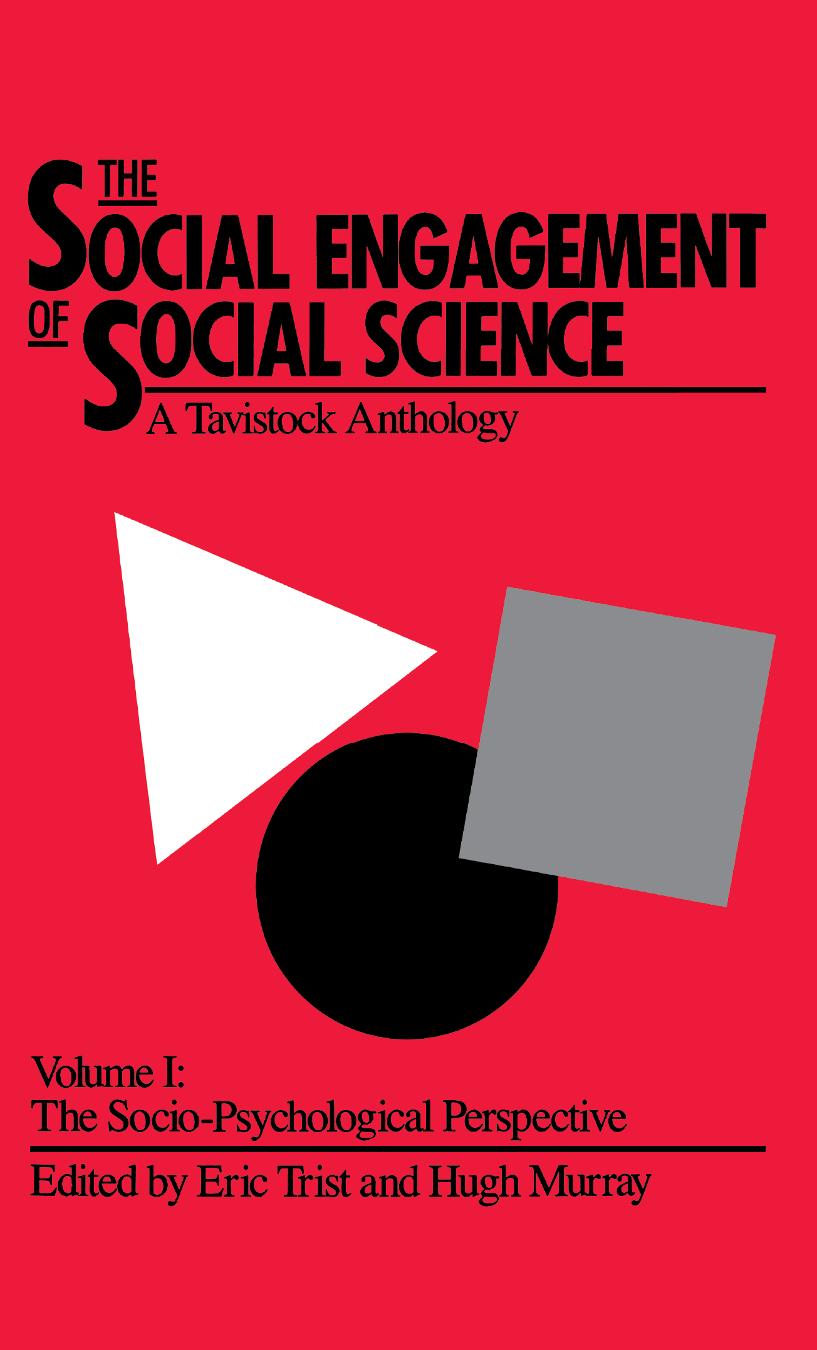
World War II brought together a group of psychiatrists and clinical and social psychologists in the British Army where they developed radical, action-oriented innovations in social psychiatry. They became known as the "Tavistock Group" since the core members had been at the pre-war Tavistock Clinic. They created the post-war Tavistock Institute of Human Relations and expanded on their wartime achievements by pioneering a new mode of relating theory and practice, called in these volumes, "The Social Engagement of Social Science."
There are three perspectives: the socio-psychological, the socio-technical, and the socio-ecological. These perspectives are interdependent, yet each has its own focus and is represented in a separate volume.
Volume I, The Socio-Psychological Perspective, extends the object-relations approach in psychoanalysis to group, organizational, and wider social life. This extension is related to field theory, the personality/culture approach, and open systems theory. Action-oriented papers deal with key ideas in social psychiatry, varieties of group process, new paths in family studies, the dynamics of organizational change, and the unconscious in culture and society.
The Institute's dynamic social science approach to industrial problems, which will be presented in Volume II, began with Eric Trist's coal-mining program for the development of more productive and personally satisfying self-regulating forms of work organization. The whole "Quality of Working Life" movement owes its theoretical and empirical basis to this pathfinding endeavor.
Volume III will focus on non-hierarchical forms of organization facilitating inter-organizational relations in complex and rapidly changing environments—the socio-ecological perspective. This perspective is offered as a guide to institution building for the future.
Before Memmo my notes were scattered across PDFs. Now a workspace pulls everything into one place — I see exactly what's still left to study.
Memmo's summaries are gold before exams. I don't have to re-read 800 pages two weeks before — just the important parts.
The AI chat has saved me the night before an exam more than once. I just keep asking until I get it — no waiting on a study group to reply.
The quizzes hit exactly what I need to know. Memmo tracks what I get stuck on — so I only practice what's worth it.
Flashcards with spaced repetition are magic. Memmo knows when I'm about to forget something and brings it back.
The AI podcasts are my favorite. I listen on my way to school and get a recap without sitting at a computer.

Handbok i kvalitativa metoder
281 kr

Hållbar utveckling: en introduktion för ingenjörer och andra problemlösare
334 kr

Brymans Samhällsvetenskapliga metoder
390 kr

Projektledning
491 kr

Den orättvisa hälsan: om socioekonomiska skillnader i hälsa och livslängd
326 kr

Vetenskapsteori för nybörjare
196 kr

Organizational Leadership
429 kr

På väg mot läraryrket
172 kr

Det sociala livet i skolan: Socialpsykologiska perspektiv
253 kr

Betygsättningens didaktik
151 kr

Personality
402 kr

Studying Leadership
404 kr

Managing Innovation
477 kr

Introduktion till samhällsvetenskaplig metod
347 kr

The Psychology of Sex and Gender
698 kr

Evidens och kunskap för socialt arbete
207 kr

Introduction to Leadership
605 kr