
Before Memmo my notes were scattered across PDFs. Now a workspace pulls everything into one place — I see exactly what's still left to study.
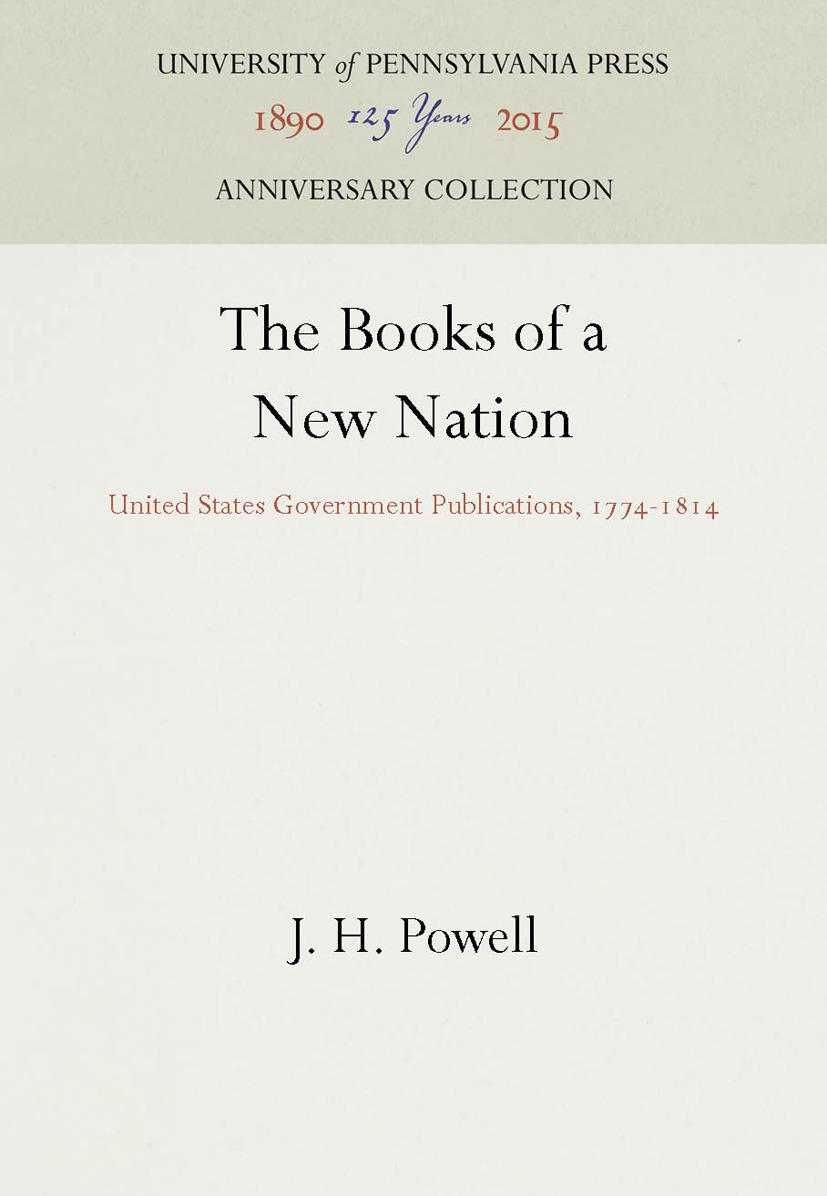
United States Government publications are books collectors have not sought, bibliographers have not analyzed, historians have rarely considered. But publication is a necessary part of law-making and law-enforcing, and as the historian J. H. Powell traces national printing through its first forty years (until the British fired the capital in 1814) these dry-as-dust public documents become vivid, exciting elements in the lively story of how a new nation was built.
In this volume collectors will find many "firsts" in public documents, bibliographers will discover unknown chapters in the history of printing in America, and historians will be challenged by the new points of view government publications suggest for interpreting national history.
Lecture I describes the printing of the Continental Congress before Independence, 1774-1176. Lecture II deals with official publications during the Revolution, 1776-1787, the printing history of the Federal Convention of 1787, and public issues of the new government during its sojourn in New York and Philadelphia, 1789-1800. Lecture III describes publication problems in the new capital, Washington City, the printing contracts and contractors, the complex process of drafting and emitting the laws for a free people to know and understand. Books—even statutes, reports, debates, such books as a government makes—are bits of human history, each with a story of its own. As Dr. Powell makes clear in these lectures, which bring to light one of the largest, most important, but most neglected subjects in American Studies, the charm of any book comes partly from the men behind it, in this case men new to American history but bound to become familiar as the field opened up by these lectures is more thoroughly explored: Adolphus Washington Greely, the Polar explorer; Samuel A. Otis, the elegant Secretary of the Senate; Roger Chew Weightman, the boy printer in Washington; Clerk Beckley of the House whom the playing fields of Eton had prepared for Jeffersonian party battles; and the printers, the politicians, the civil and military servants of the government as it grew from small beginnings to what Hamilton finally described as—"majestic, efficient, and operative of great things."
Before Memmo my notes were scattered across PDFs. Now a workspace pulls everything into one place — I see exactly what's still left to study.
Memmo's summaries are gold before exams. I don't have to re-read 800 pages two weeks before — just the important parts.
The AI chat has saved me the night before an exam more than once. I just keep asking until I get it — no waiting on a study group to reply.
The quizzes hit exactly what I need to know. Memmo tracks what I get stuck on — so I only practice what's worth it.
Flashcards with spaced repetition are magic. Memmo knows when I'm about to forget something and brings it back.
The AI podcasts are my favorite. I listen on my way to school and get a recap without sitting at a computer.

Handbok i kvalitativa metoder
281 kr

Hållbar utveckling: en introduktion för ingenjörer och andra problemlösare
334 kr

Brymans Samhällsvetenskapliga metoder
390 kr

Projektledning
491 kr

Den orättvisa hälsan: om socioekonomiska skillnader i hälsa och livslängd
326 kr

Vetenskapsteori för nybörjare
196 kr

Organizational Leadership
429 kr

På väg mot läraryrket
172 kr

Det sociala livet i skolan: Socialpsykologiska perspektiv
253 kr

Betygsättningens didaktik
151 kr

Personality
402 kr

Studying Leadership
404 kr

Managing Innovation
477 kr

Introduktion till samhällsvetenskaplig metod
347 kr

The Psychology of Sex and Gender
698 kr

Evidens och kunskap för socialt arbete
207 kr

Introduction to Leadership
605 kr