
Before Memmo my notes were scattered across PDFs. Now a workspace pulls everything into one place — I see exactly what's still left to study.
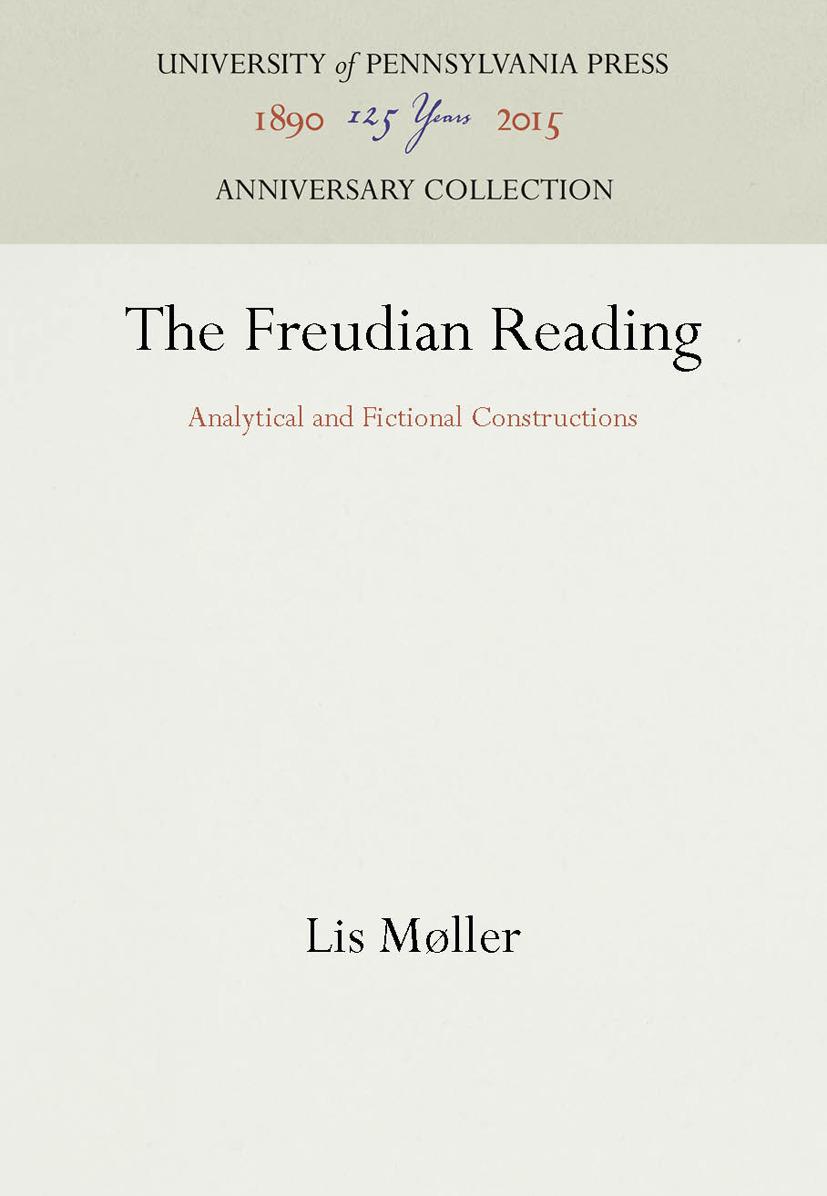
Selected by Choice magazine as an Outstanding Academic Title
In The Freudian Reading, Lis Møller examines the premises, procedures, and objectives of psychoanalytic reading in order to question the kind of knowledge such readings produce. But above all, she questions the role of Freud as master explicator. Although Freud has been seen as a great synthesizer, Møller contends that his significance as a reader lies elsewhere.
For Møller, this significance lies in the way Freud presses his inquiry to the point where he encounters something he cannot explain or that he can only explain at the risk of overthrowing previous conclusions. Such "moments of crisis" occur repeatedly in Freud's work, causing him to swerve from his original train of thought, or even to call into question the theoretical foundation of his interpretation. The dominant line of argument, therefore, is frequently punctuated with problems and questions. If we concentrate on these, Møller argues, we are forced to reconsider the traditional conception of a "Freudian reading" and to reassess our perceived notions of just what kind of reader Freud was.
While The Freudian Reading is based on a wide range of Freud's writings, it concentrates on four central texts: Delusions and Dreams in Jensen's "Gradiva", From the History of an Infantile Neurosis, "The Uncanny," and "Constructions in Analysis." The discussion does not progress chronologically. Rather, it explores the ways in which these texts interact: how they reflect, comment on, and contradict one another.
The Freudian Reading is a concentrated, subtle analysis of Freud's interpretive practice, with special reference to his interpretations of literary texts. It will be of interest to scholars and students of literary theory and criticism as well as to readers in the field of psychoanalysis.
Before Memmo my notes were scattered across PDFs. Now a workspace pulls everything into one place — I see exactly what's still left to study.
Memmo's summaries are gold before exams. I don't have to re-read 800 pages two weeks before — just the important parts.
The AI chat has saved me the night before an exam more than once. I just keep asking until I get it — no waiting on a study group to reply.
The quizzes hit exactly what I need to know. Memmo tracks what I get stuck on — so I only practice what's worth it.
Flashcards with spaced repetition are magic. Memmo knows when I'm about to forget something and brings it back.
The AI podcasts are my favorite. I listen on my way to school and get a recap without sitting at a computer.

Handbok i kvalitativa metoder
281 kr

Hållbar utveckling: en introduktion för ingenjörer och andra problemlösare
334 kr

Brymans Samhällsvetenskapliga metoder
390 kr

Projektledning
491 kr

Den orättvisa hälsan: om socioekonomiska skillnader i hälsa och livslängd
326 kr

Organizational Leadership
429 kr

Vetenskapsteori för nybörjare
196 kr

På väg mot läraryrket
172 kr

Det sociala livet i skolan: Socialpsykologiska perspektiv
253 kr

Betygsättningens didaktik
151 kr

Personality
402 kr

Studying Leadership
404 kr

Managing Innovation
477 kr

Introduktion till samhällsvetenskaplig metod
347 kr

The Psychology of Sex and Gender
698 kr

Evidens och kunskap för socialt arbete
207 kr

Introduction to Leadership
605 kr