
Before Memmo my notes were scattered across PDFs. Now a workspace pulls everything into one place — I see exactly what's still left to study.
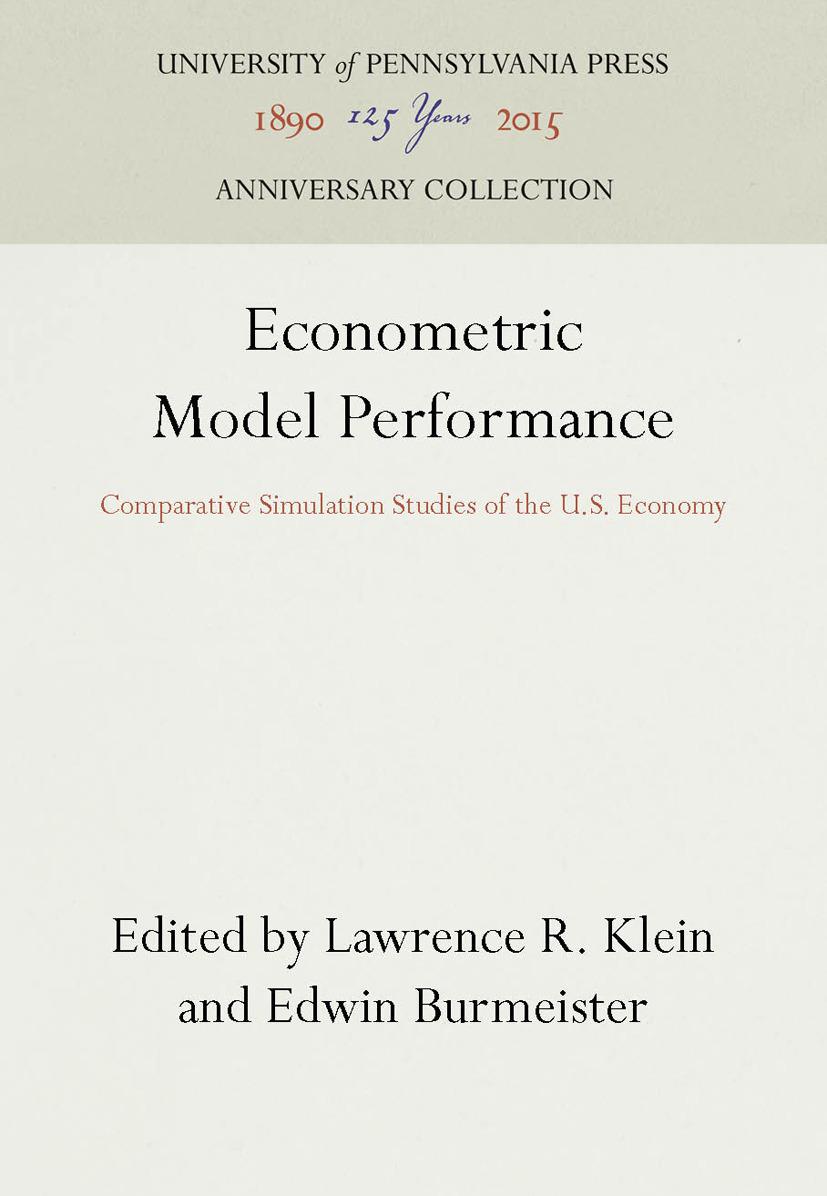
Models of the American economy exist in government, research institutes, universities, and private corporations. Given the proliferation, it is wise to take stock because these models come from diverse sources and describe different conditions from alternative points of view. They could be saying different things about the economy. The high-level comparative studies in this volume, gathered from several issues of the International Economic Review, with a substantive introduction and the addition of more comparative material, evaluate the performance of eleven models of the American economy: the Wharton Mark Ill Model; Brookings Model; Hickman-Coen Annual Model; Liu-Hwa Monthly Model; Data Resources, Inc. (DRI) Model; Federal Reserve Bank of St. Louis Model; Michigan Quarterly Econometric (MOEM) Model; Wharton Annual and Industry Model; Anticipation Version of the Wharton Mark Ill Model/Fair Model; U.S. Department of Commerce (BEA) Model.
Each of the proprietors or builders of these models describes his own system in his own words. These studies come closer than ever before to standardizing model operations for testing purposes.
Some of the models are monthly, while others are annual. but the quarterly unit of time is the most frequent. Some are demand oriented, others are supply oriented, and focus on the input-output sectors of the economy. Some use only observed. objective data; others use subjective. anticipatory data. Both large and small models are included. In spite of the diversity, the contributors have cooperated to trace the differences between their models to root causes and to report jointly the results of their research. There are also some general papers that look at model performance from outside the CEME group.
Before Memmo my notes were scattered across PDFs. Now a workspace pulls everything into one place — I see exactly what's still left to study.
Memmo's summaries are gold before exams. I don't have to re-read 800 pages two weeks before — just the important parts.
The AI chat has saved me the night before an exam more than once. I just keep asking until I get it — no waiting on a study group to reply.
The quizzes hit exactly what I need to know. Memmo tracks what I get stuck on — so I only practice what's worth it.
Flashcards with spaced repetition are magic. Memmo knows when I'm about to forget something and brings it back.
The AI podcasts are my favorite. I listen on my way to school and get a recap without sitting at a computer.

Handbok i kvalitativa metoder
281 kr

Hållbar utveckling: en introduktion för ingenjörer och andra problemlösare
334 kr

Brymans Samhällsvetenskapliga metoder
390 kr

Projektledning
491 kr

Den orättvisa hälsan: om socioekonomiska skillnader i hälsa och livslängd
326 kr

Organizational Leadership
429 kr

Vetenskapsteori för nybörjare
196 kr

På väg mot läraryrket
172 kr

Det sociala livet i skolan: Socialpsykologiska perspektiv
253 kr

Betygsättningens didaktik
151 kr

Personality
402 kr

Studying Leadership
404 kr

Managing Innovation
477 kr

Introduktion till samhällsvetenskaplig metod
347 kr

The Psychology of Sex and Gender
698 kr

Evidens och kunskap för socialt arbete
207 kr

Introduction to Leadership
605 kr