
Before Memmo my notes were scattered across PDFs. Now a workspace pulls everything into one place — I see exactly what's still left to study.
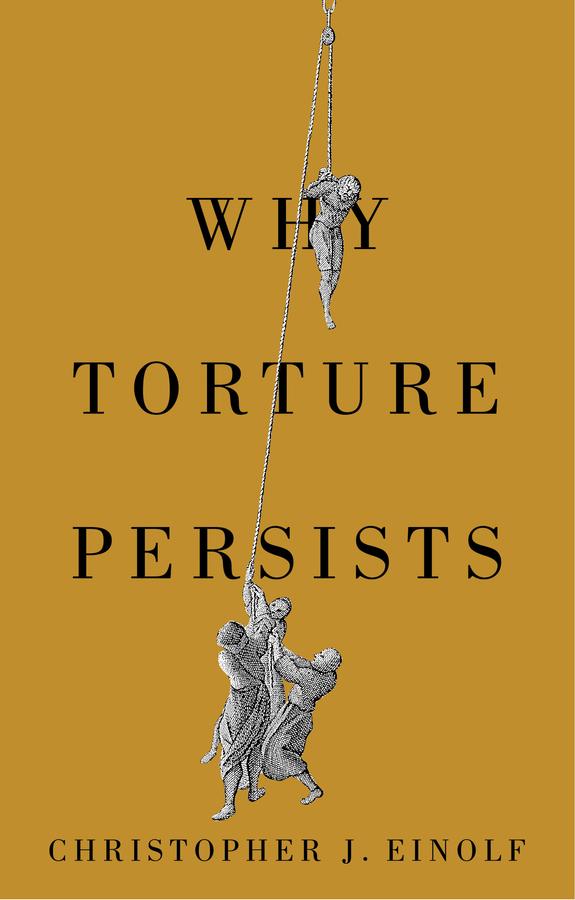
Since antiquity, governments have used torture to gather information and determine guilt. But its track record is shaky, to say the least: thinkers from Aristotle to the present have observed that torture does not work, and thinkers from Foucault to Orwell have doubted that this is torture's true purpose. Guilty people can resist torture and remain silent, while innocent people can give in and tell their torturers what they want to hear. Why, then, do governments keep using it?
In this timely and compelling book, Chistopher J. Einolf recounts the history of torture from public trials in ancient Athens to the international scandal of Abu Ghraib. He details its brutal use in the persecution of the Templars, the Spanish Inquisition, and early modern witch hunts; describes its abolition in the 18th century; and tracks its alarming resurgence across the 20th and 21st centuries. In exposing torture's sordid past, Einolf also explores the social science of torture, supplementing a broad historical account with relevant insights from sociology, political science, and psychology. The distressing reality is that governments use torture as a tool of oppression: convinced that they are beset by traitors and enemies, those with power torture victims until they confirm their worst fears.
Chilling yet vital, Why Torture Persists is a call to face humanity's troubling weapons of political coercion and control head-on. Despite recounting a disturbing history, Why Torture Persists ultimately concludes with hope. It is only by understanding torture that we can learn how to prevent it.
Before Memmo my notes were scattered across PDFs. Now a workspace pulls everything into one place — I see exactly what's still left to study.
Memmo's summaries are gold before exams. I don't have to re-read 800 pages two weeks before — just the important parts.
The AI chat has saved me the night before an exam more than once. I just keep asking until I get it — no waiting on a study group to reply.
The quizzes hit exactly what I need to know. Memmo tracks what I get stuck on — so I only practice what's worth it.
Flashcards with spaced repetition are magic. Memmo knows when I'm about to forget something and brings it back.
The AI podcasts are my favorite. I listen on my way to school and get a recap without sitting at a computer.

Handbok i kvalitativa metoder
281 kr

Hållbar utveckling: en introduktion för ingenjörer och andra problemlösare
334 kr

Brymans Samhällsvetenskapliga metoder
390 kr

Projektledning
491 kr

Den orättvisa hälsan: om socioekonomiska skillnader i hälsa och livslängd
326 kr

Vetenskapsteori för nybörjare
196 kr

Organizational Leadership
429 kr

På väg mot läraryrket
172 kr

Det sociala livet i skolan: Socialpsykologiska perspektiv
253 kr

Betygsättningens didaktik
151 kr

Personality
402 kr

Studying Leadership
404 kr

Managing Innovation
477 kr

Introduktion till samhällsvetenskaplig metod
347 kr

The Psychology of Sex and Gender
698 kr

Evidens och kunskap för socialt arbete
207 kr

Introduction to Leadership
605 kr