
Before Memmo my notes were scattered across PDFs. Now a workspace pulls everything into one place — I see exactly what's still left to study.
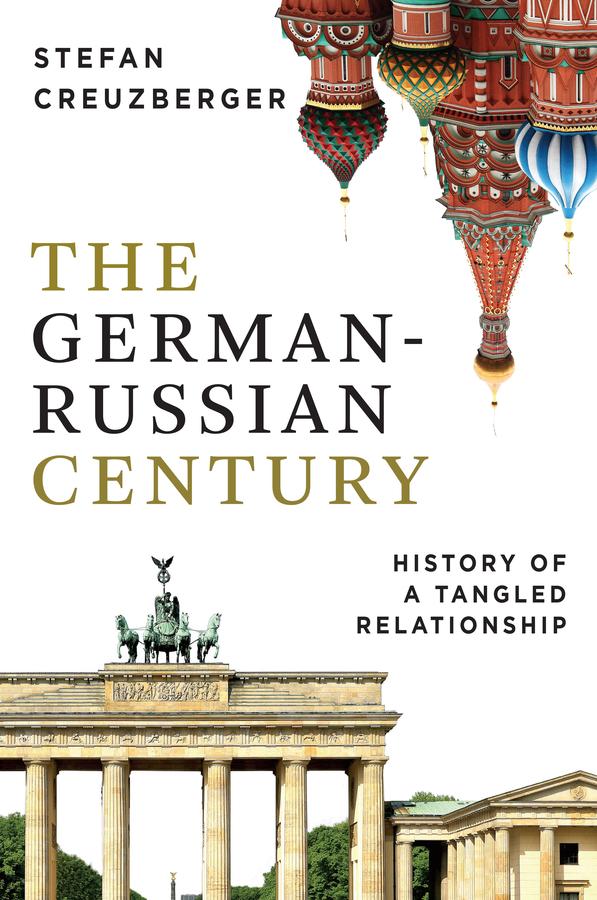
Germany and Russia: two countries whose turbulent and interlocking histories have profoundly shaped the world in which we live today. The long twentieth century was in many ways a German-Russian century. In 1917, imperial Germany became the birthplace of Russia's October Revolution, whose ideological radicalism shook the established order of states. With Hitler's seizure of power and the outbreak of World War II, Germany and Russia were thrust into violent conflict with one another. Defeating Hitler led Stalin's Red Army into the heart of Europe and Germany became the training ground for the Cold War, where two highly armed military blocs confronted one another for four decades. It was only with the collapse of the USSR that Germany was able to re-unify. Sustained efforts were made in the aftermath of the Cold War to normalize relations between Germany and Russia, but the renewed tensions precipitated by Russia's invasion of Ukraine show how fragile this relationship remains.
In The German-Russian Century the distinguished historian Stefan Creuzberger tells the remarkable story of this crucial relationship between two states and two peoples. He lays out the large ideological contexts of fascism and communism and patiently traces the efforts that each state made to confront and balance the power of the other, from the tense years leading up to the Second World War through the Cold War to the present day. He shows how each side often saw the other in terms of itself – how Stalin perceived Hitler as a fellow imperialist while Gerhard Schroeder was drawn to Putin as a modernizer and reformer seemingly similar to himself.
Engagingly written and magisterial in its grasp of high-stake issues as well as historical detail, this book will appeal to anyone interested in the historical forces that have shaped the modern world.
Before Memmo my notes were scattered across PDFs. Now a workspace pulls everything into one place — I see exactly what's still left to study.
Memmo's summaries are gold before exams. I don't have to re-read 800 pages two weeks before — just the important parts.
The AI chat has saved me the night before an exam more than once. I just keep asking until I get it — no waiting on a study group to reply.
The quizzes hit exactly what I need to know. Memmo tracks what I get stuck on — so I only practice what's worth it.
Flashcards with spaced repetition are magic. Memmo knows when I'm about to forget something and brings it back.
The AI podcasts are my favorite. I listen on my way to school and get a recap without sitting at a computer.

Handbok i kvalitativa metoder
281 kr

Hållbar utveckling: en introduktion för ingenjörer och andra problemlösare
334 kr

Brymans Samhällsvetenskapliga metoder
390 kr

Projektledning
491 kr

Den orättvisa hälsan: om socioekonomiska skillnader i hälsa och livslängd
326 kr

Vetenskapsteori för nybörjare
196 kr

Organizational Leadership
429 kr

På väg mot läraryrket
172 kr

Det sociala livet i skolan: Socialpsykologiska perspektiv
253 kr

Betygsättningens didaktik
151 kr

Personality
402 kr

Studying Leadership
404 kr

Managing Innovation
477 kr

Introduktion till samhällsvetenskaplig metod
347 kr

The Psychology of Sex and Gender
698 kr

Evidens och kunskap för socialt arbete
207 kr

Introduction to Leadership
605 kr