
Before Memmo my notes were scattered across PDFs. Now a workspace pulls everything into one place — I see exactly what's still left to study.
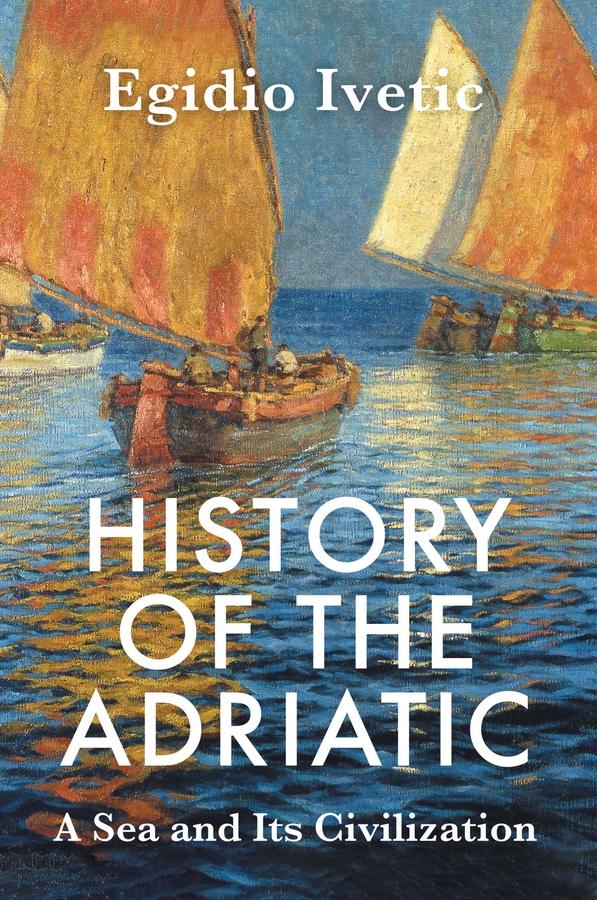
The Adriatic is ‘the small Mediterranean’ – a sea within a sea, part of the Mediterranean and at the same time detached from it, a largely enclosed sea with stunning coastlines and a long history of commercial, political and cultural exchange. Silent witness to the flow of civilizations, the Adriatic is the meeting point of East and West where many empires had their frontiers and some overlapped. With Italy on one side and the Balkans on the other, the Adriatic is the area where the Latin West became intertwined with the Greek and Ottoman East.
This book tells the history of the Adriatic from the first cultures of the Neolithic Age through to the present day. All of the great civilizations and cultures that bordered and crossed the Adriatic are discussed: Ancient Greece and Rome, Byzantium and the Holy Roman Empire, Venice and the Ottomans, Catholicism, Orthodox Christianity and Islam. Byzantium was replaced by Venice, queen of the Adriatic, which reached its zenith at the beginning of the sixteenth century and maintained commercial and military hegemony in its Gulf, sharing the sea with the Turks, the Habsburgs, the Pope and the Spanish vice-kingdom of Naples. It was Napoleon who ended Venice’s reign in 1797. In the nineteenth century, the Austrian Empire prevailed, and Central Europe reached the Mediterranean through the Adriatic. United Italy placed its most symbolic frontier in the eastern Adriatic, clashing with Austria-Hungary in the First World War. The twentieth century was marked by the prolonged conflicts and eventually peace between Yugoslavia, Albania and Italy. Today the Adriatic is a region increasingly integrated into the European Union, experiencing a new era of cooperation following the dramatic collapse of Yugoslavia.
Across centuries, this book illustrates the rich cultural and artistic heritage of diverse civilizations as they left their mark on the cities, shores and states of the Adriatic.
Before Memmo my notes were scattered across PDFs. Now a workspace pulls everything into one place — I see exactly what's still left to study.
Memmo's summaries are gold before exams. I don't have to re-read 800 pages two weeks before — just the important parts.
The AI chat has saved me the night before an exam more than once. I just keep asking until I get it — no waiting on a study group to reply.
The quizzes hit exactly what I need to know. Memmo tracks what I get stuck on — so I only practice what's worth it.
Flashcards with spaced repetition are magic. Memmo knows when I'm about to forget something and brings it back.
The AI podcasts are my favorite. I listen on my way to school and get a recap without sitting at a computer.

Handbok i kvalitativa metoder
281 kr

Hållbar utveckling: en introduktion för ingenjörer och andra problemlösare
334 kr

Brymans Samhällsvetenskapliga metoder
390 kr

Projektledning
491 kr

Den orättvisa hälsan: om socioekonomiska skillnader i hälsa och livslängd
326 kr

Organizational Leadership
429 kr

Vetenskapsteori för nybörjare
196 kr

På väg mot läraryrket
172 kr

Det sociala livet i skolan: Socialpsykologiska perspektiv
253 kr

Betygsättningens didaktik
151 kr

Personality
402 kr

Studying Leadership
404 kr

Managing Innovation
477 kr

Introduktion till samhällsvetenskaplig metod
347 kr

The Psychology of Sex and Gender
698 kr

Evidens och kunskap för socialt arbete
207 kr

Introduction to Leadership
605 kr