
Before Memmo my notes were scattered across PDFs. Now a workspace pulls everything into one place — I see exactly what's still left to study.
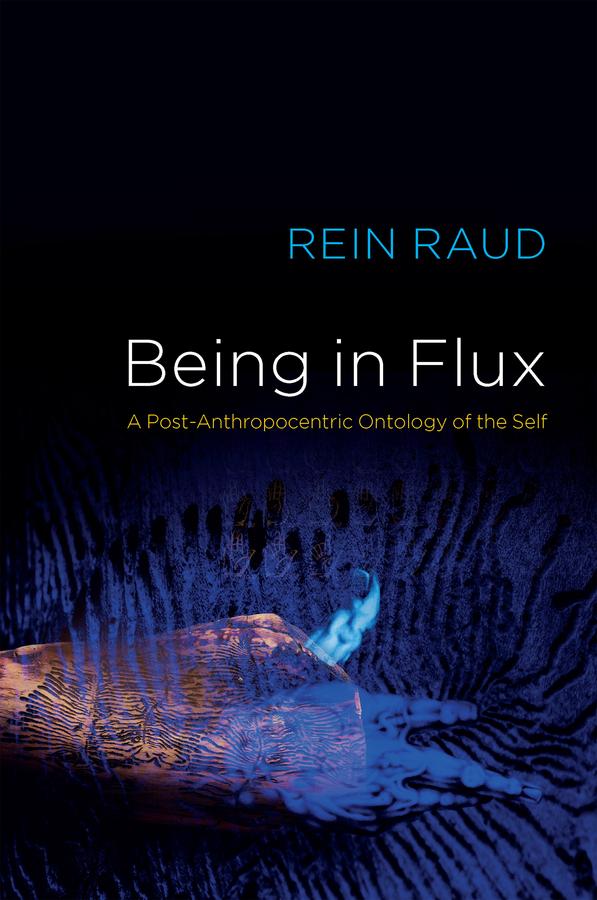
Reality exists independently of human observers, but does the same apply to its structure? Realist ontologies usually assume so: according to them, the world consists of objects, these have properties and enter into relations with each other, more or less as we are accustomed to think of them.
Against this view, Rein Raud develops a radical process ontology that does not credit any vantage point, any scale or speed of being, any range of cognitive faculties with the privilege to judge how the world ‘really’ is. In his view, what we think of as objects are recast as fields of constitutive tensions, cross-sections of processes, never in complete balance but always striving for it and always reconfiguring themselves accordingly. The human self is also understood as a fluctuating field, not limited to the mind but distributed all over the body and reaching out into its environment, with different constituents of the process constantly vying for control.
The need for such a process philosophy has often been voiced, but rarely has there been an effort to develop it in a systematic and rigourous manner that leads to original accounts of identity, continuity, time, change, causality, agency and other topics. Throughout his new book, Raud engages with an unusually broad range of philosophical schools and debates, from New Materialism and Object-Oriented Ontology to both phenomenological and analytical philosophy of mind, from feminist philosophy of science to neurophilosophy and social ontology.
Being in Flux will be of interest to students and scholars in philosophy and the humanities generally and to anyone interested in current debates about realism, materialism and ontology.
Before Memmo my notes were scattered across PDFs. Now a workspace pulls everything into one place — I see exactly what's still left to study.
Memmo's summaries are gold before exams. I don't have to re-read 800 pages two weeks before — just the important parts.
The AI chat has saved me the night before an exam more than once. I just keep asking until I get it — no waiting on a study group to reply.
The quizzes hit exactly what I need to know. Memmo tracks what I get stuck on — so I only practice what's worth it.
Flashcards with spaced repetition are magic. Memmo knows when I'm about to forget something and brings it back.
The AI podcasts are my favorite. I listen on my way to school and get a recap without sitting at a computer.

Handbok i kvalitativa metoder
281 kr

Hållbar utveckling: en introduktion för ingenjörer och andra problemlösare
334 kr

Brymans Samhällsvetenskapliga metoder
390 kr

Projektledning
491 kr

Den orättvisa hälsan: om socioekonomiska skillnader i hälsa och livslängd
326 kr

Vetenskapsteori för nybörjare
196 kr

Organizational Leadership
429 kr

På väg mot läraryrket
172 kr

Det sociala livet i skolan: Socialpsykologiska perspektiv
253 kr

Betygsättningens didaktik
151 kr

Personality
402 kr

Studying Leadership
404 kr

Managing Innovation
477 kr

Introduktion till samhällsvetenskaplig metod
347 kr

The Psychology of Sex and Gender
698 kr

Evidens och kunskap för socialt arbete
207 kr

Introduction to Leadership
605 kr