
Before Memmo my notes were scattered across PDFs. Now a workspace pulls everything into one place — I see exactly what's still left to study.
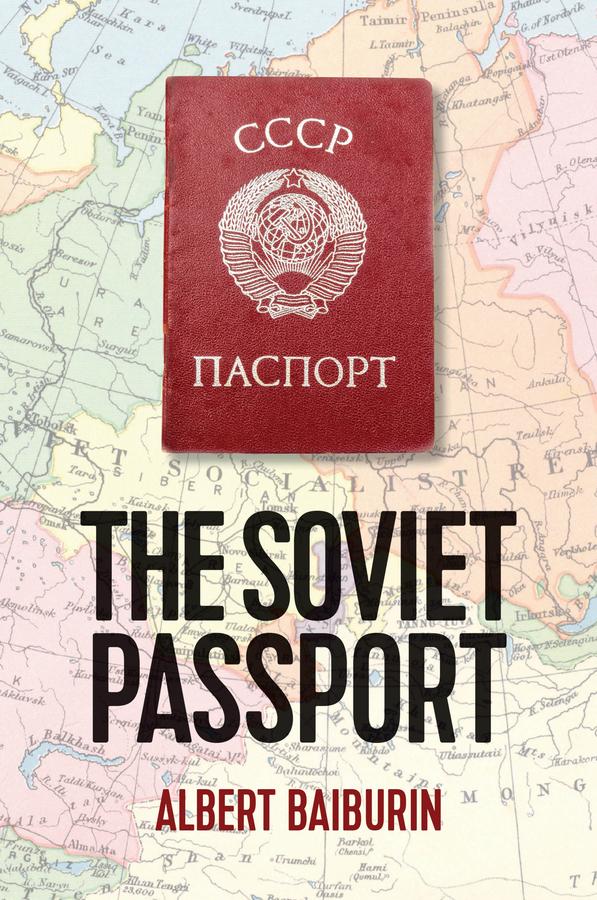
In this remarkable book, Albert Baiburin provides the first in-depth study of the development and uses of the passport, or state identity card, in the former Soviet Union. First introduced in 1932, the Soviet passport took on an exceptional range of functions, extending not just to the regulation of movement and control of migrancy but also to the constitution of subjectivity and of social hierarchies based on place of residence, family background, and ethnic origin.
While the basic role of the Soviet passport was to certify a person’s identity, it assumed a far greater significance in Soviet life. Without it, a person literally ‘disappeared’ from society. It was impossible to find employment or carry out everyday activities like picking up a parcel from the post office; a person could not marry or even officially die without a passport. It was absolutely essential on virtually every occasion when an individual had contact with officialdom because it was always necessary to prove that the individual was the person whom they claimed to be. And since the passport included an indication of the holder’s ethnic identity, individuals found themselves accorded a certain rank in a new hierarchy of nationalities where some ethnic categories were ‘normal’ and others were stigmatized. Passport systems were used by state officials for the deportation of entire population categories – the so-called ‘former people’, those from the pre-revolutionary elite, and the relations of ‘enemies of the people’. But at the same time, passport ownership became the signifier of an acceptable social existence, and the passport itself – the information it contained, the photographs and signatures – became part of the life experience and self-perception of those who possessed it.
This meticulously researched and highly original book will be of great interest to students and scholars of Russia and the Soviet Union and to anyone interested in the shaping of identity in the modern world.
Before Memmo my notes were scattered across PDFs. Now a workspace pulls everything into one place — I see exactly what's still left to study.
Memmo's summaries are gold before exams. I don't have to re-read 800 pages two weeks before — just the important parts.
The AI chat has saved me the night before an exam more than once. I just keep asking until I get it — no waiting on a study group to reply.
The quizzes hit exactly what I need to know. Memmo tracks what I get stuck on — so I only practice what's worth it.
Flashcards with spaced repetition are magic. Memmo knows when I'm about to forget something and brings it back.
The AI podcasts are my favorite. I listen on my way to school and get a recap without sitting at a computer.

Handbok i kvalitativa metoder
281 kr

Hållbar utveckling: en introduktion för ingenjörer och andra problemlösare
334 kr

Brymans Samhällsvetenskapliga metoder
390 kr

Projektledning
491 kr

Den orättvisa hälsan: om socioekonomiska skillnader i hälsa och livslängd
326 kr

Organizational Leadership
429 kr

Vetenskapsteori för nybörjare
196 kr

På väg mot läraryrket
172 kr

Det sociala livet i skolan: Socialpsykologiska perspektiv
253 kr

Betygsättningens didaktik
151 kr

Personality
402 kr

Studying Leadership
404 kr

Managing Innovation
477 kr

Introduktion till samhällsvetenskaplig metod
347 kr

The Psychology of Sex and Gender
698 kr

Evidens och kunskap för socialt arbete
207 kr

Introduction to Leadership
605 kr