
Before Memmo my notes were scattered across PDFs. Now a workspace pulls everything into one place — I see exactly what's still left to study.
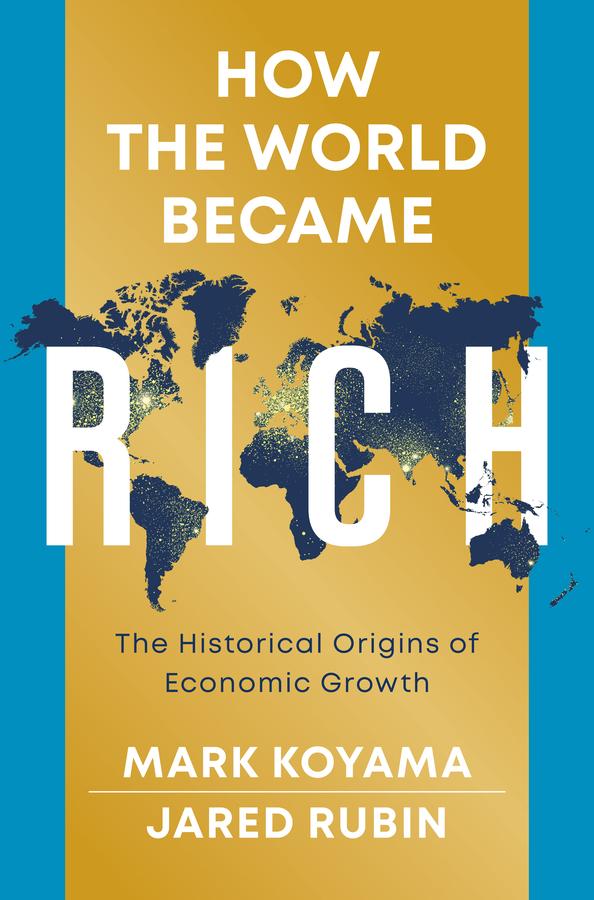
Most humans are significantly richer than their ancestors. Humanity gained nearly all of its wealth in the last two centuries. How did this come to pass? How did the world become rich?
Mark Koyama and Jared Rubin dive into the many theories of why modern economic growth happened when and where it did. They discuss recently advanced theories rooted in geography, politics, culture, demography, and colonialism. Pieces of each of these theories help explain key events on the path to modern riches. Why did the Industrial Revolution begin in 18th-century Britain? Why did some European countries, the US, and Japan catch up in the 19th century? Why did it take until the late 20th and 21st centuries for other countries? Why have some still not caught up?
Koyama and Rubin show that the past can provide a guide for how countries can escape poverty. There are certain prerequisites that all successful economies seem to have. But there is also no panacea. A society’s past and its institutions and culture play a key role in shaping how it may – or may not – develop.
Also available as an audiobook.
Before Memmo my notes were scattered across PDFs. Now a workspace pulls everything into one place — I see exactly what's still left to study.
Memmo's summaries are gold before exams. I don't have to re-read 800 pages two weeks before — just the important parts.
The AI chat has saved me the night before an exam more than once. I just keep asking until I get it — no waiting on a study group to reply.
The quizzes hit exactly what I need to know. Memmo tracks what I get stuck on — so I only practice what's worth it.
Flashcards with spaced repetition are magic. Memmo knows when I'm about to forget something and brings it back.
The AI podcasts are my favorite. I listen on my way to school and get a recap without sitting at a computer.

Handbok i kvalitativa metoder
281 kr

Hållbar utveckling: en introduktion för ingenjörer och andra problemlösare
334 kr

Brymans Samhällsvetenskapliga metoder
390 kr

Projektledning
491 kr

Den orättvisa hälsan: om socioekonomiska skillnader i hälsa och livslängd
326 kr

Vetenskapsteori för nybörjare
196 kr

Organizational Leadership
429 kr

På väg mot läraryrket
172 kr

Det sociala livet i skolan: Socialpsykologiska perspektiv
253 kr

Betygsättningens didaktik
151 kr

Personality
402 kr

Studying Leadership
404 kr

Managing Innovation
477 kr

Introduktion till samhällsvetenskaplig metod
347 kr

The Psychology of Sex and Gender
698 kr

Evidens och kunskap för socialt arbete
207 kr

Introduction to Leadership
605 kr